



 by Simin Xiang
Quick Answer:
Good BOPP packaging begins with art that is suitable for the bag size, print process, colors, finishing, and the necessary product details. Issues related to bleed, registration, bar codes, and seams need to be sorted out before creating the cylinders. A good BOPP bag design guide will minimize the chances of making changes to the artwork and ensure consistency in brand usage. Customers should provide editable artwork, color references, measurements, and all the necessary label information. XIFA Group manufactures custom BOPP laminated woven bags in China. Its production equipment includes 6-, 7-, and 8-color printing presses, with support for custom artwork and packaging layouts.
A good design must be both aesthetically pleasing and functional. Although a design looks appropriate digitally, it will not be as efficient after being wrapped around the actual woven sack. A good design will take into consideration the front, back, side portions, seams, folds, handles, and openings. Critical designs and words should be kept off portions where stitches and folds are made.
The construction of the bag must be confirmed prior to the creation of the artwork. Width, length, gusset, handle, bottom type, and lamination can influence the amount of space available for printing. In order to create custom printed BOPP bags, customers should specify which parts require graphics and which do not.
The size of the artwork needs to coincide with that of the approved bag dieline by the supplier. Any scaling of artwork after approval may have an effect on logos, text, barcodes, and picture proportions. Bleed is artwork that goes outside the visible part.
Registration determines how different colors align with each other. Misalignment leads to the presence of outlines on text, logos, and graphic details.
Important information needs to stay within the supplier’s safe area. Therefore, BOPP artwork requirements for the bag need to be based on the approved dieline/layout.
Reference colors should be decided on prior to printing. If the use of Pantone is required for the color of a certain brand, then this is applicable since XIFA allows Pantone color matching and uses multiple-color gravure technology. Its production processes include printing presses with eight colors.
Screen colors cannot be relied on since monitor colors are RGB light-based. Inks used for print do not react to BOPP film and base material in the same way.
Either a physical example, a proof, or a Pantone reference can provide a better production goal.
To get a more detailed explanation of the printing process, an internal link to XIFA’s rotogravure guide may be made here.
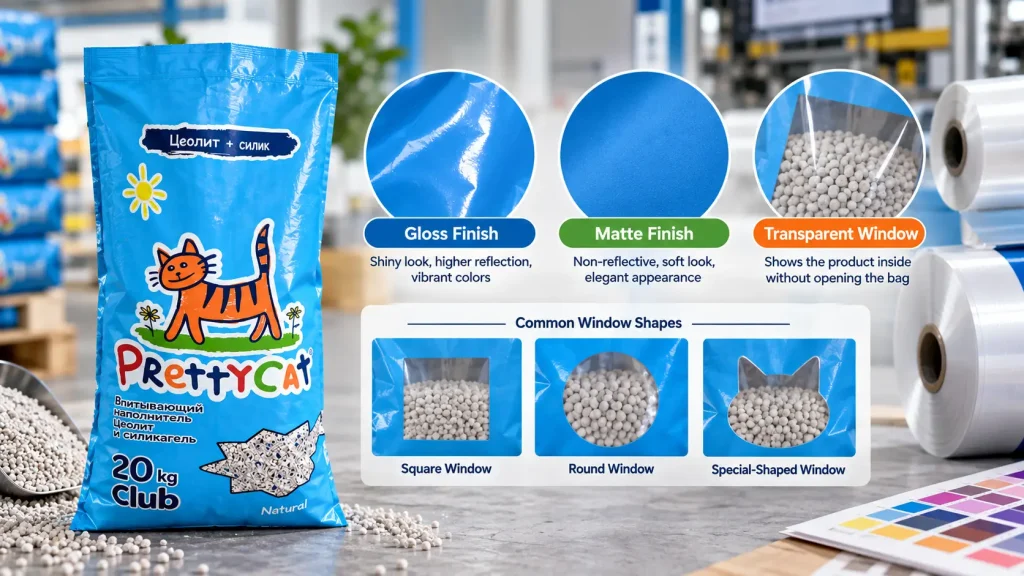
The surface finishing makes an impact on the way the graphics look. A gloss film creates a higher level of reflection, whereas a matte film does not reflect and gives a soft look. XIFA has a variety of glossy and matte BOPP surface finishings, and its current offering also includes bags that are laminated using a matte film.
Using a transparent window, one can see the product inside the package without opening the bag. This window needs to be designed during the process of creating BOPP packaging.
Window location must not hinder any text, sealing, stitching, or graphic elements.
XIFA lists three types of windows – square, round, and special-shaped windows.
Different products place different demands on packaging artwork. Brand presentation matters, but identification and handling information also need space.
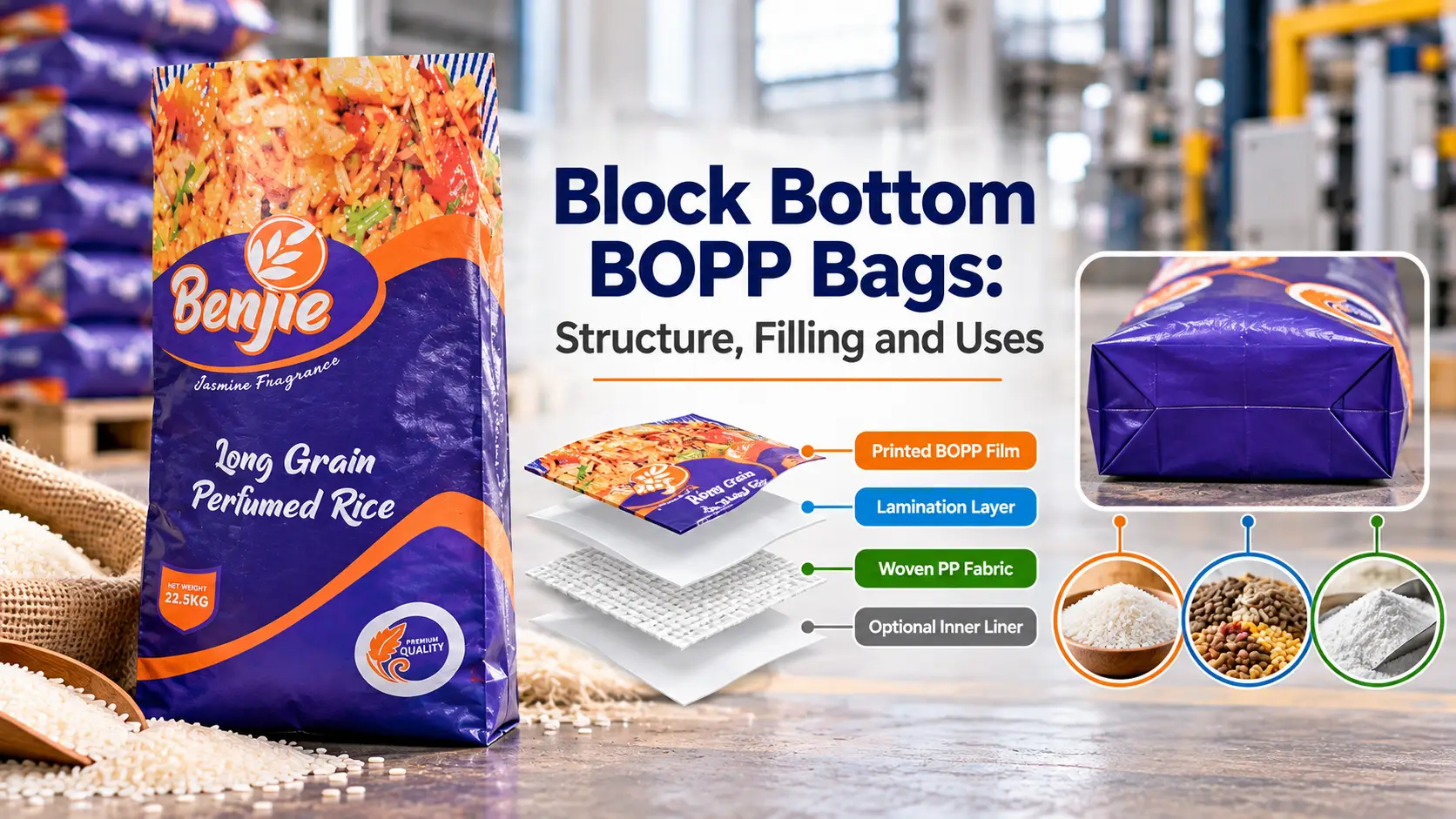
A BOPP rice bag design often uses product photography, brand colors, variety names, weight information, and cooking or origin details. Transparent areas can also show the rice itself. XIFA manufactures BOPP-laminated rice bags with gravure printing, including handled formats.
Feed packaging needs clear product identification across similar formulas. Species, feed type, weight, and handling information should remain easy to distinguish. Large color blocks can help separate product lines while maintaining the same brand structure.
Fertilizer bags often require more technical information. Product grade, nutrient information, weight, warnings, and other required labeling can take priority over decorative graphics. For custom printed BOPP bags, the layout should reserve these areas before final artwork approval.
Barcodes must be positioned in areas of good clarity, with sufficient contrast. Barcodes must not be placed over any fold lines, seams, texture changes, or areas where distortion of the bars could occur. A test print should always be tested to scan properly before large-scale production.
Labeling standards may vary depending on the nature of the product and target market. Mandatory labeling for food products, feeds, fertilizers, and chemicals may differ.
It is the buyer’s responsibility to supply the final approved regulatory text that will then be incorporated into the agreed artwork by the manufacturer.
This is an important difference since the artwork requirements for BOPP bags include both artwork design and manufacturing considerations.
A short prepress review can prevent costly changes after printing cylinders are prepared.
| Artwork item | What to confirm |
| Bag dimensions | Match approved bag specification |
| Artwork size | Matches supplier template |
| Logo | Correct version and placement |
| Colors | Pantone or approved reference supplied |
| Images | Suitable resolution for final print size |
| Text | Final wording and spelling approved |
| Barcode | Size, contrast, position, and scan test |
| Bleed | Matches supplier template |
| Safe area | Critical content clear of folds and seams |
| Finish | Matte, gloss, or other treatment confirmed |
| Window | Shape and position approved |
| Regulatory text | Final market-specific copy supplied |
XIFA can review layout, color separation, and structural details before artwork enters production.
The final BOPP bag design should be approved against the actual bag specification rather than artwork alone. Changes in dimensions or construction may require another layout review.
Contact XIFA to submit the artwork, bag dimensions, target weight, colors, finish, and application to XIFA for a layout review before production.
Vectors for editable files are usually requested for logos, text, and lines. XIFA needs to approve file formats prior to final sending.
Yes. The gravure process will allow for graphic reproduction and images. Resolution and color of the image must match the final print dimensions.
According to XIFA, its production facilities consist of 6-, 7-, and 8-color printing presses.
Yes. Window printing is available but must be designed according to graphics and bag seam positions.
Not really. The color reference can be physical or in Pantone.