



 by Simin Xiang
Quick Answer: Woven polypropylene fabric is made by crossing flat PP tapes to form a light, strong base for packaging rolls and bags. Choose uncoated fabric when airflow matters, coated fabric when the surface needs more protection, and film-laminated fabric when detailed printing is a priority. Compare base fabric weight, tape and weave details, roll dimensions, and tests for the intended filling and handling conditions. XIFA can supply PP fabric and convert woven material into custom packaging, with the final specification agreed for each order.
This guide explains the main fabric options, what the numbers on a specification sheet mean, and how to choose a construction your converter or filling line can use. It focuses on industrial packaging rather than upholstery or landscape fabric.
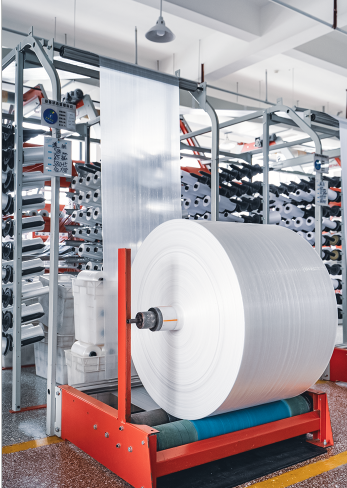
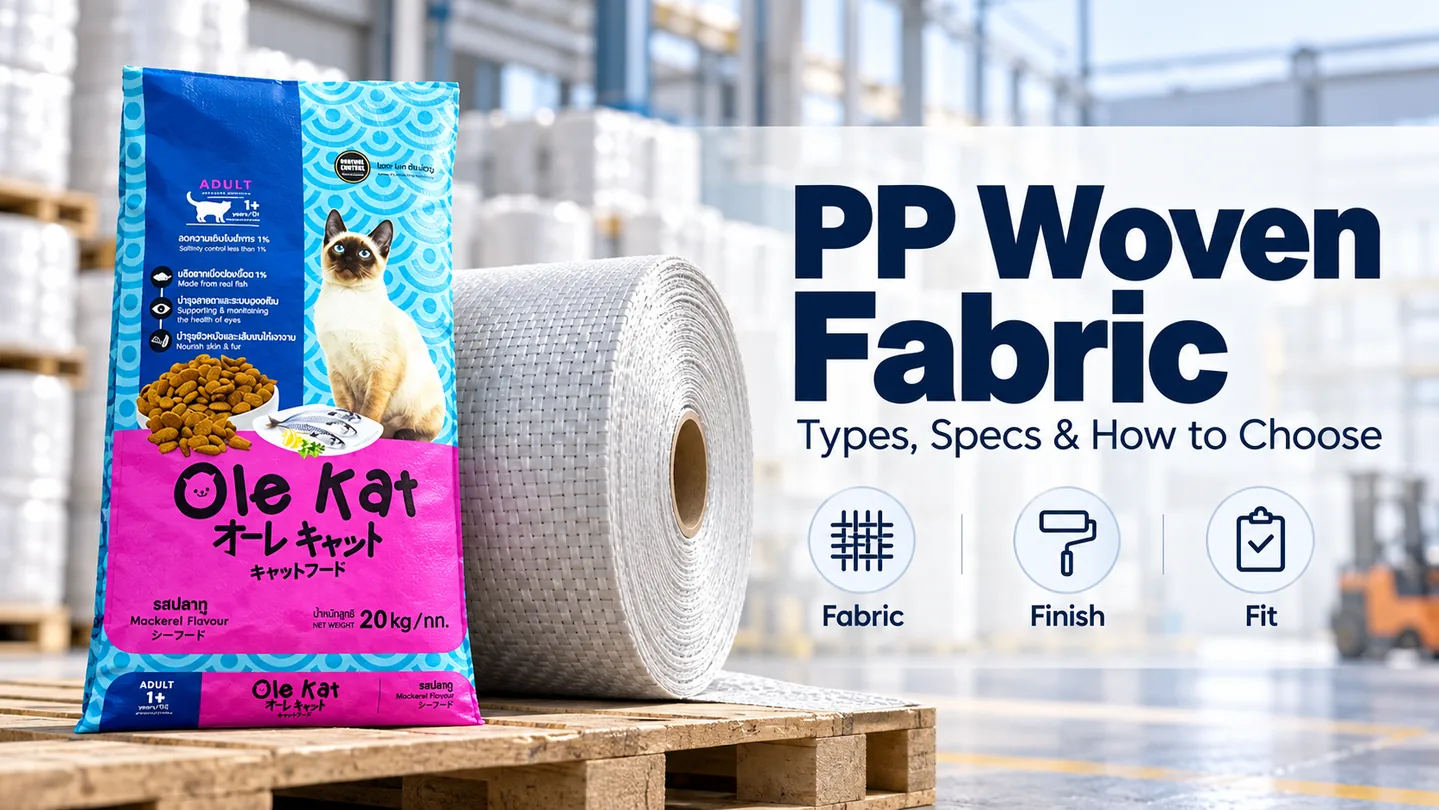
Polypropylene (PP) is a plastic made into narrow, stretched tapes. Weaving those tapes across and along the roll creates woven polypropylene fabric. The roll can be cut and sewn into a sack, used as a layer in a printed bag, or made into a flexible intermediate bulk container (FIBC), commonly called a bulk bag. Fabric strength matters, but the finished bag also depends on its seams, opening, closure and handling method. XIFA’s PP woven bag range shows how the same material family can become different packaging formats.
Woven is different from non-woven PP: woven polypropylene fabric has interlaced tapes; non-woven material is bonded from fibres. Ask which construction a quote covers rather than treating the names as interchangeable.
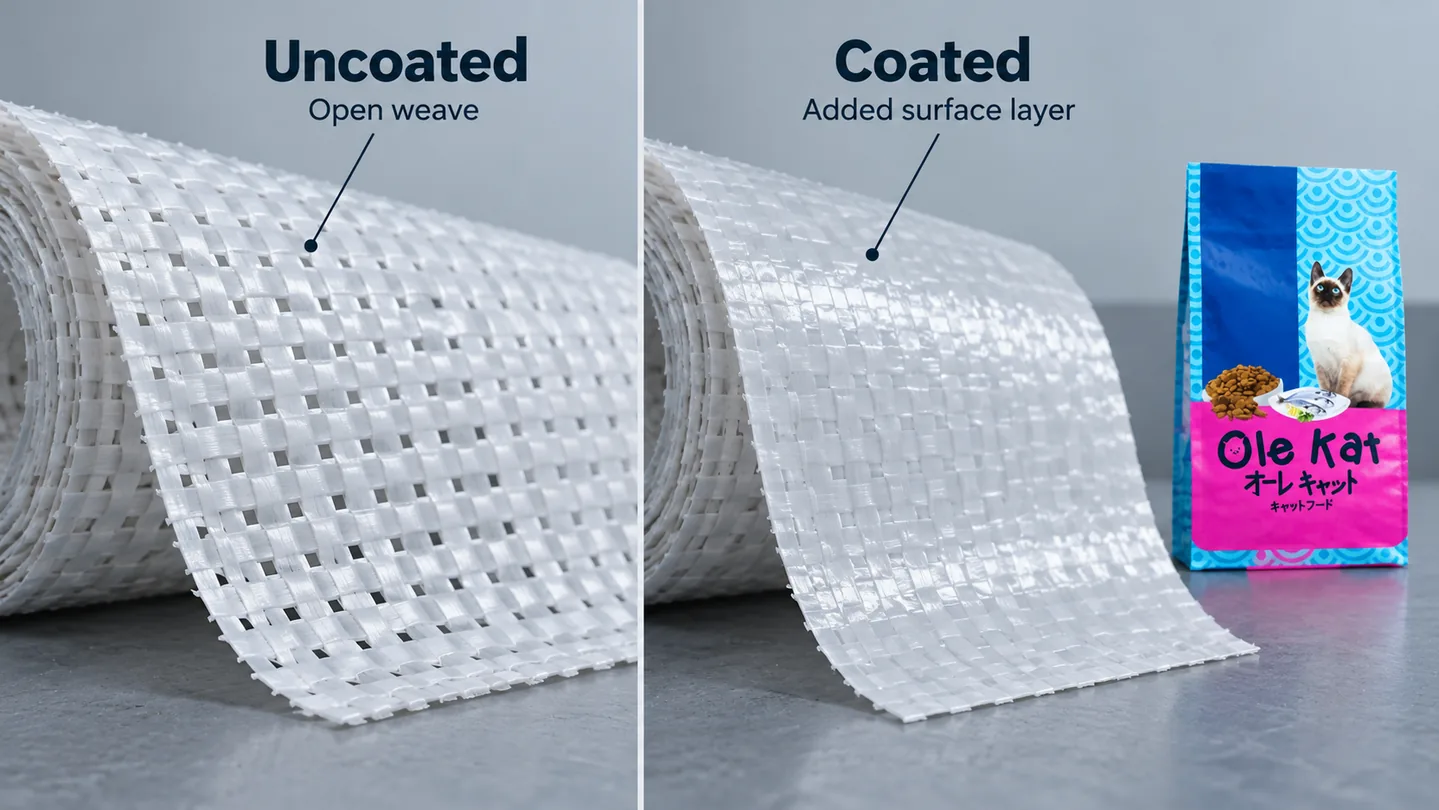
Uncoated woven polypropylene fabric retains the small openings between tapes. It may suit dry goods where some airflow is useful and a moisture barrier is not the main requirement. If fine powder could sift through the weave, check the tape spacing and the entire bag design before choosing it. XIFA’s weave-density article explains how tightly packed tapes change the fabric structure.
A coating adds a polymer layer to woven polypropylene fabric; lamination bonds on a separate film. Either can make the surface less open, but moisture protection depends on the whole pack, including seams and closure. A BOPP film, meaning biaxially oriented polypropylene film, can carry detailed printed graphics when laminated onto the woven base. See XIFA’s laminated fabric guide for the layer options, or its BOPP bag range for finished packaging examples.
Yes. Fabric may be supplied as flat rolls or woven as a tube for certain bag designs. The format affects cutting, printing, seam placement and conversion equipment. Tell the supplier whether you need fabric rolls, tubular fabric or completed bags; request the usable width and winding details for the actual format.
| Specification | Plain-language meaning | What to confirm |
|---|---|---|
| Basis weight (GSM) | Grams of fabric per square metre. | State whether the figure is for the woven base or the coated/laminated total. |
| Tape denier | The mass of 9,000 metres of PP tape. | Check it with tape width and weave density; denier alone does not prove bag strength. |
| Weave density | The number of tapes across a stated length. | Agree on the measurement direction, unit and tolerance. |
| Roll size | Usable width, length and winding format. | Check edge trim, core size and compatibility with converting equipment. |
| Surface and colour | Coating or film, one or two sides, and colour match. | Approve a physical sample or print proof where appearance matters. |
| Performance | How the proposed material and finished pack behave in use. | Specify tensile, tear, seam, drop or barrier tests that reflect the application. |
Do not read GSM as thickness or load capacity. Heavier woven polypropylene fabric can still fail if the tapes, seams or closure do not suit the contents and handling. For a bag order, compare the complete construction and filled-bag trial, not just the fabric roll. XIFA describes its manufacturing process from tape drawing and weaving through conversion.
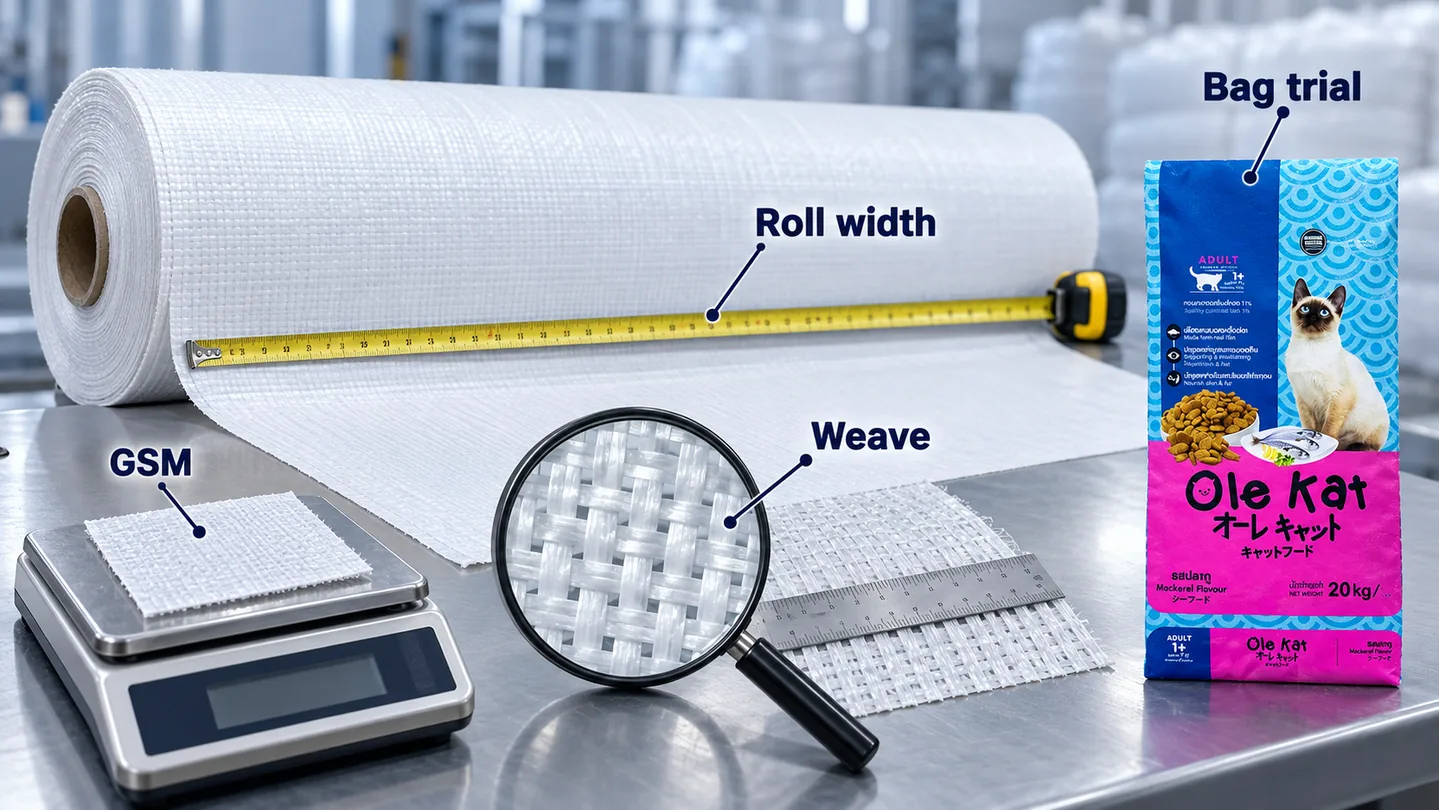
Start with the contents: particle size, bulk density, target fill weight, moisture sensitivity and any food-contact or static-control requirements. Then describe the filling machine, storage period, stacking, transport and likely exposure to sun or rain. A coating or liner may help with a particular risk, but do not assume every coated bag is watertight or every PP fabric is suitable for food contact. Request evidence for the exact material and finished structure where these claims affect acceptance.
Next, compare two or three sample constructions using the same filling and handling trial. Give each supplier one specification sheet so GSM, coating, dimensions and closure are quoted on the same basis. For repeat orders, record the approved sample, artwork revision, tolerances and checks. XIFA outlines its quality-control process, but acceptance criteria should still be agreed for your order.
If you buy rolls for conversion, ask for roll width, roll length, core size, surface treatment and winding condition. If you buy bags, add dimensions, seams, opening, closure, optional liner and filled-bag tests. Price comparisons are useful only after those details match.
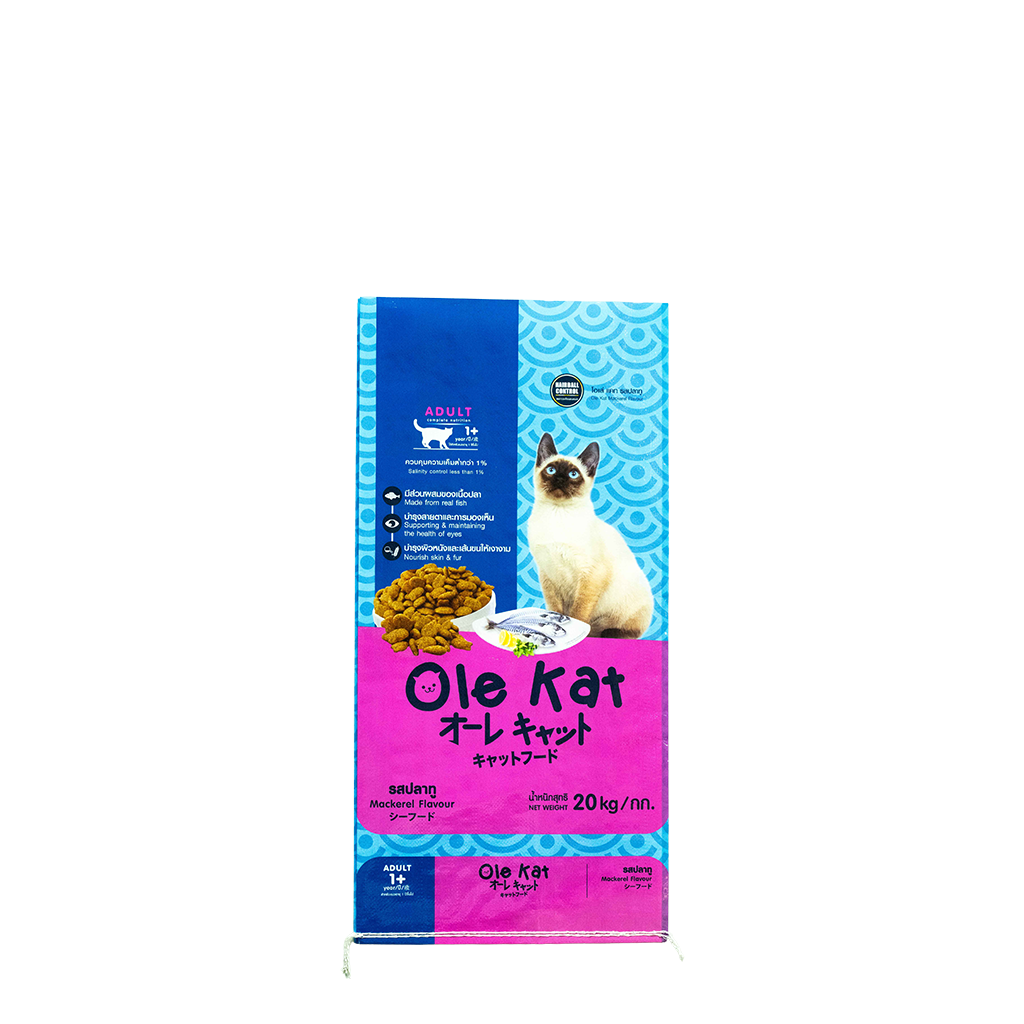
Send your intended use, contents, target fill weight, preferred fabric or bag format, dimensions, coating or print requirements, annual volume and destination market. Add any existing sample, drawing, filling-line limits and required test method. In short, choose woven polypropylene fabric by the finished packaging job, then confirm the material specification that makes it work. Share those details with XIFA to discuss a suitable construction, sample and quotation.