



 by Simin Xiang
If your brand wants a premium, low-glare shelf image, matte is usually the better choice. If you need brighter color pop and faster visual impact, glossy usually performs better.
This guide explains how finishing changes print appearance, readability, texture, and buyer perception. You will also learn which finish fits fertilizer, pet food, and other industrial packaging, plus what to review before placing a custom order.
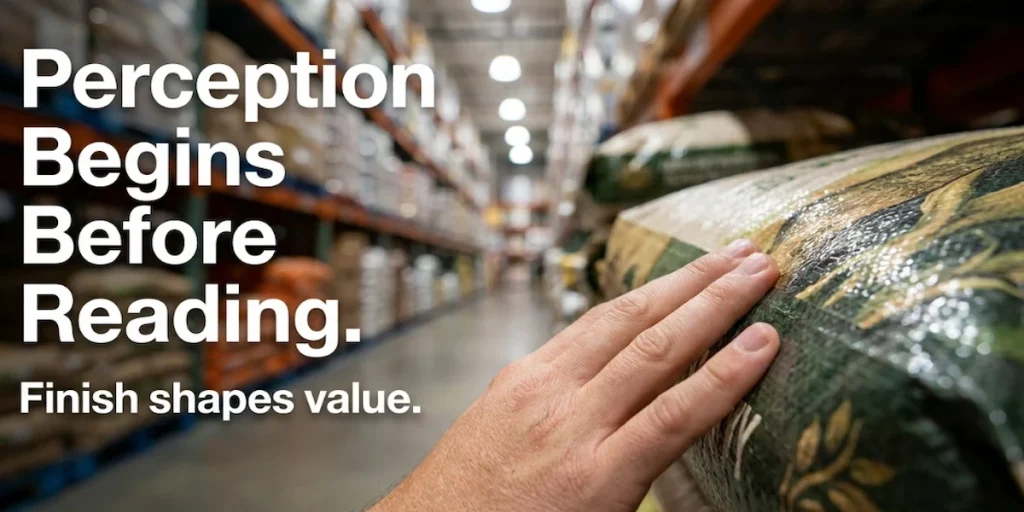
Packaging finish shapes product value before buyers read the label. That effect is strong in agriculture, animal feed, and retail packaging.
For many buyers, finish is not only a design choice. It also affects glare, print contrast, image sharpness, and performance under store lighting.
Glossy film reflects more light. This usually makes colors appear brighter and supports glossier packaging for bold graphics.
Matte film diffuses light. That gives surfaces a softer look and helps printed text stay readable from more viewing angles.
Brands that want a clean or upscale image often prefer a softer surface effect. A matte finish Bopp bag can support that premium signal effectively.
Brands focused on mass visibility often choose glossy surfaces. That approach works when shelf competition is high, and recognition must be immediate.
Both formats use printed BOPP film laminated onto woven polypropylene fabric. The core bag structure can remain similar while the surface finish changes appearance.
This is why buyers should compare film behavior, not only color preference. The lamination layer influences how the package looks and feels in use.
Matte film uses a non-reflective surface treatment. It reduces shine and can create a softer tactile effect after lamination.
In bopp laminated woven bags, this finish is often used for premium pet food, specialty fertilizer, and value-added agricultural products.
Glossy film keeps a reflective surface. It helps inks appear brighter and often improves image vibrancy from a distance.
This makes glossy useful for colorful retail products, promotional designs, and packaging that depend on first-glance visibility.
The answer depends on what the graphics must do. Some designs need visual punch, while others need calm, precise communication.
Matte works well when the bag has detailed text, restrained color palettes, and clean brand blocks. It reduces glare under warehouse and retail lighting.
This matters in high-end fertilizer packaging, where specifications, usage directions, and brand details must remain easy to read.
Glossy works well for saturated colors, large product photos, and high-contrast graphics. It tends to create more visual energy on the shelf.
For consumer-facing pet food lines, glossy can help mascot images and bold color panels stand out faster.
Matte and glossy both have value, but they support different product stories. Buyers should match the finish to the sales channel and brand promise.
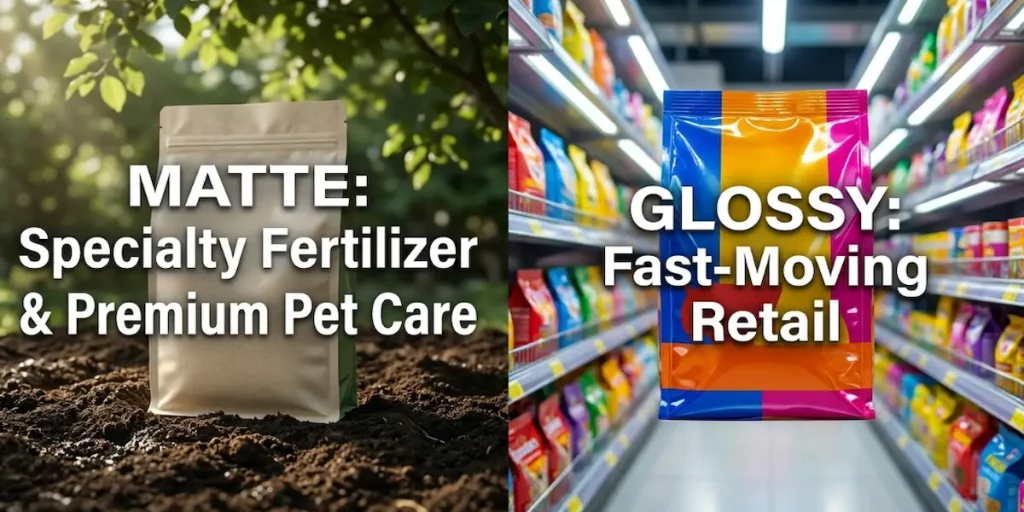
Specialty fertilizer brands often want a technical and upscale presentation. Matte surfaces help the bag look controlled, modern, and less commodity-driven.
Case example: A premium soil nutrition line used dark green panels with reduced-glare text zones. The matte surface improved readability and gave the product a more professional look.
Pet food buyers often associate soft textures with care and product quality. That makes matters attractive for premium formulas and specialty diets.
Case example: A pet food brand used muted earth tones and simple typography. The softer finish supported the premium message better than a high-shine layout.
Glossy is useful when products compete in busy retail rows. It also suits value lines that need high color visibility with short decision time.
The best selection comes from a short technical review. Buyers should compare finish performance against product, channel, and print design.
| Decision Factor | Matte Finish | Glossy Finish |
| Brand Tone | Premium, Refined, Soft | Bold, Vivid, Energetic |
| Readability | Better In Bright Light | Can Reflect Glare |
| Color Impact | Controlled, Muted | Bright, High Contrast |
| Texture Feel | Soft Visual Effect | Smooth, Slick Feel |
| Best Uses | Premium Fertilizer, Pet Food | Fast-Moving Retail Items |
Some buyers also compare laminated non-woven polypropylene bags for lighter retail applications. Those can work in selected markets, but woven laminated structures are often preferred for higher load stability.
If barrier needs or inner protection are part of the design, buyers may also compare options like PE film bags with outer woven structures.
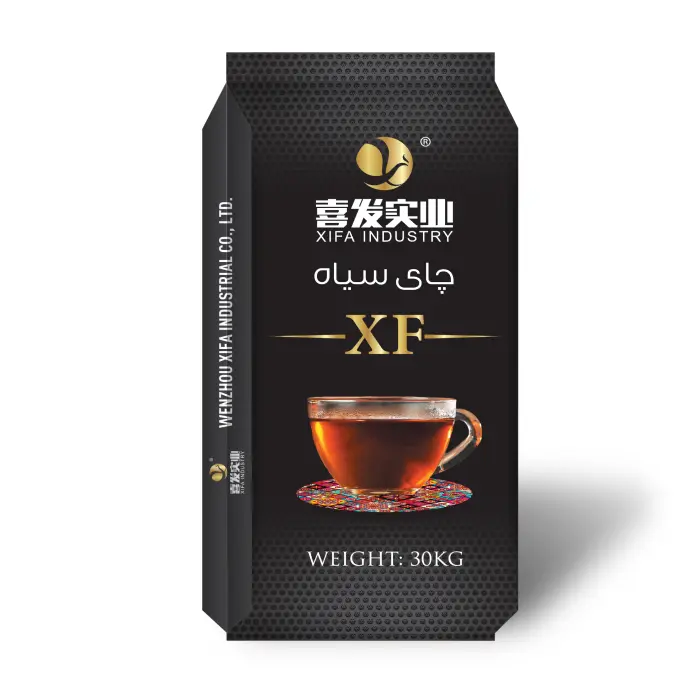
XIFA Group supports buyers with custom packaging across PP fabric, BOPP bag, FIBC big bag, and PE film bag lines. Its website shows 25 years of manufacturing experience, OEM/ODM support, in-house design, batch traceability, and structured quality systems.
On the BOPP bag product page, XIFA notes options for matte BOPP film and glossy film. This helps buyers align finish, graphics, and anti-counterfeiting needs in one structure.
The design department also provides free typesetting services. That helps when artwork must balance logo size, technical text, and print zones for shelf presentation.
Finish choice works best when tied to production knowledge. XIFA also shares material insights through its PP fabric blog section, which helps buyers understand woven structure and application fit.
It’s published Sedex SMETA 2-Pillar audit, traceability tools, and application coverage in agriculture, animal feed, food grade, chemicals, and construction, adding practical trust signals.
Choose a matte finish BOPP bag when your package needs to show premium value, reduce glare, and support clean technical graphics. Choose a glossy BOPP bag when your brand needs brighter colors and stronger shelf visibility.
For buyers developing branded industrial packaging, XIFA Group offers a useful mix of material range, design support, and manufacturing depth. Explore its BOPP bag collection to match structure, print, and market position more accurately.
Usually, yes. Matte often gives a softer, more upscale appearance and reduces shelf glare.
In most cases, yes. Glossy surfaces reflect more light and can make printed colors appear more vivid.
Yes. They are commonly used for fertilizer because they combine print quality with woven structural strength.