



 by Simin Xiang
Quick Answer:
The block bottom BOPP bag is made of woven polypropylene material together with BOPP film that has been printed on it and a bottom design that creates flatness in the bottom of the bag. The structure will help improve the presentation, filling, and stacking of bags when they match the filling line and packing. When ordering a block bottom BOPP bag, the key information needed includes: size of the bag, fabric weight, BOPP laminating, bottom style, top sealing, filling type, and packing weight. XIFA Group produces custom BOPP laminated woven packaging materials used in packing foods, feeds, fertilizers, chemicals, and agricultural products.
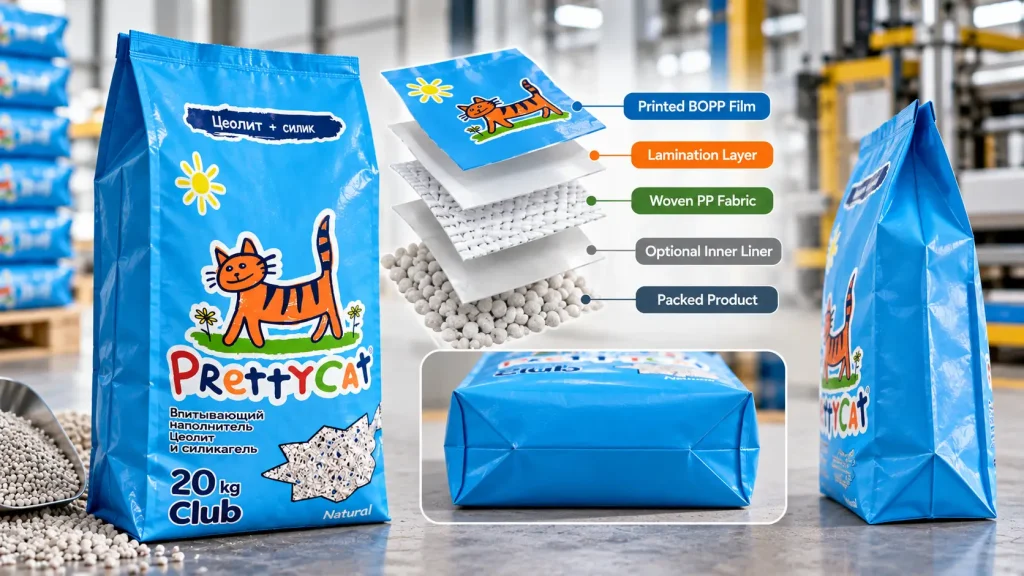
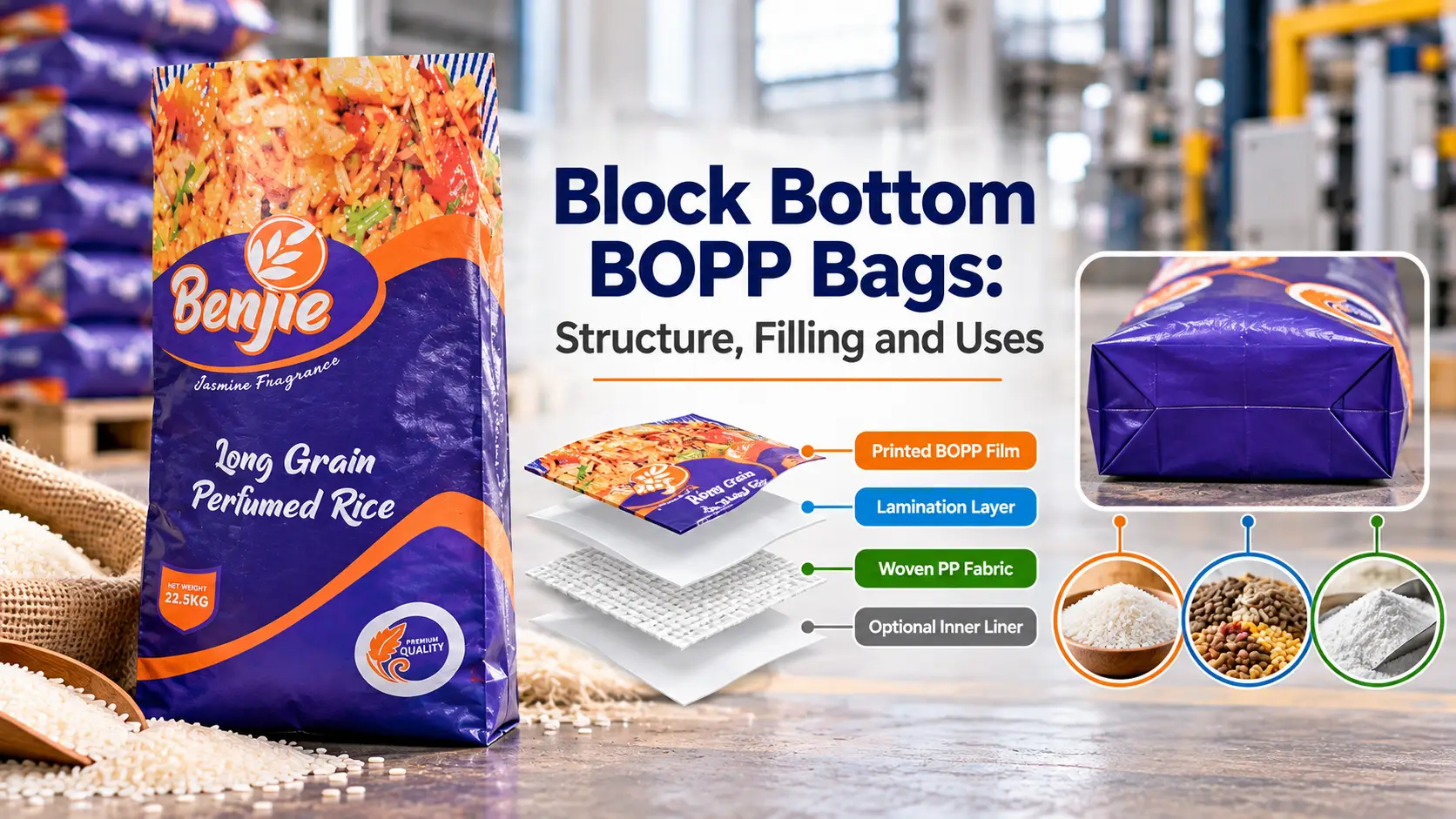
BOPP laminated packaging features woven PP as the core material. The printed BOPP film is laminated to it to create graphics and to provide extra protection of the surface. In the case of BOPP block bottom bags, the core material is shaped to form a flat bottom instead of just using a simple stitching seam. The exact shape will depend on the design of the bag and the manufacturing process.
The construction can be illustrated in the following manner:
The core material at the bottom of the bag is formed into the required shape. Such construction is not similar to that of an unlaminated woven sack.
The first step is making polypropylene tapes that will form the woven fabric. BOPP film is printed separately and then laminated with the woven film. The laminated material is transformed into a bag of specific dimensions and bottom type. The top of the bag is suitable for filling and closing methods chosen by a customer.
A flat bottom makes the filled package footprint more distinct and is useful if bags have to stand or be stacked correctly after filling.
Nevertheless, not all block bottom woven bags look the same. Customers are supposed to send a drawing, a sample of a bag, or specifications of a filling line when asking for a quote.
Nowadays, the variety of XIFA BOPP films includes both single- and double-side lamination, gravure printing, stitched bottom designs, etc. It is necessary to clarify which designs are available for block bottom structure.
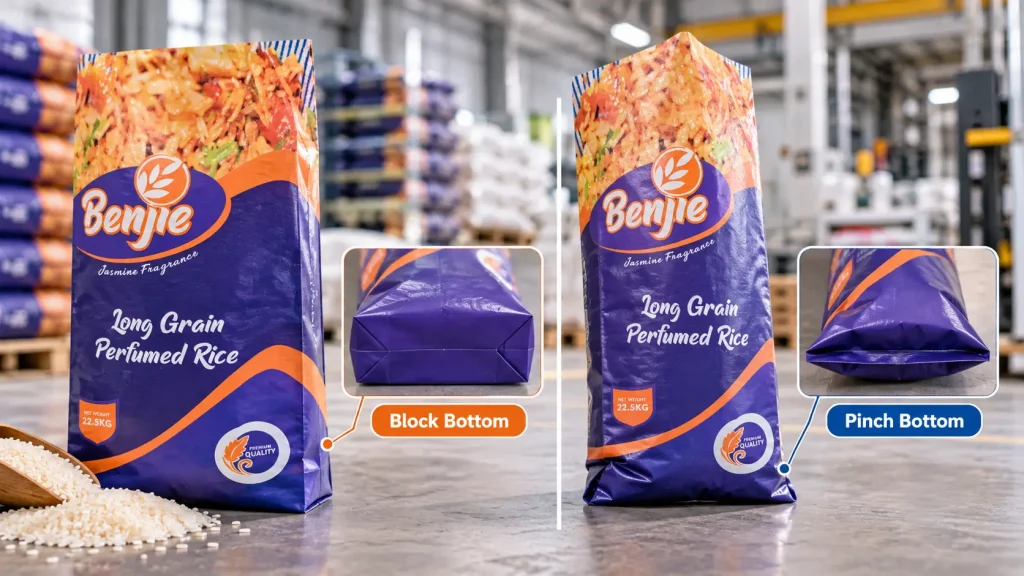
They refer to two distinct bag features and should not be confused with each other.
| Feature | Block bottom | Pinch bottom |
| Main design feature | Flat, formed base | Folded and sealed end |
| Filled shape | More defined base | Depends on the filled product |
| Main purpose | Shape and stacking | Clean closure |
| Filling compatibility | Depends on top design | Depends on open end and sealing |
| BOPP lamination | Can be specified | Can be specified |
| Best choice | Based on line and product | Based on line and closure needs |
Thus, the pinch bottom vs block bottom bags comparison does not solely depend on the strength of the structure. The first one is related to the molded bottom, and the latter one is related to the approach to closing.
The purchase specification should specify both the bottom and top styles instead of selecting a bag based on its name only.
The geometry of a bag plays a role in an automated process line since an inconsistent package could hinder the subsequent handling after filling.
The open-mouth BOPP bags can be filled from the top and sealed once the requisite weight is achieved. The bag opening size must be compatible with the filling equipment. The specification should include the filling technique, filling rate, product density, and closing equipment. Sometimes fine powders need to be handled differently than pellets or grains.
A more level and consistent shape after being filled can make pallet arrangements easier to achieve. This can help minimize the inconsistency in spacing of bags on a pallet.
However, the bottom alone cannot decide pallet stability. Factors such as fill height, trapped air, product movement, bag dimensions, surface friction, and pallet arrangement are important as well.
XIFA provides antiskid coating on their BOPP packaging products.
These bags have uses for products that require strength from woven material, printing of logos and branding, and package structure.
In feed and pet food packages, strength and branding are always necessary. The BOPP film will facilitate the graphics, while the woven PP will provide the strength.
Currently, XIFA manufactures BOPP bags for animal feed and pet food. Various formulations of the products can use distinct colors or graphics.
BOPP bags for fertilizer incorporate woven PP with a printed lamination of the bag. Branding, product grading, nutrient content, weight, and any warnings can be included in the design. Consideration should also be made for moisture protection. The laminate will help in providing extra surface protection, and even a lining may be necessary if the product requires additional strength.
Food seeds, grains, rice, and other dried foods can also be packed using laminated woven materials. As mentioned by XIFA, BOPP bags find applications in the food and agriculture industry. The structure of the last type of BOPP bags will depend on the product’s density and weight, among other factors.
The BOPP film has good graphics because it is printed on the film before it is laminated with the woven substrate. XIFA uses gravure printing and has equipment capable of 6-, 7-, and 8-color printing. BOPP lamination is offered both on one side and on two sides by XIFA’s published product line.
Lamination helps protect the product from surface moisture, but the entire package needs to be taken into account. Seams, closures, and openings might contribute to moisture intrusion.
Where additional protection is needed, a PE liner can be added if applicable. Therefore, BOPP bags for fertilizer, animal feed, and foods need to be ordered based on the needed barrier.
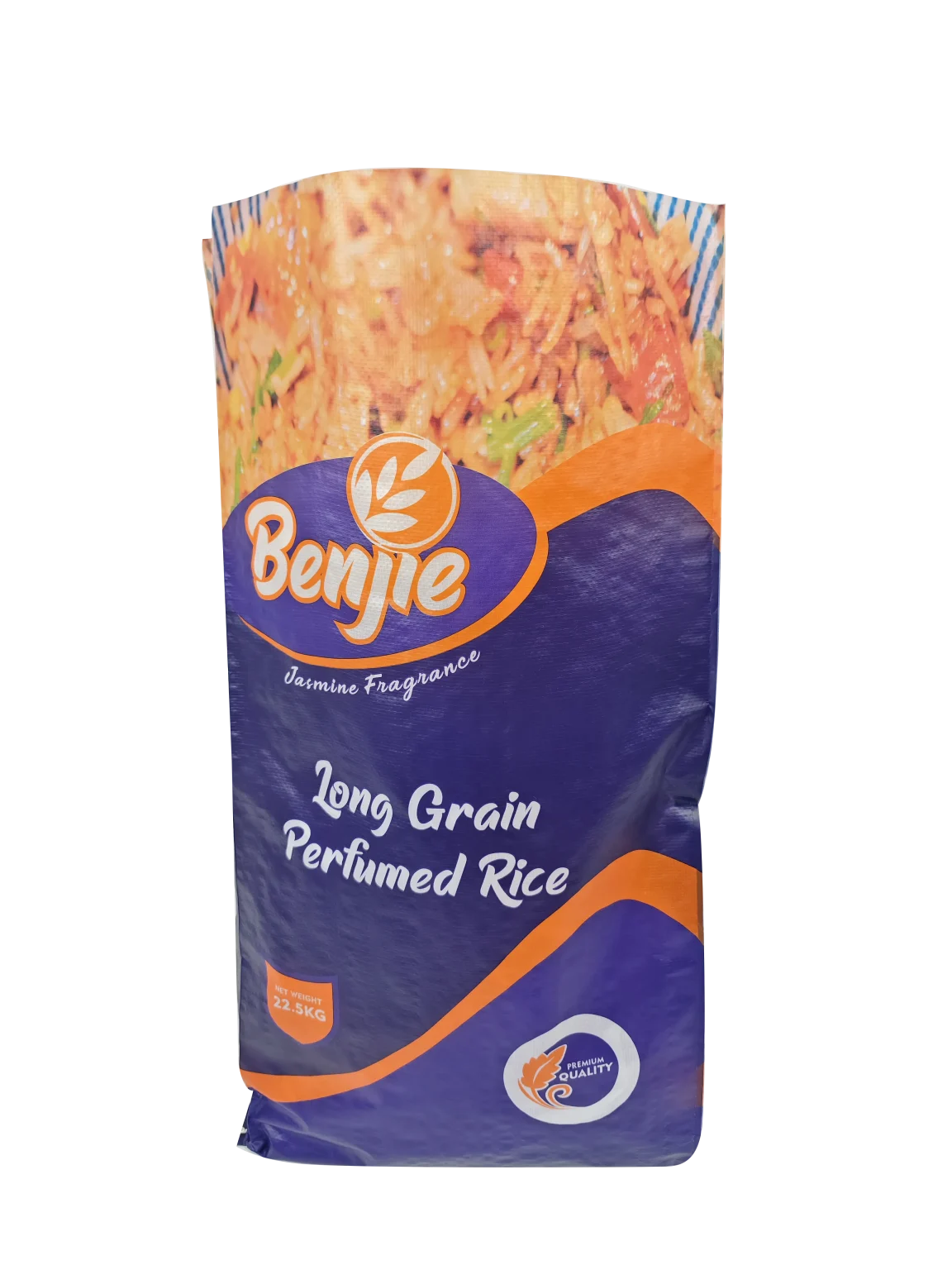
An RFQ should describe the bag as a complete structure. A product name alone leaves too many manufacturing details undefined.
| RFQ item | Information to provide |
| Product | Feed, fertilizer, pet food, seed, food |
| Fill weight | Target net weight |
| Bag size | Width × length × gusset, if applicable |
| Fabric | PP GSM and color |
| Lamination | Single or double side |
| Bottom | Required block-bottom construction |
| Top | Open-mouth and closure requirement |
| Printing | Artwork, colors, print sides |
| Barrier | BOPP only or additional liner |
| Filling | Manual or automated equipment |
| Palletizing | Pallet size and stacking requirements |
For BOPP block bottom bags, an existing sample or technical drawing can help clarify folds and dimensions.
The RFQ should also identify required tests, order quantity, destination, and expected annual demand. A production sample can then be checked on the actual filling and closing equipment.
Contact XIFA today to request a sample and structure review before confirming the bottom design, BOPP lamination, printing, and filling specification.