



 by Simin Xiang
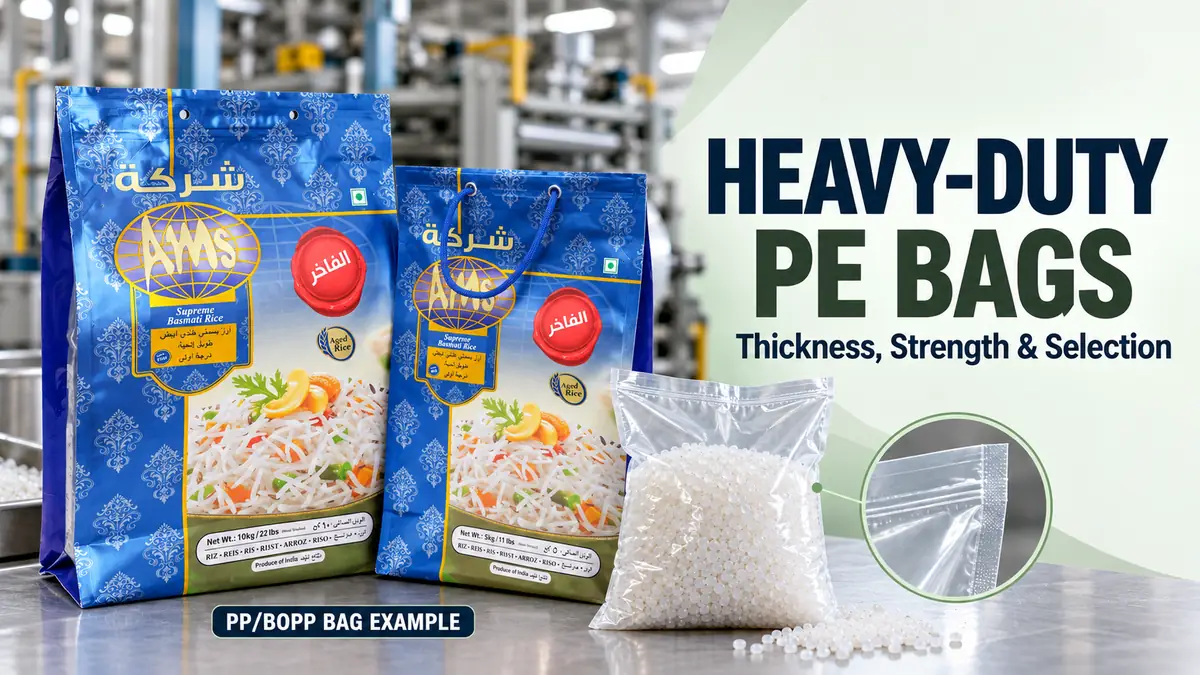
Quick Answer: Heavy-duty polyethylene bags should be chosen for the product and handling conditions, not by thickness alone. Film type, bag dimensions, seals, sharp edges, filling speed and transport all affect whether a bag will hold up. Specify thickness in microns or mils, then test a filled sample under realistic conditions. XIFA offers PE film bags for industrial packaging and can discuss the structure, size and closure needed for your application. The best specification is one your supplier can make consistently and your team can verify.
This guide explains what thickness tells you, what it cannot tell you, and how to compare bags before placing a production order.
There is no single thickness that makes a PE bag “heavy duty.” A smooth, compact product and a bag of sharp metal parts may weigh the same but place very different demands on the film.
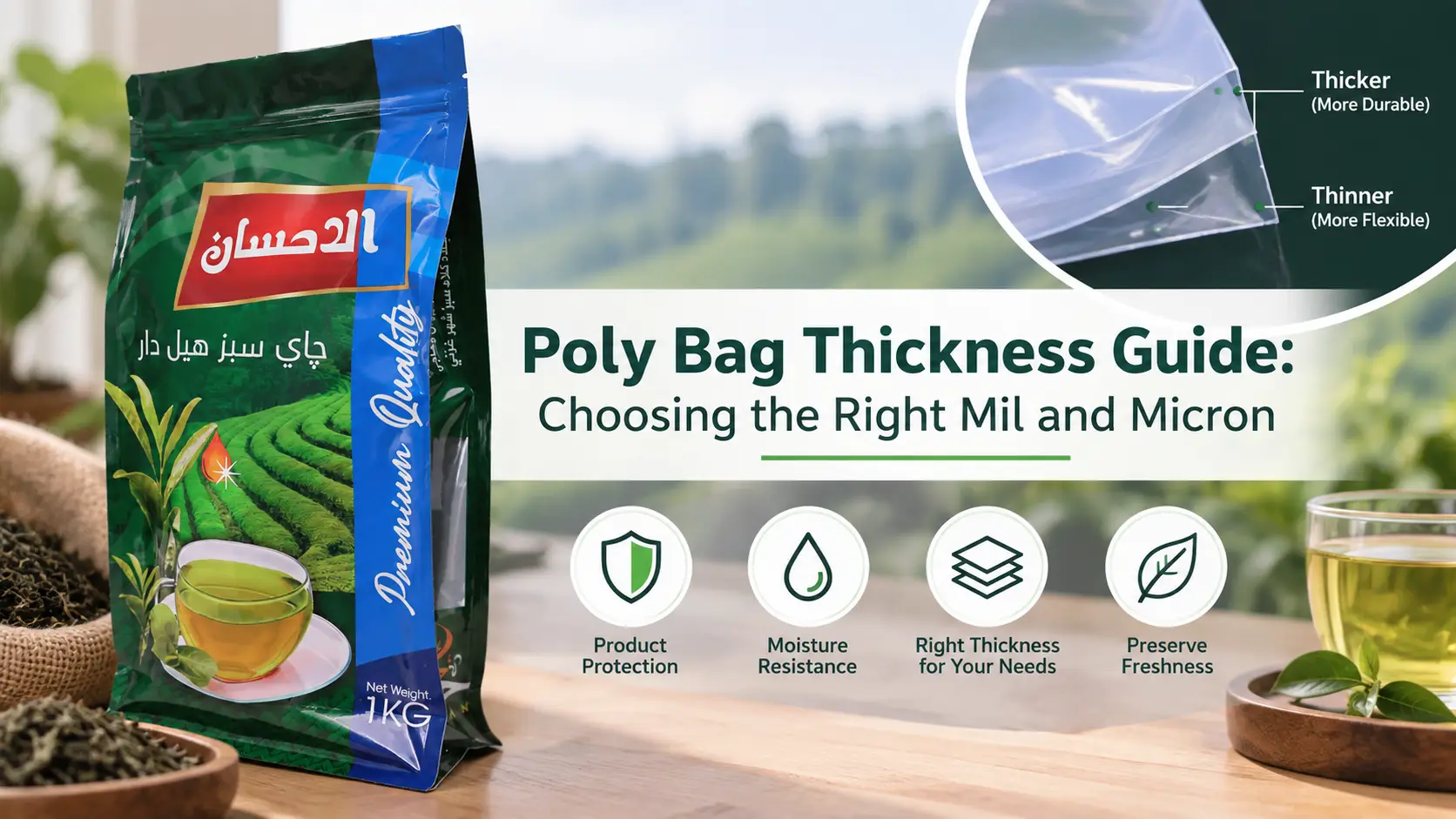
Film thickness is usually stated in microns (µm) or mils. One micron is one-thousandth of a millimetre; one mil is one-thousandth of an inch. One mil equals 25.4 microns, so a 4 mil film is about 102 microns thick. XIFA’s poly bag thickness guide provides a fuller conversion table.
When comparing quotes, ask whether the stated thickness is for one wall of film and agree on the acceptable variation across the bag. A nominal gauge without a measurement method or tolerance is difficult to inspect at delivery.
Usually, more film gives a bag more material to resist damage. It does not guarantee a stronger finished bag. A thick film can still fail at a weak heat seal, a poorly designed bottom or a point where the contents press against a sharp corner.
For heavy-duty polyethylene bags, consider three kinds of failure:
Ask for tests that match the risk. A puncture result matters for hardware; seal strength and filled-bag drop trials may matter more on an automated filling line. Test the proposed bag with the actual contents, fill weight and closure.
LDPE (low-density polyethylene) is generally softer and more flexible. HDPE (high-density polyethylene) is generally stiffer and can perform well at a lower gauge, but its feel and tear behaviour differ. LLDPE (linear low-density polyethylene) is often used when flexibility and resistance to stretching or puncture are priorities. Film blends can combine these properties.
The resin name alone cannot settle the choice. Ask the supplier for the proposed film structure and samples. Compare those samples using the same bag size, contents and handling test. If the product needs a form-fill-seal line, confirm film and sealing compatibility with the equipment; XIFA’s FFS film article explains the format, although its general claims still need checking against your order.
Start with the work the bag must do:
| Buyer question | Why it changes the specification |
|---|---|
| What goes inside? | Weight, shape, sharp edges and sensitivity to moisture affect film and closure choices. |
| How is it filled? | Filling speed, drop height and equipment affect impact and seal requirements. |
| How is it moved? | Manual handling, conveyors, pallet stacking and transport create different stresses. |
| How long is it stored? | Storage conditions can change the protection required. |
| How will it be checked? | Agreed dimensions, gauge tolerance and performance tests make acceptance clearer. |
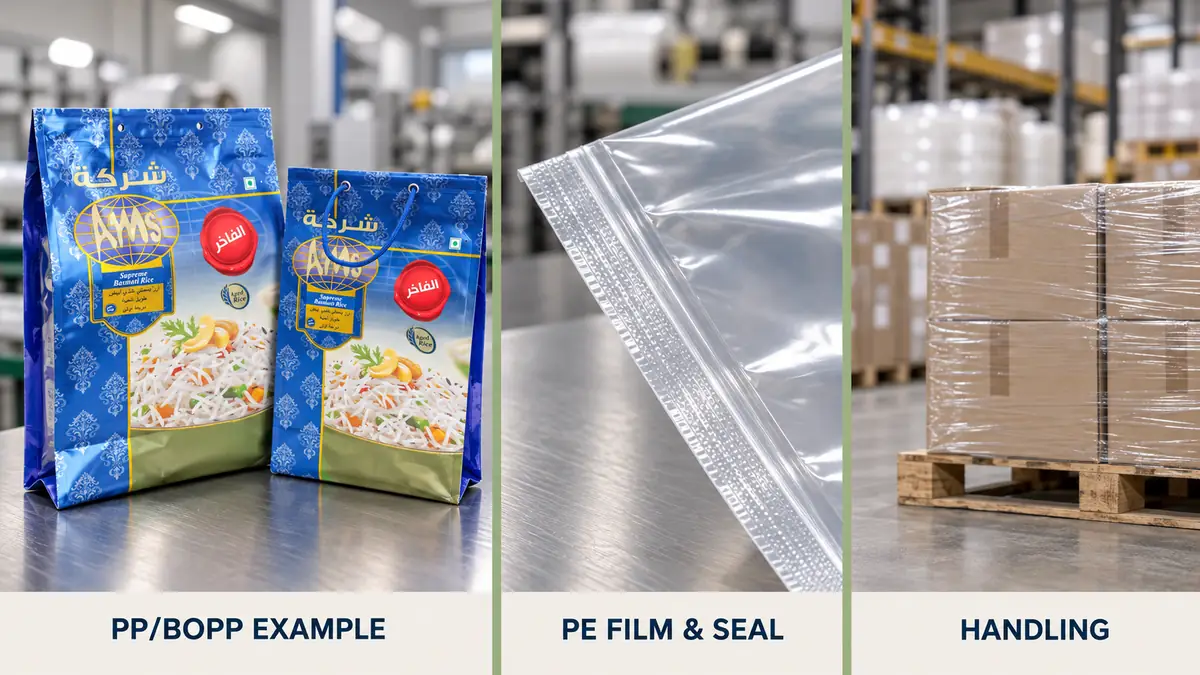
For a moisture-sensitive product, assess the whole closed bag, including seams and the filling opening. For a product with sharp edges, start by investigating puncture resistance. Neither decision can be made from thickness alone.
A PE film bag may suit a sealed package or a flexible protective layer. If the load and handling call for a woven structure, compare it with a PP woven bag. Woven PP and PE film are different constructions; adding a PE liner to a woven bag does not turn it into a solid-film PE bag.
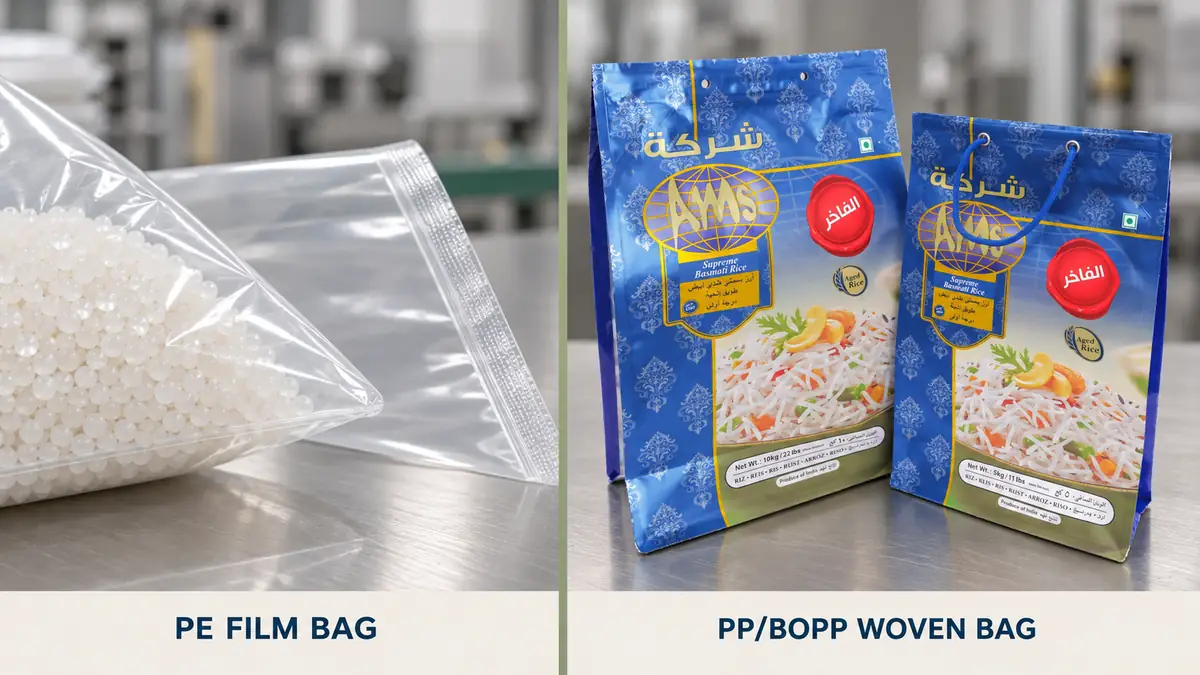
Compare the finished options using the same contents, closure, handling route and acceptance tests. If end-of-use handling matters, check the complete material structure and local collection route as well. XIFA’s PE bag recycling guide covers those questions.

Send the product description, net fill weight, bag width and length, any gusset, preferred film type, target thickness, filling method, closure, printing needs, order volume and destination. Include the failures you need to prevent and the tests you expect. XIFA describes material, process and outgoing quality checks; agree on the checks and acceptance limits for your particular order.
In short: choose heavy-duty polyethylene bags by how the finished package performs, then specify the film and thickness that achieve that result. Share your contents, fill weight, bag dimensions and handling conditions with XIFA to discuss a suitable sample and quotation.