



 by Simin Xiang
Quick Answer: Choose single-loop FIBC bags when your approved bag design and lifting equipment are set up for one lifting point. Choose four-loop bags when your handling method uses four separate lifting points and needs that arrangement at filling, transfer and unloading. Neither design is automatically stronger or safer: check the bag’s safe working load, drawing, test record and every transfer point first. XIFA can help buyers compare FIBC construction options against their actual filling and handling process.
This guide shows where each loop layout fits, what can go wrong during a lift, and which details to send a supplier before requesting a quotation. If you are comparing single loop FIBC bags with four-loop bags, trace the whole route, not just the first pick-up.
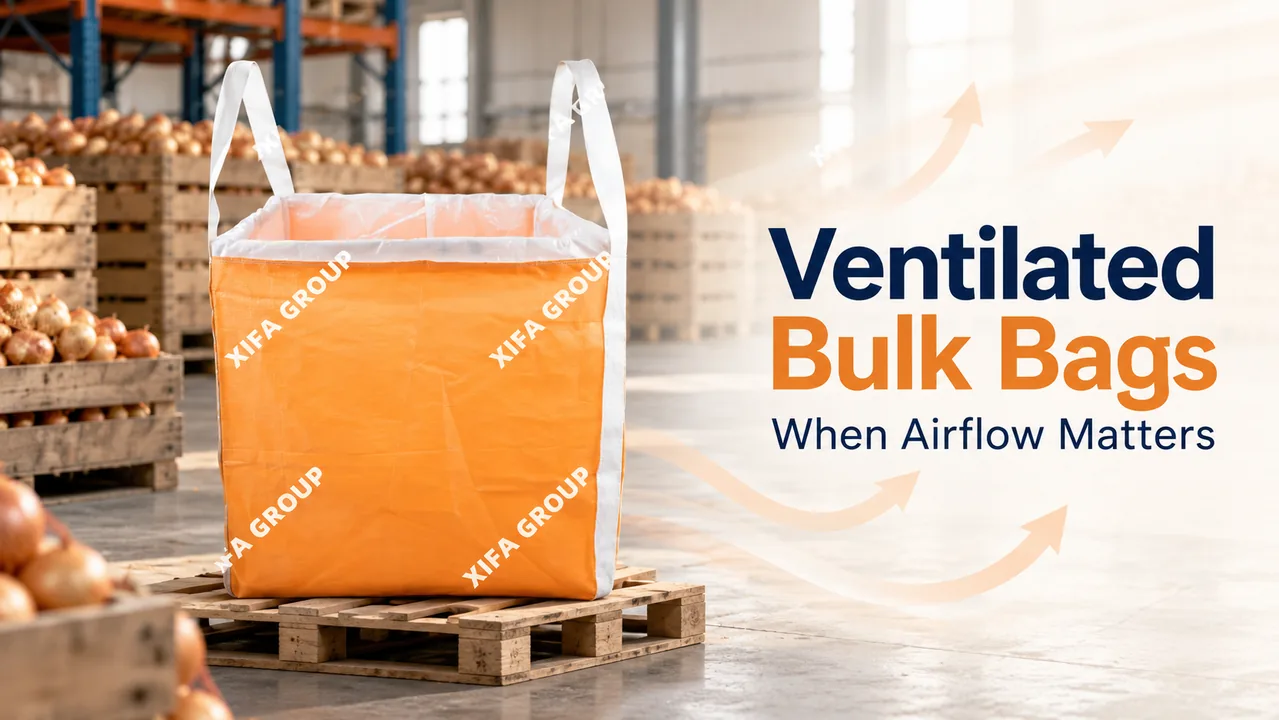
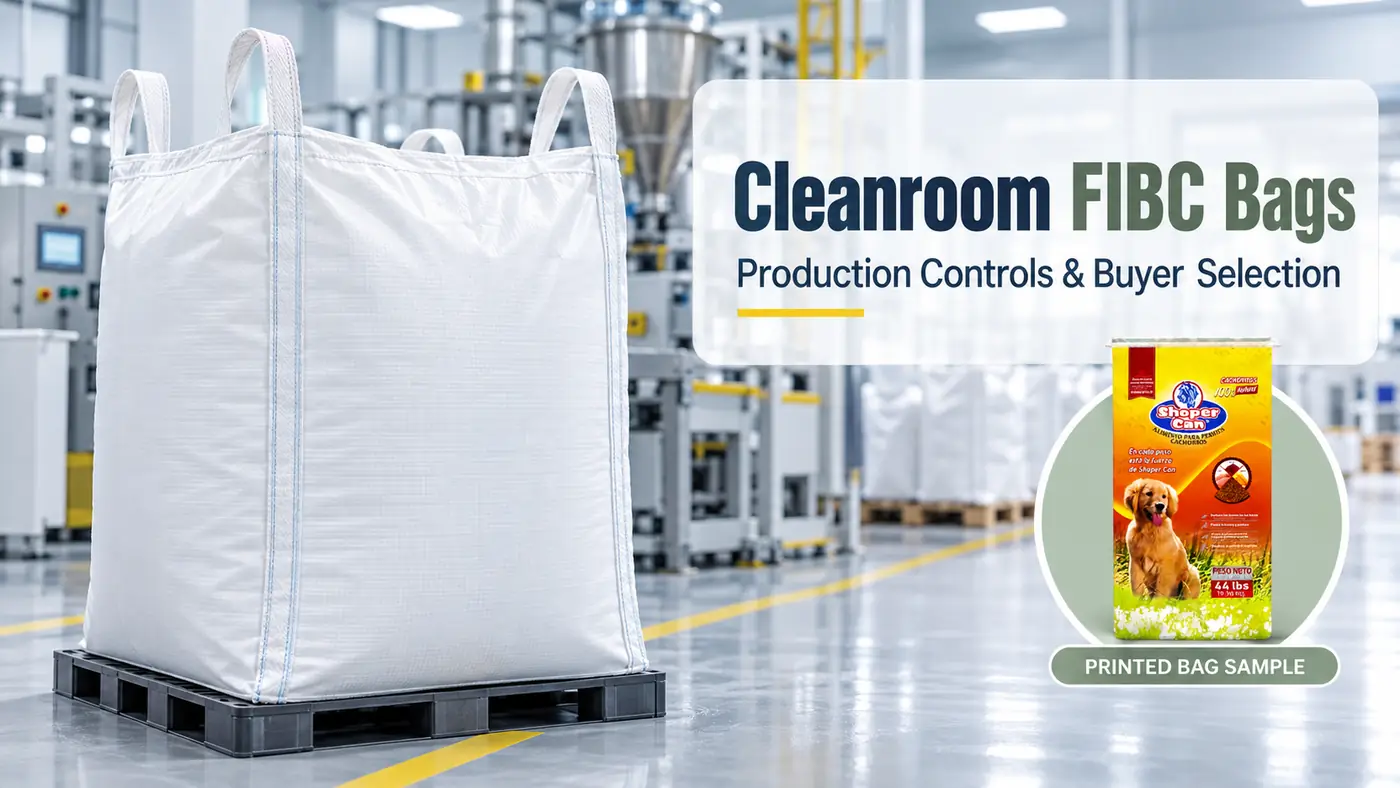
An FIBC (flexible intermediate bulk container) is a woven bulk bag for dry, flowable material. Its lifting loops are the parts designed to connect the filled bag to approved handling equipment. Single loop FIBC bags present one intended lifting point; four-loop bags have four intended points, usually positioned around the top corners. The exact loop and body construction varies, so confirm it on the supplier’s drawing rather than judging a photo.
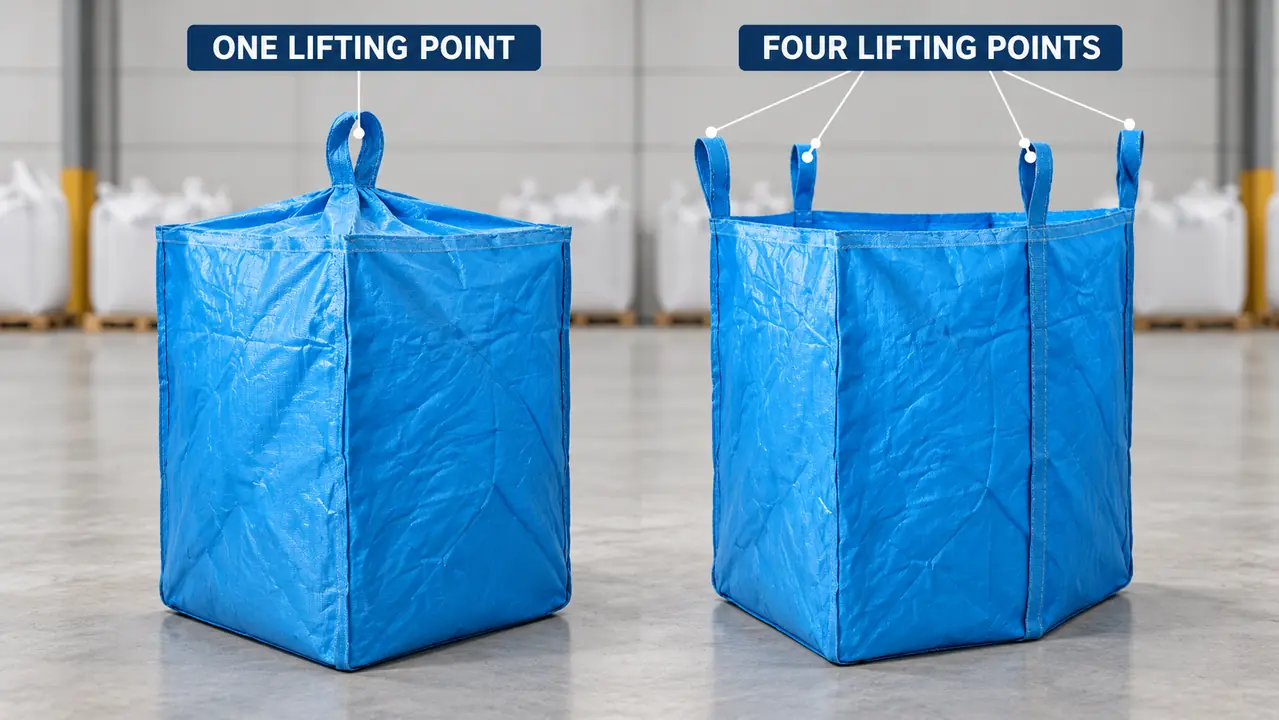
| Buyer question | Single-loop design | Four-loop design |
|---|---|---|
| How is it picked up? | At the one designed lifting point, with equipment approved for that bag. | At all four designed lifting points, using the approved fork or lifting arrangement. |
| What is the main advantage? | A simpler connection where the handling system is built for one point. | Four attachment points can suit equipment and processes set up for corner loops. |
| What needs checking? | Hook or attachment shape, clearance, bag alignment and the tested lifting arrangement. | Whether all four loops are engaged correctly, fork spacing, clearance and loop protection. |
Loop count alone does not set capacity, price or reuse permission. Compare actual designs in XIFA’s FIBC construction options and FIBC product range, then request a drawing for the proposed bag.
If a filling station, crane or purpose-designed forklift attachment uses a single connection, single loop FIBC bags may be practical. Check that the hook or attachment fits the loop without cutting, bunching or twisting it, and that the bag can be lifted and set down without a sideways pull. A single visible loop on a bag does not, by itself, approve every hook or forklift method.
Walk through the full route: filling station, local transfer, warehouse, container loading and the receiver’s unloading equipment. If the receiver cannot handle the one-point design, a faster first lift will not help. XIFA’s guide to FIBC handling provides broader storage and movement considerations.
Four-loop bags may fit a line that already lifts through four corner loops. The operator must use the lifting arrangement specified for that bag, engage every intended loop and keep the load controlled. Never lift a four-loop bag by only one or two loops unless the manufacturer has expressly approved and tested that exact method; see FIBCA’s handling guidance. Check fork spacing, edge protection and travel clearance at the destination as well as at your own site.
If your process is mixed, consider whether an approved alternative FIBC product configuration is needed. Do not assume a cross-corner or two-loop bag can be used as a single-point bag without its specific lifting instructions.
There is no reliable price or load answer from loop count alone. Bag fabric, seams, loop construction, dimensions, liner, filling and discharge openings, order quantity and testing all affect the quotation. Single loop FIBC bags may reduce connection steps in a suitable line, while four-loop bags may fit equipment that a buyer already owns. Compare the total handling process and the same approved specification, rather than unit prices for unlike bags.
Ask for the safe working load (SWL): the maximum product weight that the specific bag is designed to carry. The safety factor (SF) describes a test margin; a 5:1 or 6:1 figure does not mean you can fill a bag to five or six times its SWL. The label, design and test record must match the proposed contents and handling method. Seam and loop attachment quality also matter; see XIFA’s FIBC sewing and manufacturing guide.
Send the supplier a short handling brief rather than asking only for “one loop” or “four loops”:
For single loop FIBC bags, ask specifically for the approved one-point lifting drawing and test evidence. For four-loop bags, confirm the four-loop engagement method. XIFA describes quality checks across its packaging operations, but your purchase should identify the records that apply to the exact FIBC construction ordered.
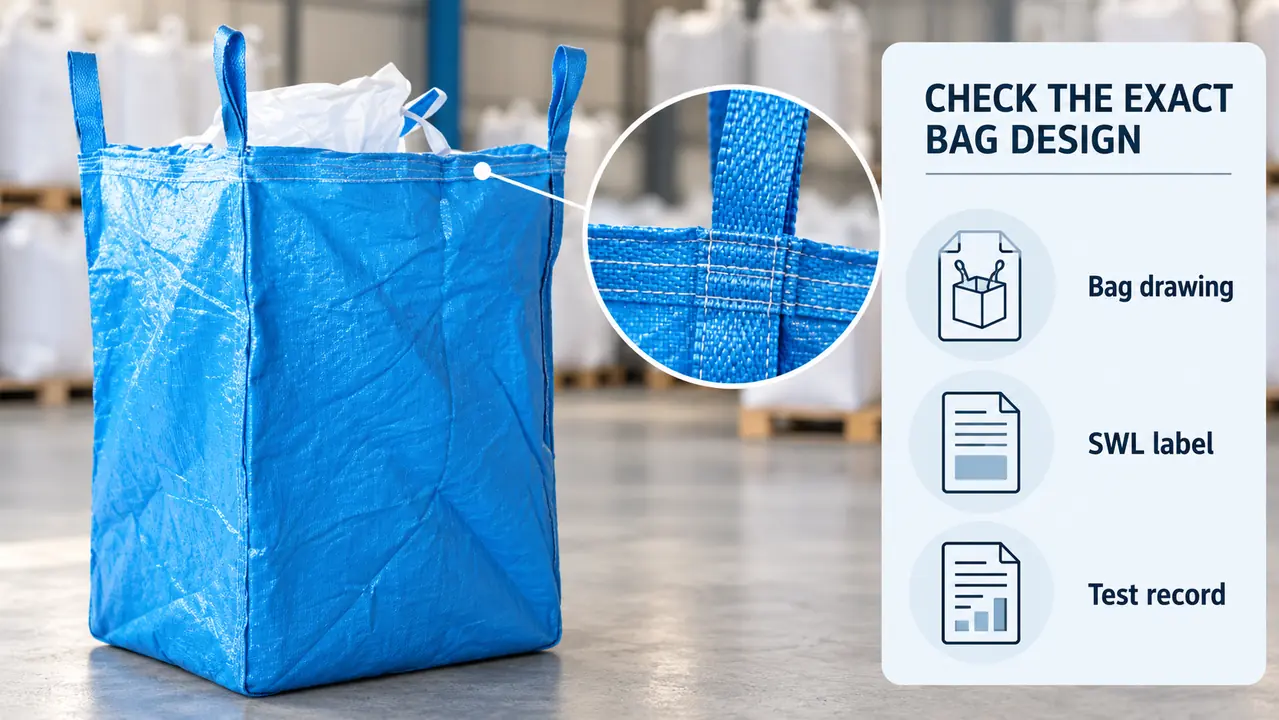
Choose the loop layout that fits every approved lift in your supply chain. One-point handling can suit single loop FIBC bags; equipment designed for four separate points can favour four-loop bags. In both cases, confirm the lifting method and rated bag before production. Share your material, target fill weight, handling equipment and expected order volume with XIFA’s team to review a suitable construction and quotation.