



 by Simin Xiang
Quick Answer: A ventilated bulk bag is a flexible intermediate bulk container (FIBC) with open-weave fabric or mesh panels that let air move around packed goods. It can suit onions, potatoes or firewood when airflow helps manage surface moisture and heat. It does not dry wet stock or protect it from rain on its own. Buyers should check the product, vent layout, safe working load, filling and lifting method, hygiene needs and storage conditions. XIFA can review these details for a custom bulk-bag specification.
If you are sourcing breathable packaging, the key question is whether the whole handling system lets air reach the load. This guide explains when a ventilated bulk bag makes sense, when a more enclosed design is safer, and what to confirm before approving a sample or repeat order.
Ventilation is useful when packed goods need some air exchange during storage or transport. Mesh or open-weave side panels create a path for moving air, which may help release heat and surface moisture. This is why buyers often consider ventilated bulk bags for whole onions, potatoes and other produce, or for firewood. The design still needs to match the product’s condition and journey.
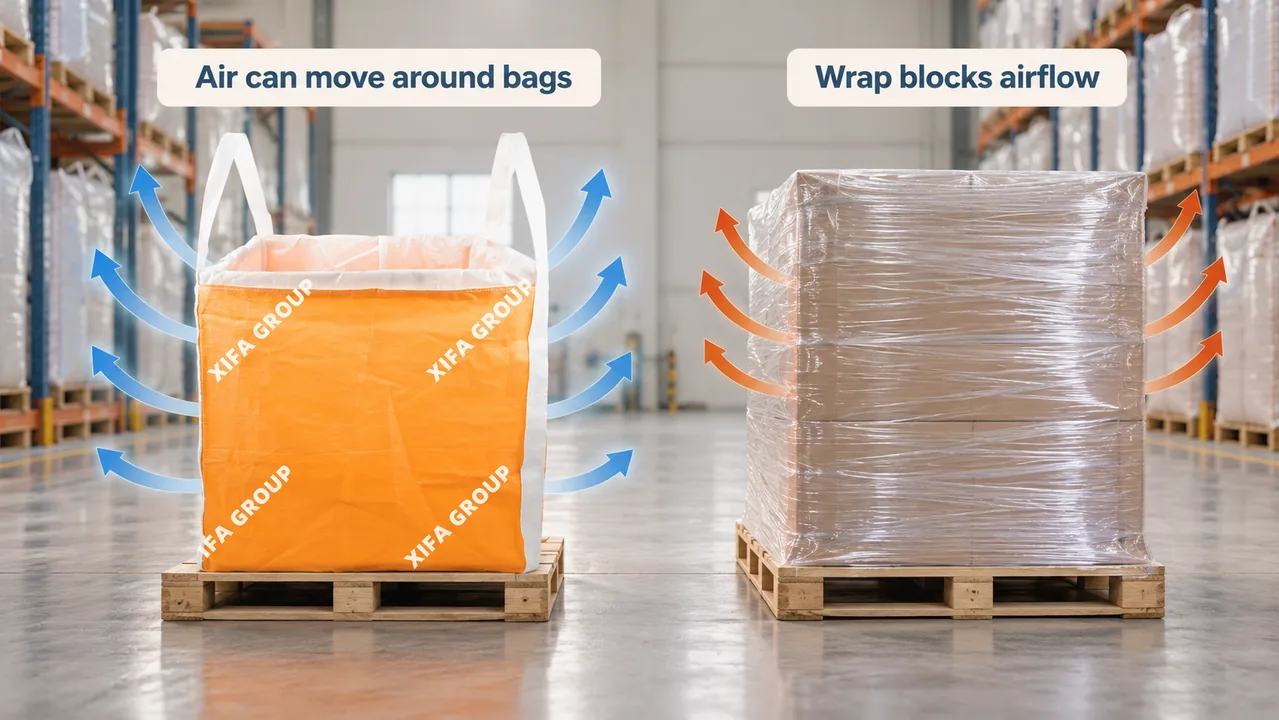
Airflow through a bag only helps if air can also move around it. A tightly wrapped pallet, dense stacking or a poorly ventilated container may block the openings. Wet product may need curing or drying before packing; a breathable bag cannot replace that process. Buyers planning longer storage should review FIBC storage and maintenance alongside the bag design.
Fine powders, dusty materials and goods that must be shielded from external moisture usually need a more enclosed construction. A ventilated bulk bag can let fine particles escape and allow rain, dust or pests in. A coated bag or liner may be more appropriate, but it changes the moisture and airflow balance. Start with XIFA’s FIBC bulk bag range if your material needs containment rather than ventilation.
Do not assume every crop needs the same opening pattern. For produce, ask how it is prepared before packing, how long it will stay in the bag and what temperature and humidity it will face. For firewood, check piece size, sharp edges and whether the wood is already dry enough for the planned route.
A ventilated bulk bag may use open-weave polypropylene (PP) fabric, mesh panels or ventilation strips. PP is the woven plastic material that forms many bulk bags; open-weave areas leave more space for air to pass. More exposed area is not automatically better. The panel layout must also hold the load, retain the contents and work with the filling equipment.
Ask for a drawing that shows the vent locations and dimensions, the solid fabric areas, and the top and bottom openings. If bags will sit close together, check which sides remain exposed. A filling trial can show whether the product bulges into the panels or catches on the mesh. XIFA’s FIBC type overview helps buyers compare body, loop and opening options before settling on one layout.
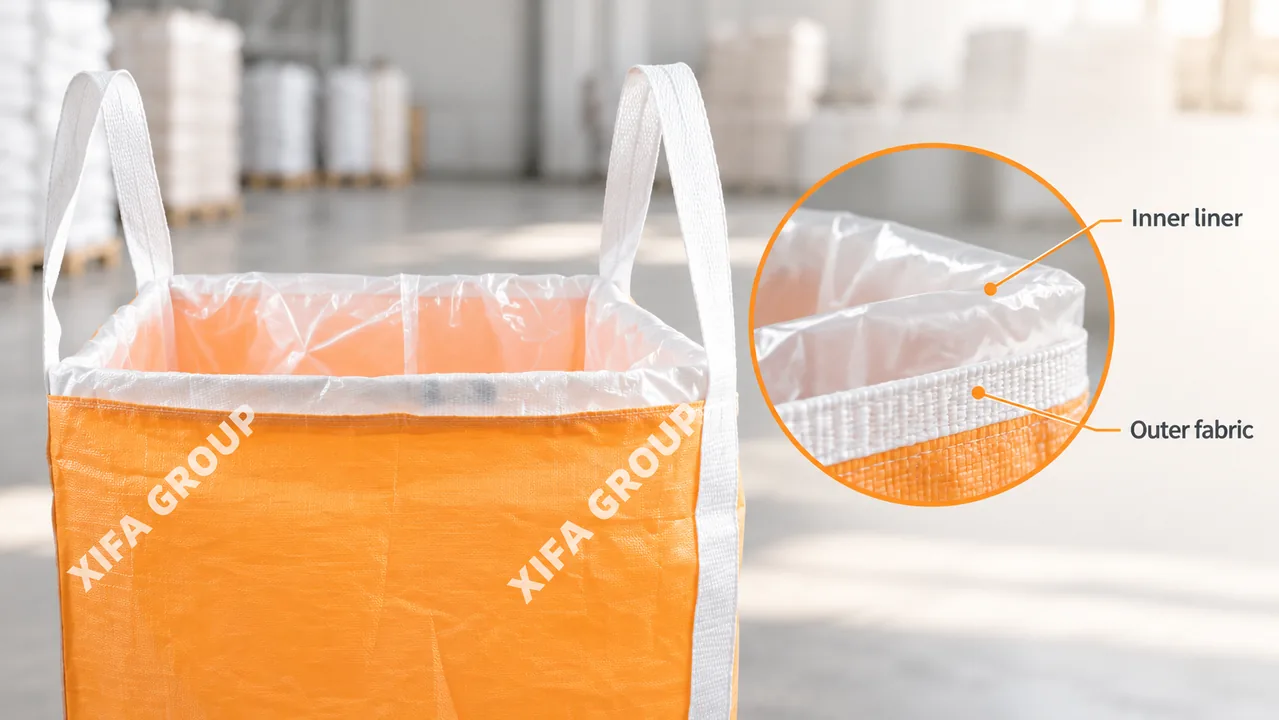
Usually, an unbroken inner liner blocks air from reaching the contents through the side panels. A liner may still be needed for a separate cleanliness or barrier requirement, but the buyer should then verify what ventilation remains. If both needs appear in a brief, specify which matters most and test the proposed complete bag rather than combining features by assumption.
1. Product and route. State the commodity, its condition at filling, target storage period, climate, exposure to rain and intended stacking. These details determine whether airflow is useful and whether the packing plan actually permits it.
2. Rated load and volume. Request the safe working load (SWL), the maximum net weight approved for that particular bag design. Match it to the intended fill weight, bulk density and filled dimensions. A safety factor is a test/design margin, not extra payload you can add to the SWL. Ask for the test evidence for the finished construction, including its vent panels, seams and loops.
3. Filling, lifting and emptying. Confirm the top style, filling line clearance, lifting equipment, loop arrangement and discharge method. The same loop shape does not authorise every lifting setup. XIFA’s guide to FIBC top openings can help narrow the filling choice.
4. Product contact and cleanliness. For produce or other food-contact use, ask what part of the bag touches the product, how the bags are made and packed, and which current declarations or test reports cover the exact materials and destination market. A ventilated bulk bag is not automatically suitable for food contact. Review XIFA’s food-grade FIBC options as an order-specific starting point.
5. Inspection and traceability. Agree on checks for panel openings, stitching, dimensions, contamination and load performance, then request records tied to the order. XIFA describes raw-material, in-process and outbound checks in its quality-control process; buyers should agree on the actual acceptance plan for their ventilated design.
Send the packed product, fill weight, target bag dimensions, top and bottom preferences, lifting method, quantity, destination and planned use period. Include photos or drawings of your filling line and current bag if available. For produce, add the product’s condition at packing and your storage layout; for firewood, add piece size and edge characteristics. State any food-contact, UV exposure or test-document requirements so they can be checked against the proposed construction.
In short: Choose a ventilated bulk bag when the goods and the full storage route benefit from airflow, then verify the exact bag against your load, handling and hygiene needs. Planning a recurring bulk order? Contact XIFA with your specification and shipment plan to review a suitable design.