



 by Simin Xiang
Quick Answer: The right super sack size depends on three separate checks: how much space your product needs, how much the filled bag will weigh, and whether its dimensions fit your filling and handling equipment. Start with the product’s bulk density and target fill weight, then check the bag’s usable volume and safe working load (SWL). Finally, confirm the pallet footprint, lifting loops and spouts. XIFA can tailor these features to an agreed specification, helping buyers compare bags on the same practical basis.
This guide shows how to make those checks and what to send a supplier before requesting a quote. A flexible intermediate bulk container (FIBC), often called a bulk bag or super sack, holds dry, flowable material in a woven fabric body. There is no single super sack size that suits every product or filling line.
Ask for the body length × width × height, with each axis named on a drawing. Also state whether the measurements are internal or external and whether height includes the loops. A label such as “90 × 90 × 110 cm” is incomplete if it does not identify the axes or measurement points. Filled bags can bulge, so a flat, empty-bag measurement alone will not tell you the loaded footprint.
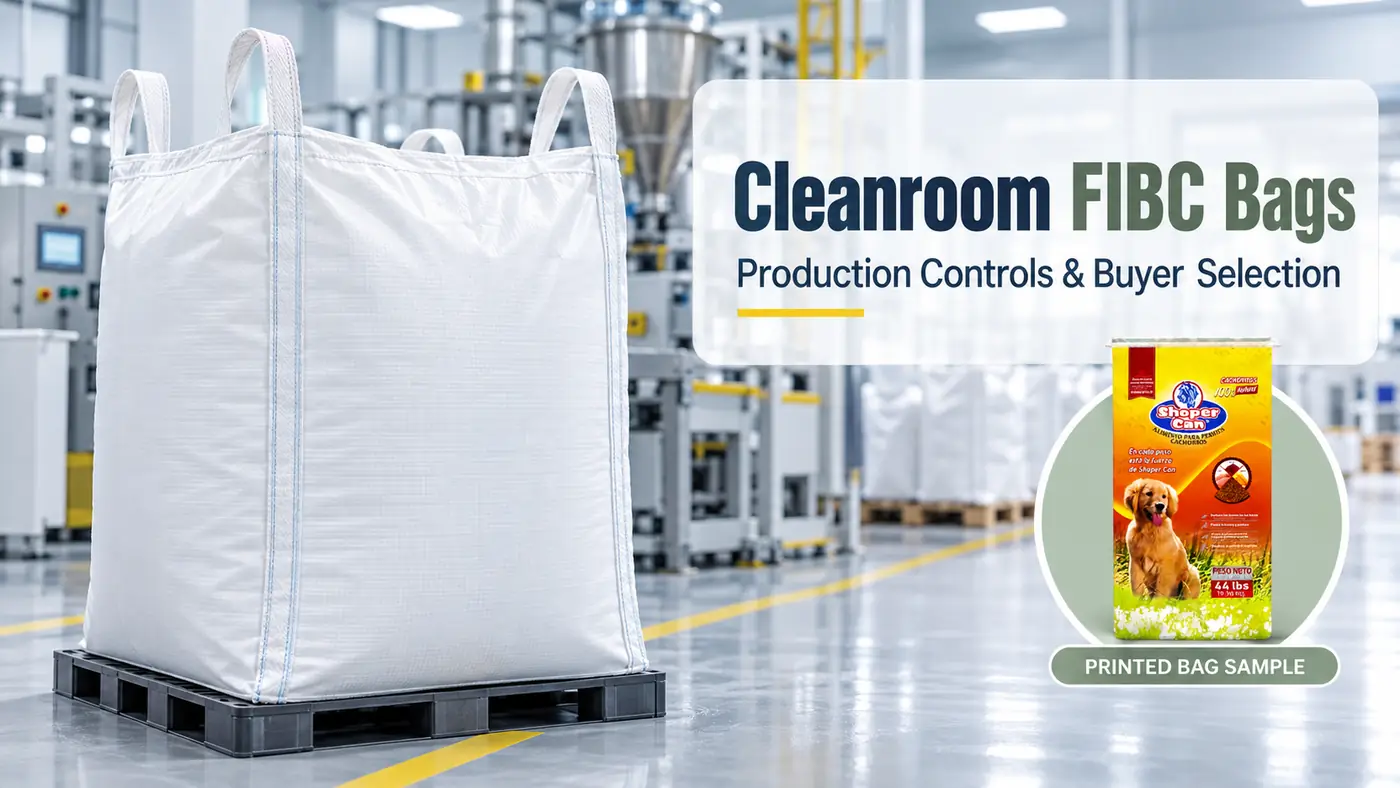
Measure the available pallet space, warehouse height, container clearance and forklift or hoist arrangement. Leave room for the lifting loops and filling head above the bag. XIFA’s published FIBC catalogue shows several dimension sets and top and bottom layouts; use them as discussion points, then request an order-specific drawing rather than treating one set as a universal standard. Explore the XIFA FIBC range and its bag construction options before fixing the footprint.
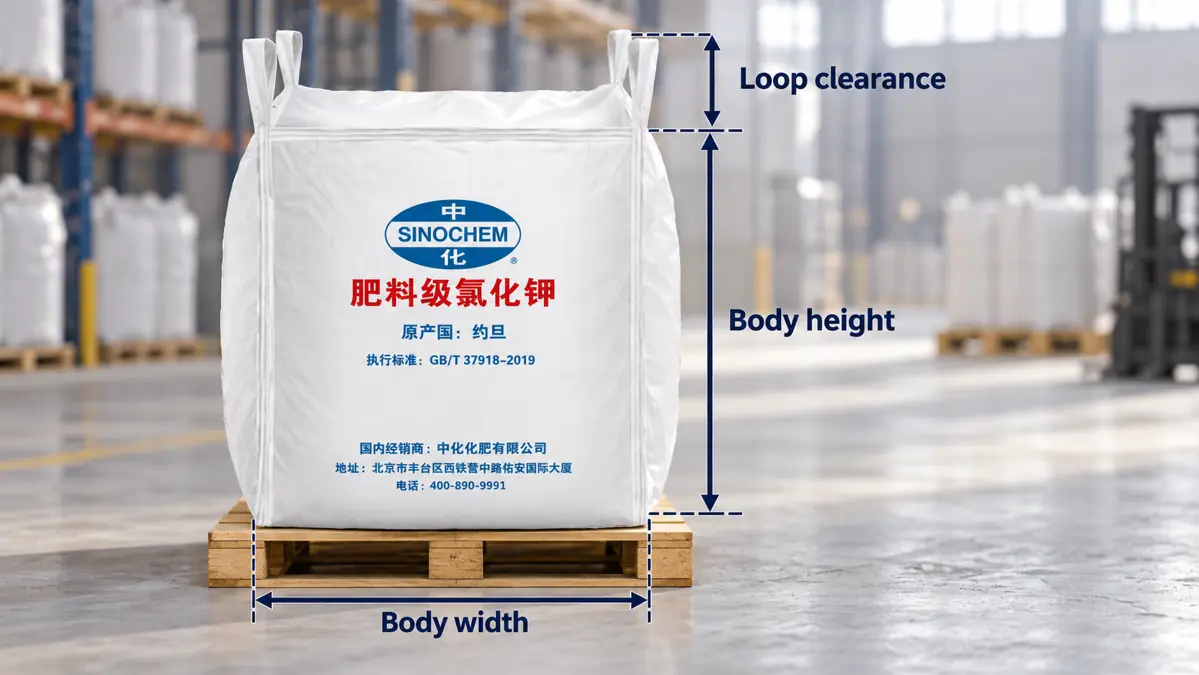
For a rectangular body, estimate volume in cubic metres by multiplying its internal length, width and height in metres. For example, 0.90 × 0.90 × 1.10 m = 0.891 m³. This gives a starting point for comparing super sack size options, not a promise of usable fill: seams, shape, the top closure and headspace can reduce the practical volume. A baffle bag has internal panels that help limit bulging and hold a squarer shape, but its usable fill still needs checking with the actual product.
To estimate filled product weight, multiply usable volume by bulk density—the mass of a loose product per cubic metre, including the spaces between its particles. If a trial establishes 0.80 m³ of usable fill and the product’s bulk density is 900 kg/m³, the estimated product weight is 720 kg. These numbers illustrate the method; they are not XIFA ratings or a density for all powders. For a fuller walkthrough, see XIFA’s FIBC dimension and capacity calculation guide.
A lighter, less dense product takes up more space at the same target weight. A denser product may reach the weight limit while much of the bag remains empty. Ask for the product’s loose and settled bulk density if filling or transport changes how it packs. Then verify the proposed super sack size in a filling trial; do not choose height from nominal weight alone.
No. Volume and load rating answer different questions. One cubic metre describes space; 1,000 kg describes mass. The required volume depends on your material’s bulk density, while the bag’s SWL is the maximum load it is designed to carry. Check both before approving a super sack size.
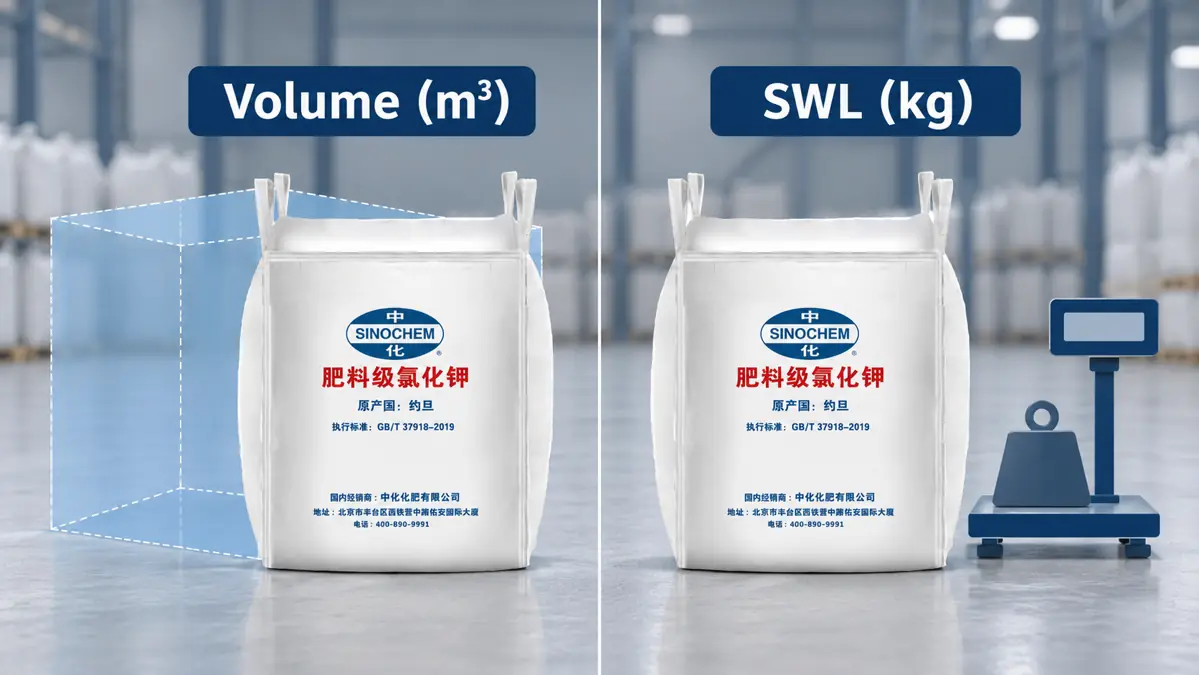
The safety factor (SF) is a strength-test ratio, commonly shown as 5:1 or 6:1. It does not permit filling a 1,000 kg SWL bag with 5,000 or 6,000 kg. The approved SWL, bag construction and intended use must match the actual job. XIFA’s product information discusses designs within a 500–2,000 kg SWL range, but a specific rating belongs to a specific approved bag. Its guide to bulk bag weight and SWL explains the distinction in more detail.
An open top, duffle top or filling spout changes how a bag meets the filling head. A flat bottom or discharge spout changes how it empties. Specify the opening diameter, length, closure and required clearance; the body dimensions alone will not make a bag fit a line. XIFA offers these FIBC top, bottom and lifting options for order-specific selection.
If side bulge wastes pallet or container space, ask whether a baffle or four-panel construction helps maintain the target footprint. Confirm the filled dimensions with a sample or trial, especially before planning tight stacking. Check the lifting-loop position against your forks or hooks, and follow the approved handling instructions. A different loop layout does not automatically authorise a different lifting method.
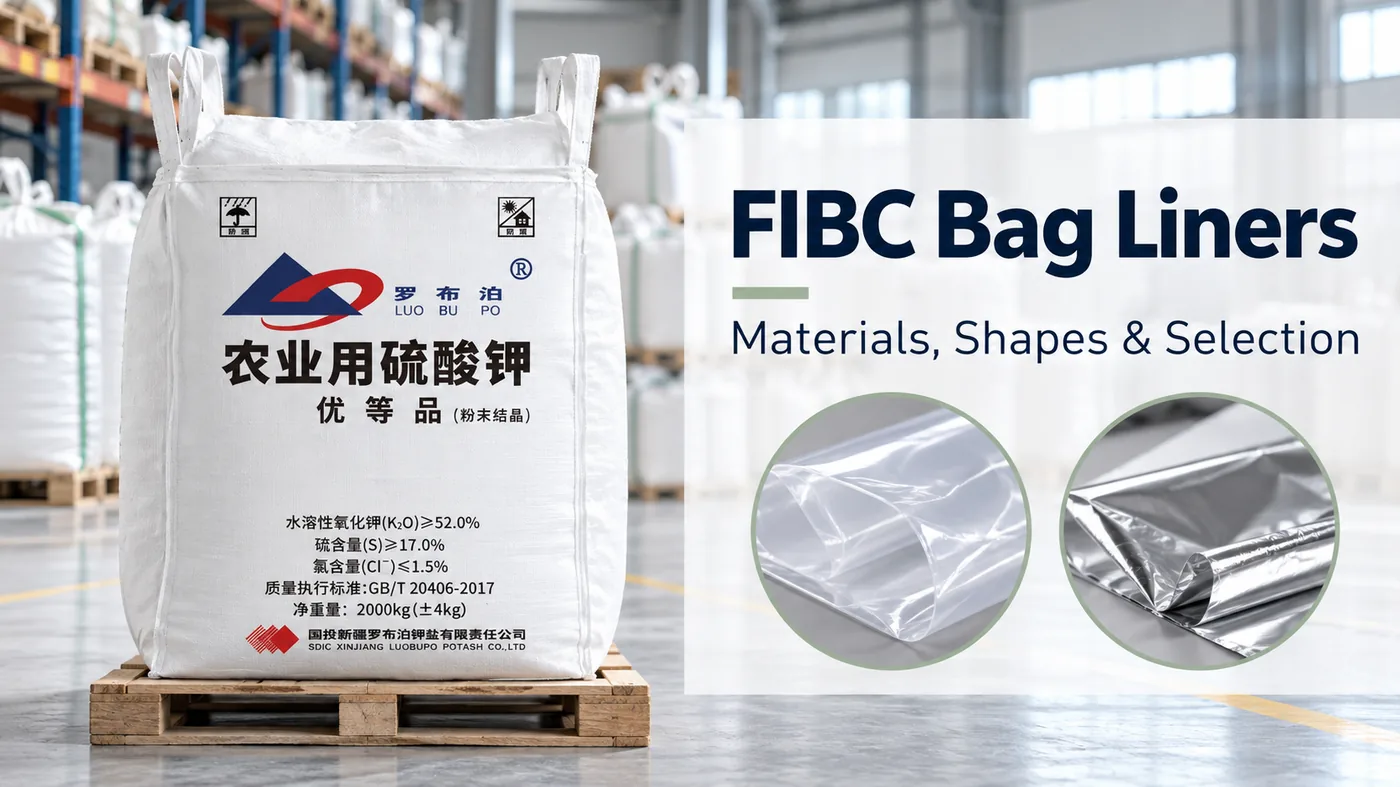
Fine powders may need an appropriate liner, coating or seam treatment to manage leakage; moisture-sensitive contents may also need a specified closure. Food-contact, static-sensitive or hazardous applications need their own material and test review. A larger super sack size does not solve these requirements. XIFA’s food-ingredient FIBC options show available constructions, but request documents that cover the exact bag and intended use.
Send the product name and handling requirements, target net fill weight, loose and settled bulk density, and the body size or pallet footprint you can accept. Add filling-head and discharge dimensions, lifting method, transport and storage conditions, liner or hygiene needs, order quantity and any required test or compliance documents. If you have a current bag, include its drawing and note what does not work.
That brief lets XIFA propose a super sack size and construction for review, then confirm the drawing, SWL, test scope and sample against your operation. The best size is the one that holds the intended fill within its rated load and works through your whole handling route. Send XIFA your requirements to discuss a practical bulk-order specification.