



 by Simin Xiang
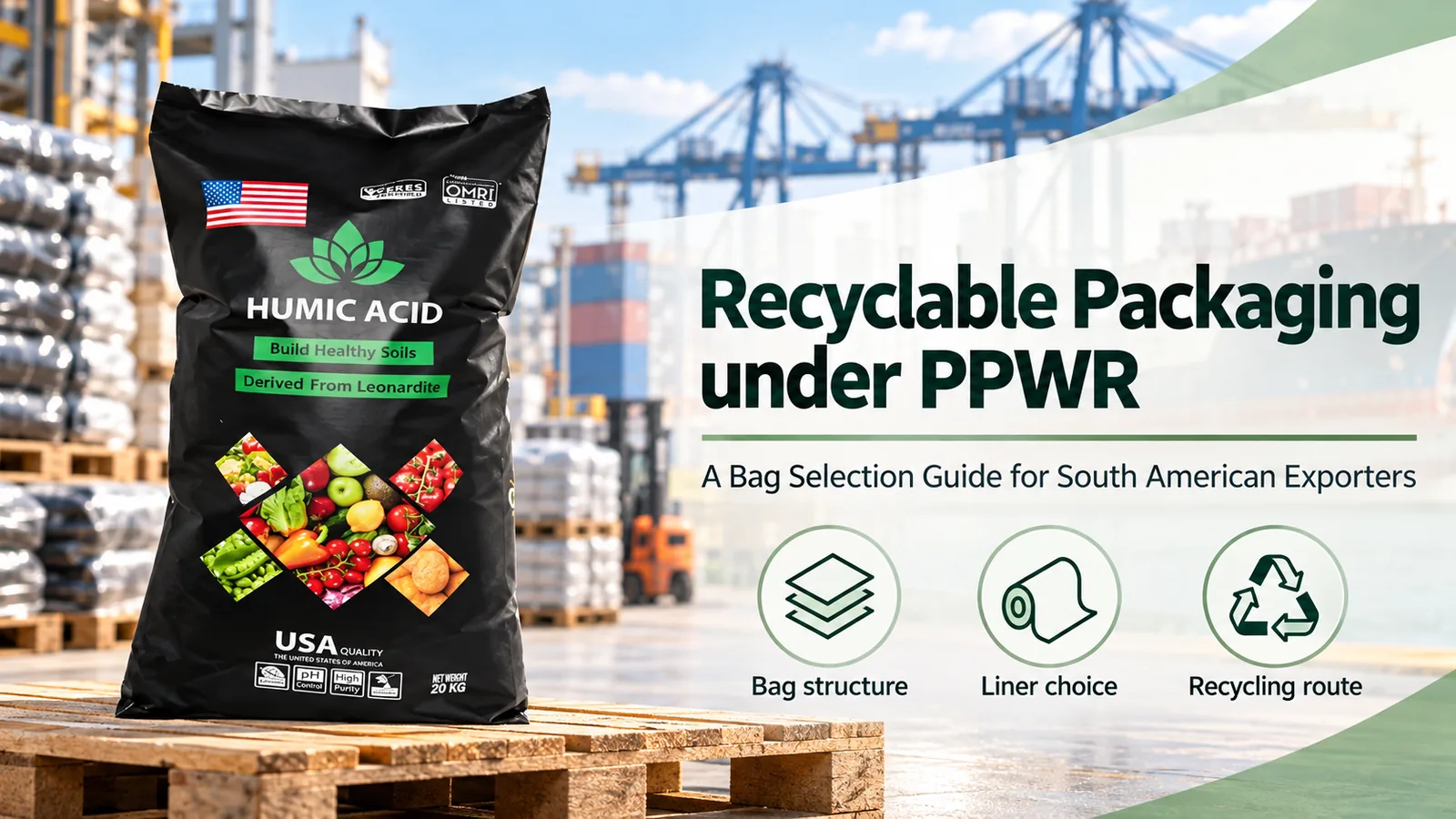
Quick Answer: For South American exporters shipping goods to the EU, recyclable packaging under the Packaging and Packaging Waste Regulation (PPWR) starts with the finished bag, not a resin label. Check every layer, liner, ink and closure, then confirm how the pack can be collected and recycled in its destination market. PPWR rules are phased, so ask your EU buyer which evidence is needed for this order and future designs. XIFA can help compare woven PP, laminated, PE and bulk-bag constructions against your contents and filling line.
If you export grain, feed ingredients, fertiliser or industrial powders, this guide helps you shortlist a bag and prepare a useful supplier brief. It focuses on packaging entering the EU; a South American sale that never reaches that market is a different regulatory question.
Yes, when the packaging is placed on the EU market with your goods. Regulation (EU) 2025/40 covers packaging regardless of its origin or material. It has applied in stages since 12 August 2026. Your EU importer should help identify the responsible economic operators and the documents needed before a shipment is placed on the market. For the wider timeline and roles, see XIFA’s PPWR overview.
The European Commission says detailed design-for-recycling and recycled-content measures begin from 2030. Article 6 also ties some dates to later EU acts, so check the rules in force when your design is approved. Planning recyclable packaging now reduces the chance of redesigning a printed bag during a repeat-order programme.
A polymer may be recyclable, yet the finished pack can still be difficult to sort or process. For recyclable packaging, PPWR looks beyond the main fabric: material combinations, coatings, labels, inks, adhesives and liners can all matter. “Mono-material” simply means a pack is made mainly from one material family; it is a helpful design direction, not an automatic compliance certificate.
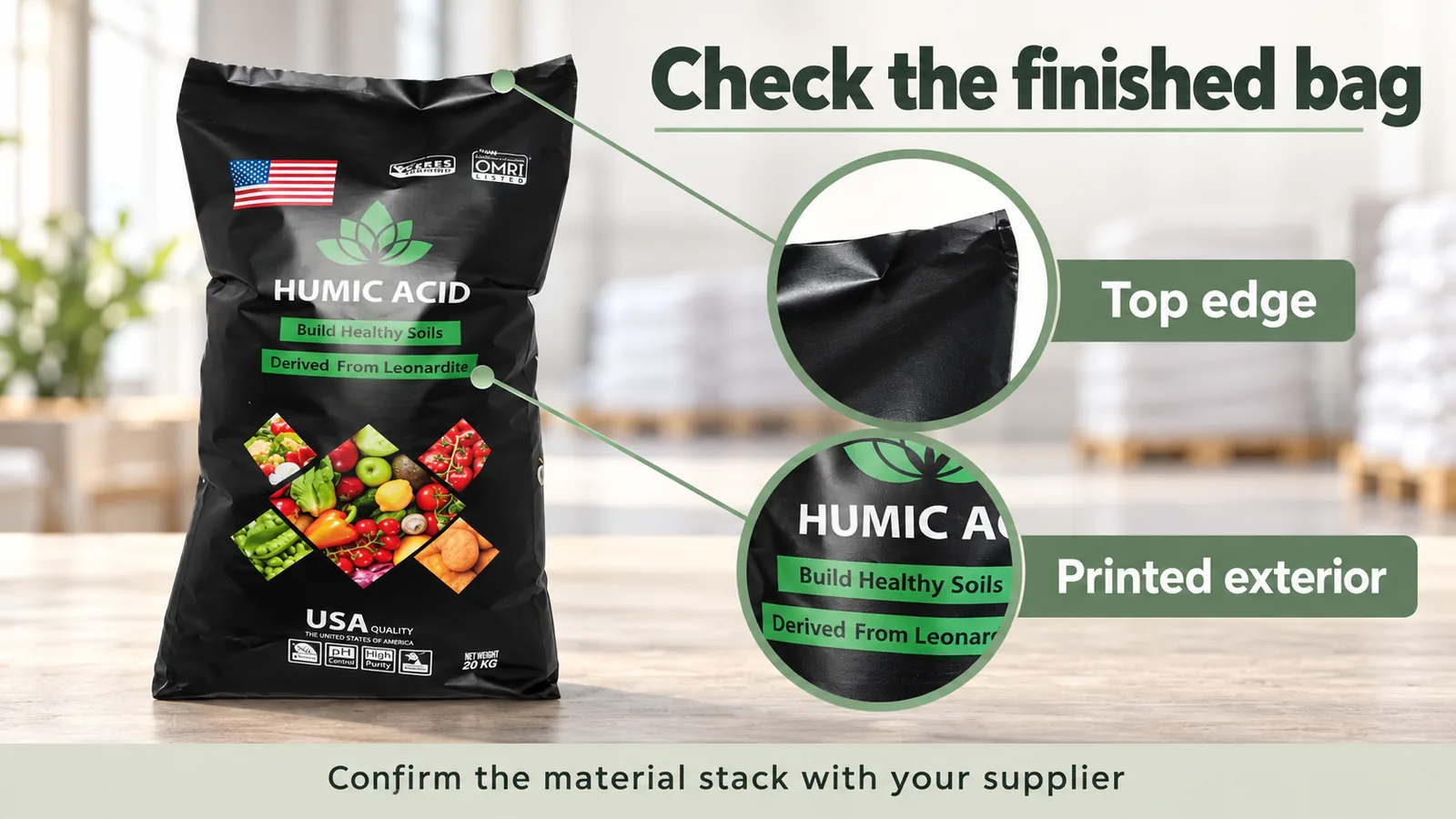
Ask how each component leaves the pack. Can a liner be removed? Will the remaining bag enter a suitable collection and sorting stream? Is there evidence for the complete construction, rather than just a raw-material claim? Recyclable packaging also needs to protect the contents and survive filling, storage and shipping. A failed bag creates waste regardless of its theoretical recycling route.
Use the simplest construction that meets the actual job, then assess its end-of-life route with your EU buyer. These are starting points, not PPWR approvals.
| Packaging choice | When to shortlist it | Recyclability question to ask |
|---|---|---|
| PP woven sack | Dry goods needing a strong, economical sack | Is the fabric uncoated, coated or lined, and how will each part be sorted? |
| BOPP laminated woven bag | Retail-facing goods needing detailed print | What are the film, woven layer, adhesive and optional liner, and can they be recycled together? |
| PE film bag | Products needing a sealed film format | Is it a single PE-family structure or a multilayer film needing separate assessment? |
| FIBC bulk bag | Large dry-bulk loads handled by lifting equipment | What are the fabric, loops, seams and liner; is there a real collection or reuse route? |
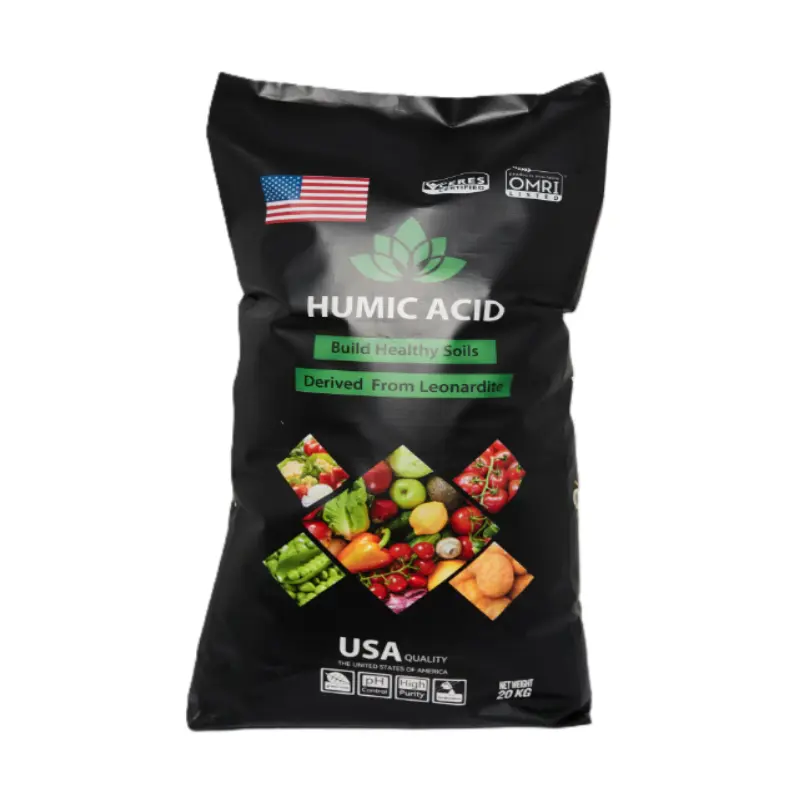
For powders on automated equipment, a valve bag may fit the filling process better than an open-top sack. Its paper, PP or composite structure still needs a separate recyclability check. Choosing recyclable packaging by appearance alone can miss the valve, coating or liner that changes the result.
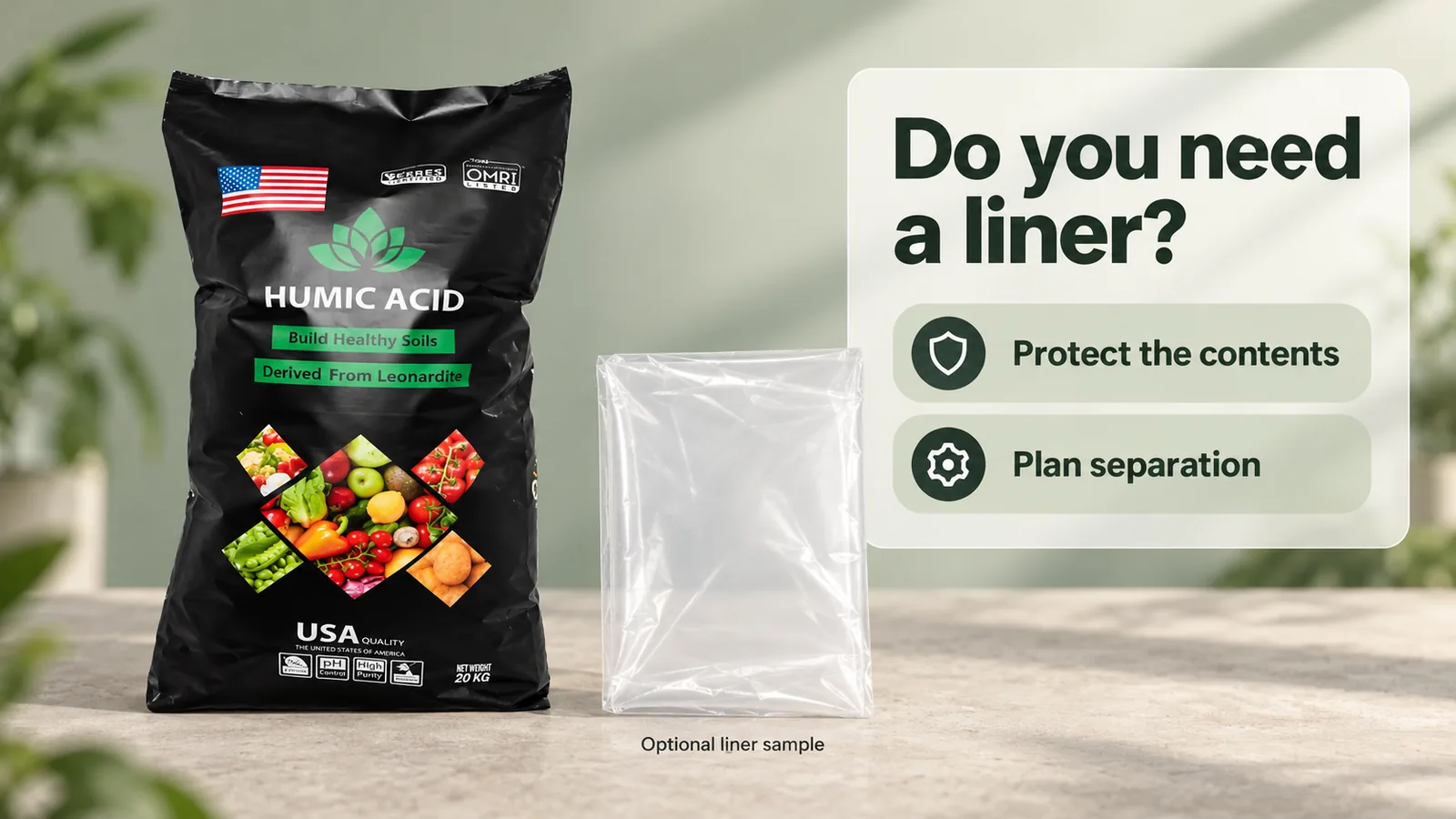
Only if the product can tolerate the change. A PE liner may help control moisture or fine-powder leakage, but it adds another component and can complicate collection if attached to the outer bag. Compare separate and attached liners, closure options and the destination recycler’s acceptance rules. XIFA’s bulk-bag liner comparison explains the protection trade-off.
No. Recycled content describes how much recovered material was used to make the new pack. Recyclability describes whether the finished pack can be collected, sorted and recycled after use under the applicable criteria. A bag may have one attribute without proving the other. If your buyer asks for recycled-content figures, request the applicable material and batch records rather than inferring a percentage from a “green” label.
Send a recyclable packaging specification for the filled product, not just a bag photo. Include contents, net weight, food-contact status, filling method, bag dimensions, shipping and storage conditions, printing, destination countries and expected repeat volume. Then ask the supplier and EU buyer to agree on:
XIFA’s published quality-control process covers material, process and finished-bag checks. Ask which records can be supplied for the exact construction and production batch. That keeps a recyclable packaging claim tied to evidence buyers can review.
Shortlist one or two constructions that protect your product, work on your filling line and have a credible recycling route in the destination market. Have your EU buyer confirm the current PPWR duties and acceptance criteria before approving artwork or a recurring order. Recyclable packaging is a design and documentation decision, not a slogan printed on the bag.
Planning an EU-bound bulk order? Send XIFA your specification—contents, weight, bag size, liner need, artwork, volume and destination—so the team can compare suitable bag structures and identify the evidence to confirm before production.