



 by Simin Xiang
Super Sacks, bulk bags, and FIBC bags are often used interchangeably when referring to industrial packaging. However, each of these heavy-packaging bags actually differs based on materials, dimensions, and industry standards. Understanding these various differences is essential for selecting the right packaging solution for your business needs.
Read on to learn more.
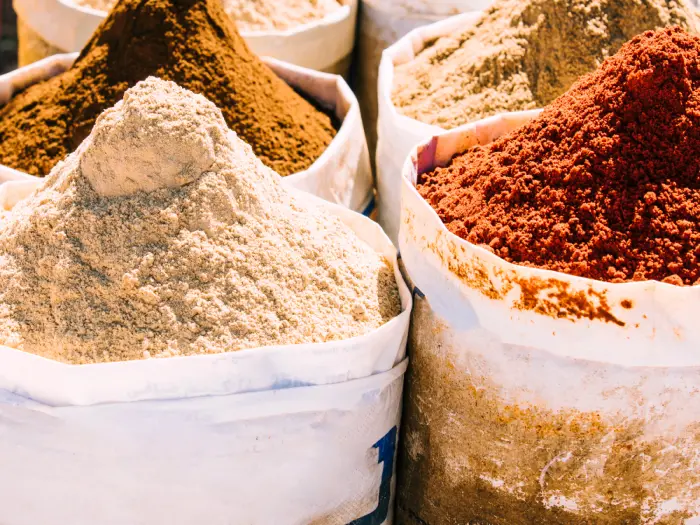
Sack bags in industrial packaging serve as flexible, high-capacity containers for transporting and storing bulk materials such as powders, granules, or liquids.
> Agriculture
> Chemicals
> Construction
> Pharmaceuticals
Thanks to their durability and reusable features, sack bags can reduce shipping costs, protect products from contamination, and simplify transporting large volumes of goods.
Sack bags are known by various names depending on the region and industry. The following bag packaging terms show their functions for bulk storage or shipment:
Flexible Intermediate Bulk Containers (FIBCs) are large, woven bags that can carry up to 2,000 to 4,000 lbs (approximately 900–1,800 kg) of bulk materials. FIBC bags are typically made from polypropylene fabric — abbreviated as PP bags — and are manufactured in compliance with ISO 21898 and (for hazardous goods) the UN Recommendations on the Transport of Dangerous Goods. Each FIBC carries a Safe Working Load (SWL) and a Safety Factor (SF) rating of 5:1 for single-trip or 6:1 for multi-trip bags.
Polypropylene (PP) is a thermoplastic polymer material that is lightweight but highly durable.
Many FIBC bags that are made from PP material are treated for UV stabilization, which can withstand prolonged exposure to sunlight with minimal damage.
This is why FIBC bags are ideal for outdoor storage of bulk materials.
This bag is technically a specific type of FIBC bag. However, you may hear people referring to any industrial bag as a super sack — it has become a common synonym (a “genericized trademark”) for industrial packaging bags. No wonder, these sacks are made with the same material as FIBC bags.
Like FIBCs, bulk bags are made of woven PP and are durable enough to hold up to 4,000 lbs of material.
It’s important to distinguish that bulk bags are more of a general term used in the packaging industry.
Unlike standard-size products like the Super Sack, bulk bags may not meet stringent requirements.
| Feature | Bulk Bag | FIBC | Super Sack® |
|---|---|---|---|
| Term Type | Generic commercial | ISO standardized (21898) | Registered trademark |
| Owner | Public domain | ISO / industry | BAG Corp / Mauser |
| Material | Woven PP (most common) | Woven PP / coated PP | Woven PP, often premium grade |
| SWL Range | 500–2,000 kg | 500–2,000 kg | Up to 2,000 kg |
| Safety Factor | 5:1 or 6:1 | 5:1 or 6:1 | Typically 5:1 |
| UN Certified | Optional | Optional (per UN PG) | Optional (per UN PG) |
| Cost Range | $1–$15 typical | $1–$20 typical | $2–$25 typical |
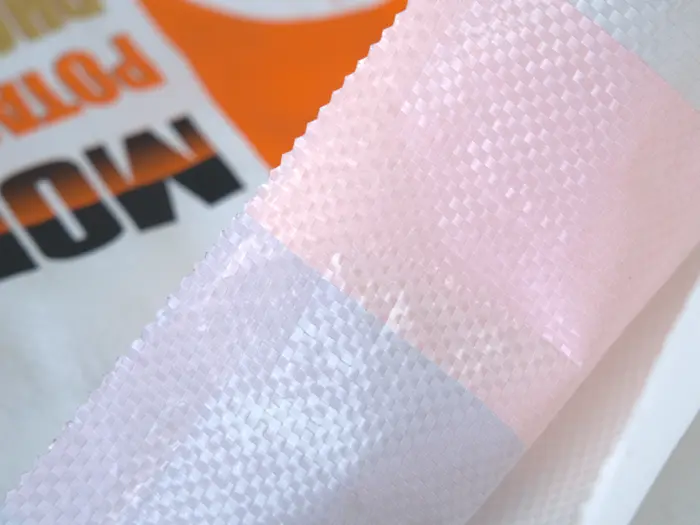
Primary material used in most industrial bags for packaging due to its lightweight, durable, and flexible features.
Some packaging bags include additional coatings to protect materials from moisture and UV rays.
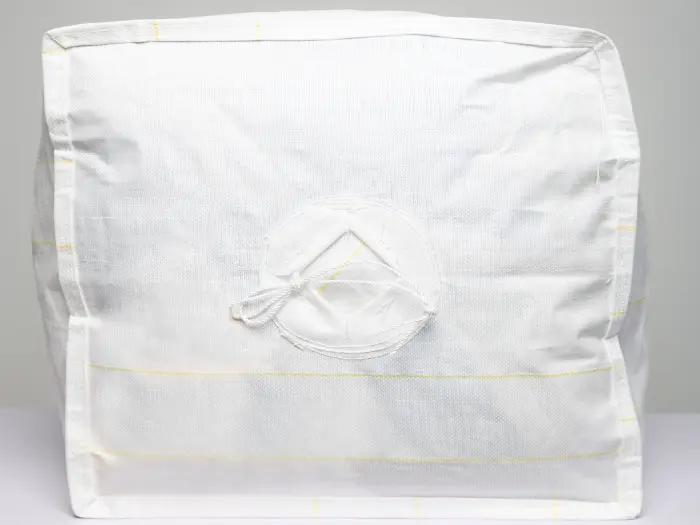
Used to prevent static electricity buildup when transporting powders or goods that are prone to fires or explosions.
Used for safely transporting hazardous goods or substances.

| Dimension | |
| Width | Typically range from 35 to 51 inches. |
| Height | Around 30 to 80 inches; can vary depending on the application. |
| Volume Capacity | These bags usually have a volume capacity of 1 to 3 cubic meters. |
| Customization | Custom sizes are available to meet specific material-handling requirements. |
Super Sacks, bulk bags, and FIBCs must meet industry standards such as ISO and UN certifications, particularly for transporting hazardous materials.
These standards ensure the bags’ durability, safety, and environmental sustainability.
Compliance with these regulations is crucial in industries where material spillage or contamination could lead to safety hazards or environmental damage.
For example, Type C and D FIBCs are designed to safely dissipate static charges, reducing the risk of fires or explosions when handling flammable materials.
Finding the right packaging can be difficult. If you’re scouting for industrial sack bags for your business or personal use, consider these questions.
Powders may need lined bags for moisture protection, while sharp materials need reinforced fabrics for durability.
Bulk bags hold between 2,000 to 4,000 lbs. Choose larger bags for light materials and smaller, durable bags for heavy or dense products.
Lined bags offer moisture and contamination protection — for food-grade materials or sensitive products.
Choose a flat bottom, cone bottom, or spout bottom. Spout bottoms are ideal for controlled granular discharge, while cone bottoms help with complete emptying.
Baffled bags maintain shape, ideal for maximizing warehouse space, while standard bags offer more flexibility.
Use static dissipative bags (Type C or D) for flammable powders to reduce static discharge risk in explosive environments.
Ensure bags fit with existing equipment, like sack lifters or automated systems. Loops or sleeves can simplify lifting processes.
For fine powders, consider dust-free unloading systems like sealed spouts or dust collection systems to improve safety and efficiency.
Single-trip bags are cheaper upfront, but multi-trip bags offer long-term savings for companies with ongoing material transport needs.
Assess if stackable or collapsible bags meet your space and transport needs. Stackable bags save storage space, while collapsible ones are space-efficient when not in use.
Yes, the terms are largely interchangeable in commerce. FIBC is the technical designation (Flexible Intermediate Bulk Container) under ISO 21898; “bulk bag” is the generic commercial term. Both refer to large woven polypropylene containers typically rated 500–2,000 kg SWL.
Super Sack® is a registered trademark of BAG Corporation (now Mauser Packaging Solutions). Over time the term has become generic in procurement usage, but legal contracts should use “FIBC” or “bulk bag” to avoid trademark ambiguity.
For flammable powders or explosive atmospheres, select Type B (low breakdown voltage ≤6 kV), Type C (conductive, must be grounded), or Type D (static-dissipative, no grounding required) FIBC bags that meet IEC 61340-4-4.
XiFa Group, located in China’s “Plastic Weaving Capital,” is a leading manufacturer of high-quality woven bags and Super Sacks.
With 23 years of experience and a 72,000-square-meter facility, XiFa is equipped with advanced production lines, including 11 gravure color printing and 17 automatic bagging machines.
Known for quality and integrity, XiFa has become one of the largest color-printed woven bag producers in China, offering reliable and customized packaging solutions for various industries.