



 von Simin Xiang
Wer schon einmal an einem Sommernachmittag einen Sack Holzkohle aufgerissen hat, kennt die Frustration: eine aufgeplatzte Naht, überall Holzkohlestaub und ein Produkt, das aussieht, als hätte es den Transport kaum überstanden. Dieser Moment ist nicht nur ärgerlich für den Endkunden. Er signalisiert, dass irgendwo in der Lieferkette die falsche Verpackungsentscheidung getroffen wurde.
Holzkohle aus Stückholz ist eines der heikelsten Produkte beim Verpacken. Sie ist kantig, schwer und verrutscht ständig beim Transport. Der Sack, in dem sie verpackt ist, ist nicht nur ein Behälter – er ist die letzte Verteidigungslinie zwischen Ihrem Produkt und einer schlechten Bewertung. Die richtige Wahl ist daher entscheidend. BBQ-Holzkohlebeutel Es ist wichtiger, als die meisten Menschen ahnen, und es beginnt damit, zu verstehen, was tatsächlich verfügbar ist.
Holzkohle erzeugt einen konstanten Innendruck. Beim Stapeln der Säcke, beim Verladen auf Paletten und beim Hin- und Herwerfen in den Containern reiben scharfe Kanten an der Innenfläche. Die Folge ist vorhersehbar: Es entstehen kleine Löcher, die sich bei unzureichender Reißfestigkeit zu Rissen ausweiten. Die Konsequenzen sind gravierend: Produktverlust, beschädigte Ware für Kunden und ein Imageschaden.
Feuchtigkeit verschärft das Problem. Holzkohle ist von Natur aus hygroskopisch, das heißt, sie zieht aktiv Feuchtigkeit aus der Umgebungsluft an. Sobald sie genug Feuchtigkeit aufgenommen hat, lässt sie sich schwer entzünden und erzeugt übermäßig viel Rauch – beides ist für den Benutzer ärgerlich. Wirksam Säcke mit Holzkohle für den Grill müssen gleichzeitig sowohl mechanische Festigkeit als auch Feuchtigkeitsbeständigkeit aufweisen.
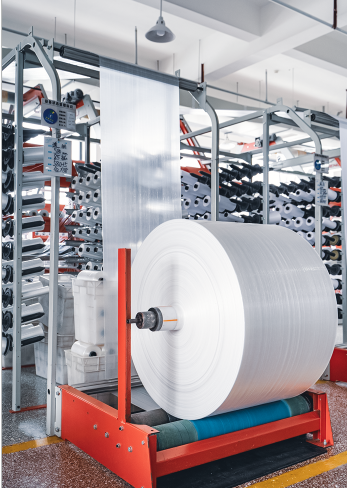
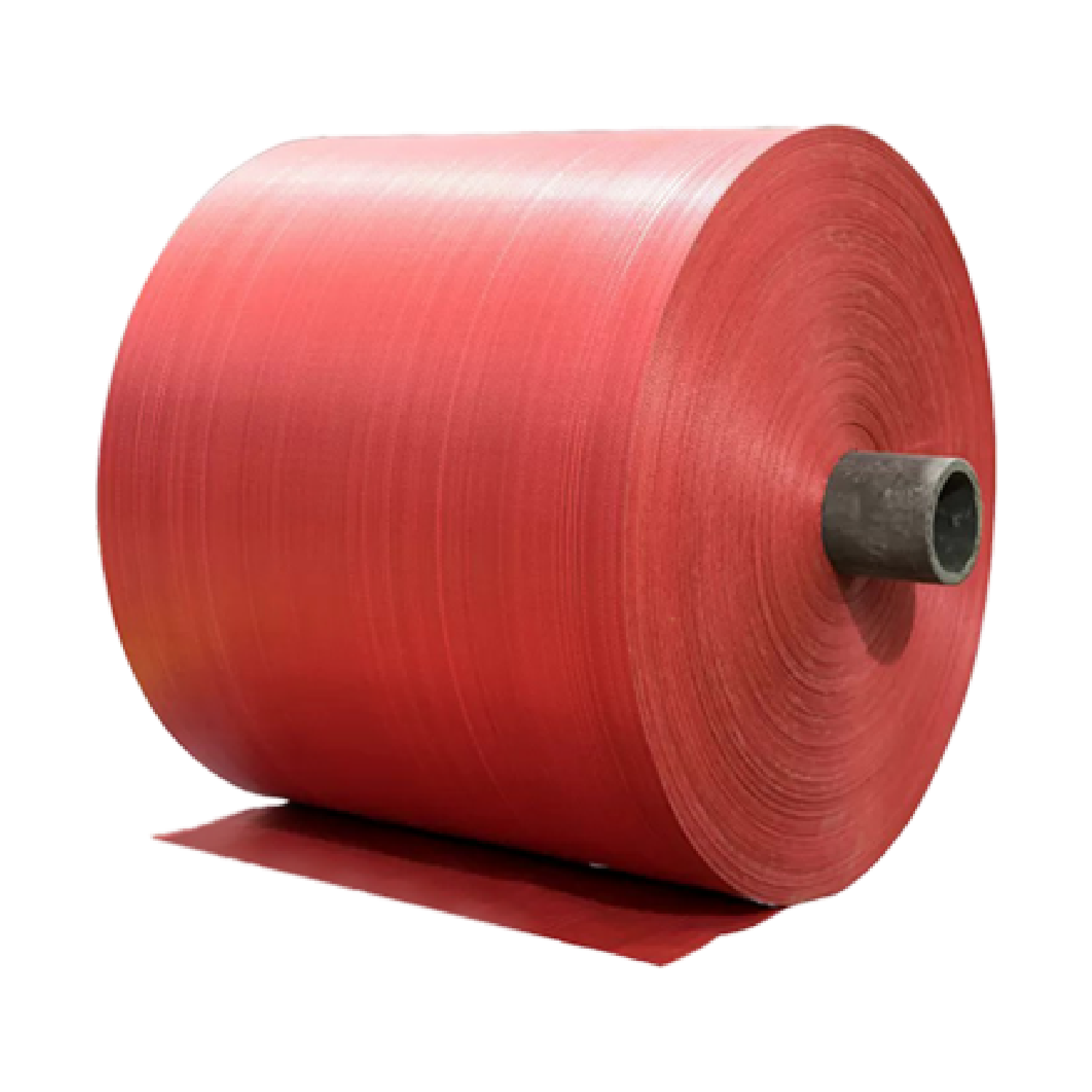
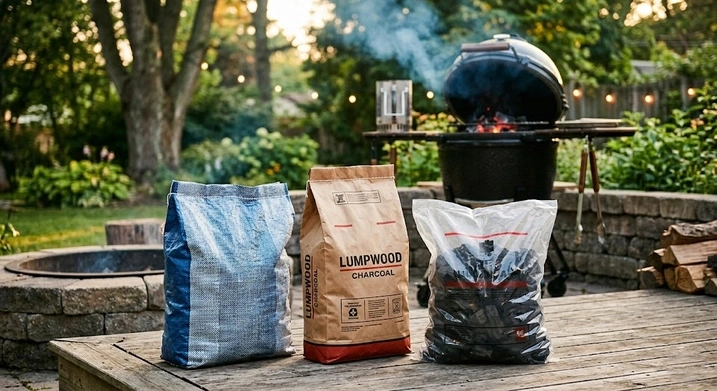
Für die meisten mittelgroßen bis großen Verpackungsformate gewebtes Polypropylen Es bietet höchste Leistung in allen Bereichen. Das Material besteht aus einzelnen PP-Fasern, die zu einem dichten Gitter verwebt werden. Dadurch verteilt sich die Belastung gleichmäßig über das Gewebe, anstatt sich an einem Punkt zu konzentrieren. Deshalb bleiben Einstiche meist begrenzt und breiten sich nicht zu vollständigen Rissen aus. Eine Tasche kann fallen gelassen, gezogen, fünffach gestapelt und mit einem Gabelstapler verladen werden – all das, bevor sie im Einzelhandel landet. Gewebtes PP übersteht das problemlos.
Viele Premium-Holzkohle Taschen, Grillhersteller verwenden eine BOPP Laminatschicht zur gewebter StoffDadurch entsteht eine glatte Oberfläche, die hochauflösenden Druck optimal aufnimmt und gleichzeitig das Gewebe vor Feuchtigkeit schützt. Für Marken, die Wert auf eine ansprechende Warenpräsentation legen, sorgen laminierte Gewebetaschen dafür, dass die Verpackung auch nach unsachgemäßer Behandlung einwandfrei aussieht. Die Haltbarkeit hängt letztendlich von der Herstellungsweise ab: Hersteller mit großflächiger Produktion, kontrolliertem Flächengewicht und strenger Qualitätskontrolle erzielen deutlich gleichmäßigere Ergebnisse als kleinere Betriebe mit weniger Kontrolle.
Papierverpackungen haben einen echten Reiz. Sie sehen auf Fotos gut aus, vermitteln Umweltbewusstsein und lassen sich hervorragend bedrucken. Für Marken, die sich an anspruchsvolle oder umweltbewusste Konsumenten richten, gibt es einen klaren Grund, warum Papiertüten weiterhin beliebt sind.
Die Herausforderung liegt in der Materialbeständigkeit. Papier absorbiert leicht Feuchtigkeit, wodurch seine Reißfestigkeit abnimmt. Eine Tasche, die in einem trockenen Lagerhaus gut hält, kann weicher und schwächer werden, sobald sie der Luftfeuchtigkeit im Freien ausgesetzt ist – wie sie in Gartencentern und Outdoor-Läden häufig vorkommt. Für schwere Grillkohlebeutel Bei voller Gewichtsbelastung stellt dies ein erhebliches Risiko dar. Einige Hersteller begegnen diesem Problem mit inneren Kunststoffauskleidungen, die zwar die Feuchtigkeitsbeständigkeit verbessern, aber die Kosten erhöhen und das Recycling erschweren.
Polyethylenbeutel bieten etwas, womit gewebtes Polypropylen und Papierbeutel Schwierigkeiten haben: echte Wasserdichtigkeit. Ein PE-Beutel bildet eine dichte Barriere, die Feuchtigkeit vollständig abhält und ihn daher ideal für den Einsatz im Außenbereich von Einzelhandelsgeschäften macht.
Die Einschränkung liegt in der Durchstoßfestigkeit. PE-Folie Im Gegensatz zu gewebten Strukturen kann PE scharfe, unregelmäßige Belastungen nicht so gut bewältigen – sobald ein kleines Loch entsteht, bietet die umgebende Folie unter Last nur noch geringen Widerstand. Daher wird PE meist als Auskleidung in gewebtem PP eingesetzt, anstatt als eigenständige Lösung. In dieser Kombination arbeiten die beiden Materialien effektiv zusammen.
Das Material ist nur ein Teil der Gleichung. Der Hersteller Ihrer Taschen bestimmt maßgeblich deren tatsächliche Leistung. Wichtige Indikatoren für einen zuverlässigen Lieferanten sind zertifizierte Qualitätsmanagementsysteme, ethische Produktionsaudits wie Sedex SMETA und nachweisliche Exporterfahrung in unterschiedlichen Klimazonen und Märkten. Lieferanten mit globaler Reichweite haben unter Bedingungen, die einheimischen Lieferanten möglicherweise nie begegnen, erlebt, was funktioniert und was nicht.
Unternehmen wie XIFA-Gruppe Sie spiegeln wider, wie das in der Praxis aussieht. Mit über 25 Jahren Erfahrung in der Fertigung, Rundwebstuhltechnologie und ISO-zertifizierter Produktion liefern sie gleichbleibend hochwertige, gewebte Kohleverpackungen an globale Märkte – unterstützt durch die Art von Qualitätskontrolle Dadurch werden die oben beschriebenen häufigen Fehler vermieden.
Jede Verpackungsentscheidung bringt Kompromisse mit sich. Papier ist optisch ansprechend, aber unter anspruchsvollen Bedingungen nur bedingt haltbar. Polyethylen bietet Feuchtigkeitsschutz, benötigt jedoch bei hohen Belastungen eine Verstärkung. Gewebtes Polypropylen bietet die zuverlässigste Allround-Leistung, insbesondere bei Laminierung und hochwertiger Verarbeitung.
Die beste Herangehensweise an diese Entscheidung ist, über die Verpackung selbst hinauszudenken und den gesamten Weg des Produkts zu berücksichtigen – von der Fabrik bis zum Garten des Kunden. Wenn die Verpackung jede Phase dieses Weges unbeschadet übersteht, profitieren auch Ihr Produkt und Ihre Marke davon.