



 von Simin Xiang
Im Bereich der Lebensmittelsicherheit wird die Verpackung oft vernachlässigt – dabei spielt sie eine entscheidende Rolle für den Schutz von Produkten und Verbrauchern. Für Unternehmen, die mit Lebensmitteln in großen Mengen handeln, können selbst geringfügige Abweichungen von den Verpackungsstandards zu Kontaminationsrisiken, Produktrückrufen oder Problemen mit der Einhaltung gesetzlicher Vorschriften führen.
Deshalb achten viele Unternehmen heute nicht mehr nur auf die Haltbarkeit ihrer Verpackungen, sondern auch darauf, ob diese international anerkannten Sicherheitsstandards entsprechen. Eine der wichtigsten Initiativen ist die Global Food Safety Initiative (GFSI), die Maßstäbe für Lebensmittelsicherheit entlang der gesamten Lieferkette setzt.
Zur Klarstellung: GFSI steht für Global Food Safety Initiative (Globale Initiative für Lebensmittelsicherheit). Falls Sie sich jemals gefragt haben, wofür GFSI steht: Es handelt sich um ein globales Benchmarking-System, das Zertifizierungsprogramme für Lebensmittelsicherheit wie BRCGS anerkennt.
Ein anerkannter GFSI-Standard legt Erwartungen an die Herstellung, Handhabung und Überwachung von Materialien fest. Für Verpackungen bedeutet dies, sicherzustellen, dass Die Materialien sind lebensmittelecht.Die Prozesse werden kontrolliert und die Risiken in jeder Phase minimiert.
Die Einhaltung dieser GFSI-Anforderungen hilft Unternehmen, die Einheitlichkeit ihrer Standards zu wahren und gleichzeitig internationale Vorschriften einzuhalten. Noch wichtiger ist, dass dadurch sichergestellt wird, dass Verpackungen nicht zu einer Schwachstelle in der Lebensmittelsicherheit werden.
Eines der Kernprinzipien der GFSI-Konformität ist die Rückverfolgbarkeit. Vereinfacht ausgedrückt bedeutet dies, jeden Schritt im Lebenszyklus eines Produkts nachvollziehen zu können – von den Rohstoffen bis zur Auslieferung.
Im Problemfall ermöglicht die Rückverfolgbarkeit Unternehmen, betroffene Chargen schnell zu identifizieren und zu reagieren, ohne den gesamten Betrieb zu unterbrechen. Diese Kontrollmöglichkeit ist insbesondere bei einem GFSI-Audit wichtig, bei dem Dokumentation und Prozesstransparenz genauestens geprüft werden.
Moderne Verpackungen unterstützen die Rückverfolgbarkeit durch Chargencodierung, Etikettierung und digitale Werkzeuge, die eine klare und zuverlässige Produktionsdokumentation ermöglichen.
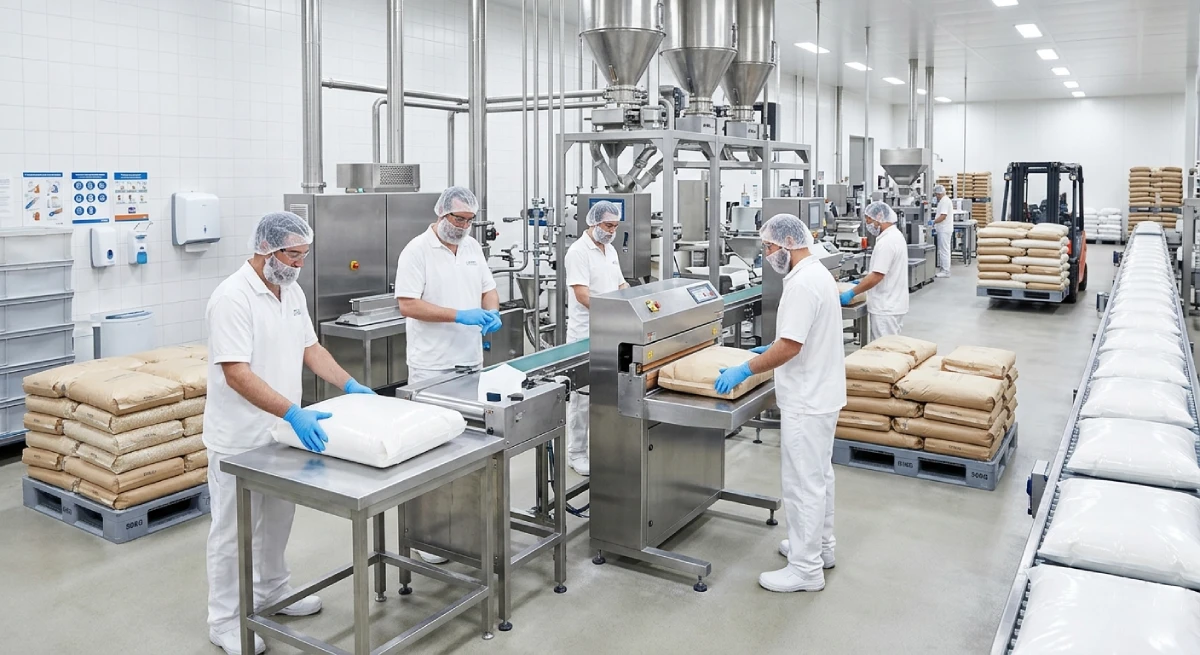
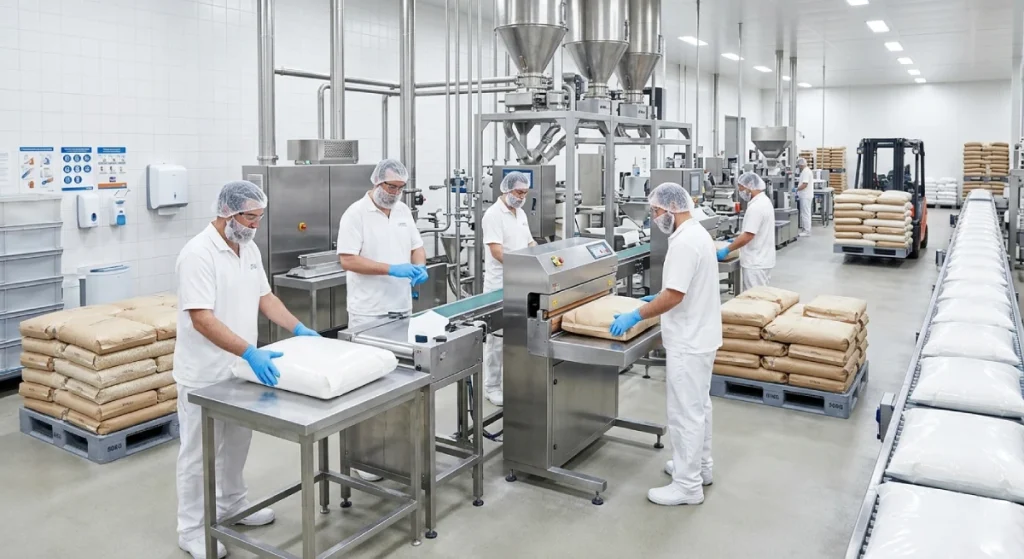
Lebensmittelsichere Großverpackung Es geht nicht nur um Festigkeit, sondern auch um Kontrolle. Die Materialien werden sorgfältig ausgewählt, um Feuchtigkeit zu widerstehen, Verunreinigungen zu verhindern und die Produktqualität während Lagerung und Transport zu erhalten.
Auch das Design spielt eine Rolle. Merkmale wie sichere Versiegelung und Kompatibilität mit automatisierten Systemen tragen dazu bei, manuelle Eingriffe zu reduzieren und somit das Kontaminationsrisiko zu senken. Gleichzeitig gewährleistet eine eindeutige Kennzeichnung, dass jede Einheit bei Bedarf identifiziert und überprüft werden kann.
Diese Elemente wirken zusammen, um sowohl die betriebliche Effizienz als auch die Einhaltung der Lebensmittelsicherheitsstandards zu gewährleisten.
Mit zunehmender Komplexität der Lieferketten wird die digitale Verifizierung zu einem Schlüsselelement für die Einhaltung von Standards. QR-Codes ermöglichen es beispielsweise, Verpackungen mit mehr als nur grundlegenden Informationen zu versehen.
Durch Scannen eines Codes erhalten Beteiligte Zugriff auf Details wie Chargennummern, Produktionszeitpläne und Prüfberichte. Dies verbessert die Transparenz und vereinfacht Audits, wodurch der Nachweis der Einhaltung von Vorschriften bei Bedarf erleichtert wird.
Es schafft zudem zusätzliches Vertrauen bei Partnern und Aufsichtsbehörden, die auf genaue und zugängliche Daten angewiesen sind.
Da die Anforderungen an die Lebensmittelsicherheit stetig steigen, muss die Verpackung mehr leisten als nur Schutz – sie muss in jeder Phase für Transparenz und Verantwortlichkeit sorgen. Von der Materialauswahl bis zur Auslieferung sollte jeder Schritt die Rückverfolgbarkeit und die Einhaltung der Vorschriften gewährleisten.
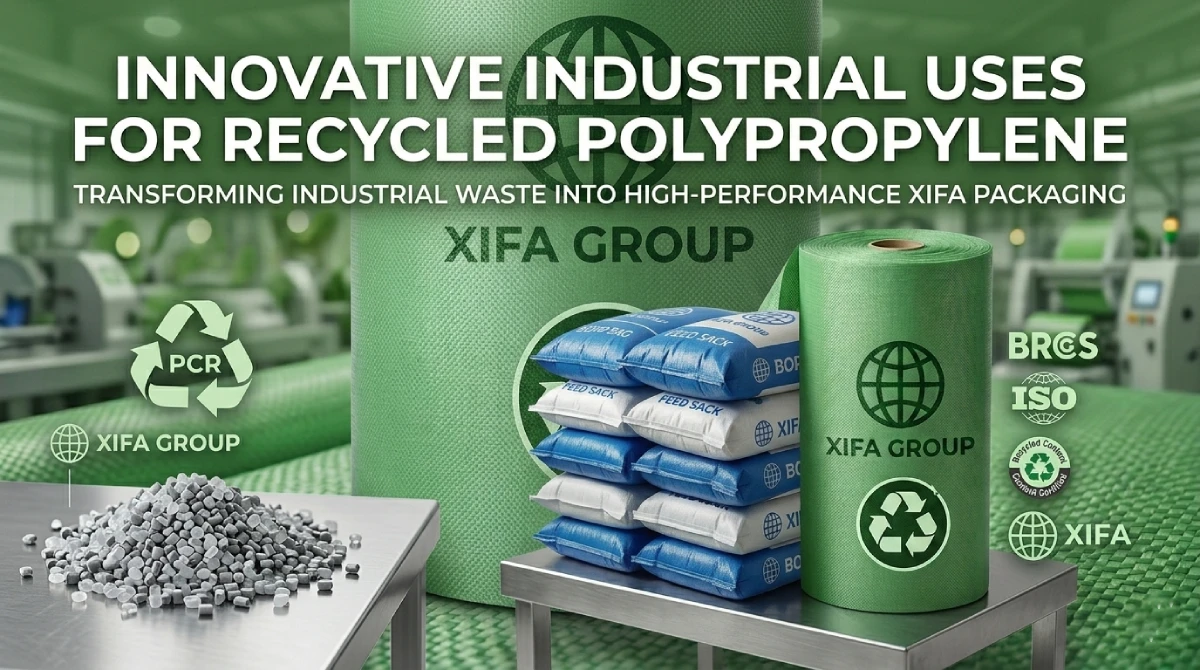
In der Endphase der Beschaffung wird die Zusammenarbeit mit einem erfahrenen Hersteller unerlässlich. XIFA-GruppeDas Unternehmen, das über die BRCGS- und ISO-Qualitätsmanagement-Zertifizierung verfügt, ist besser gerüstet, diese Erwartungen zu erfüllen. Seine Prozesse gewährleisten eine vollständige Rückverfolgbarkeit, einschließlich der Verfolgung und Verifizierung per QR-Code während der gesamten Produktion.
Letztendlich geht es bei zuverlässigen Großverpackungen nicht nur um die sichere Aufbewahrung, sondern auch darum, sicherzustellen, dass jeder Schritt den erforderlichen Standards für die Lebensmittelsicherheit entspricht.
Es trägt zur Reduzierung von Lebensmittelsicherheitsrisiken bei und gewährleistet, dass die Verpackung international anerkannte Standards erfüllt.
Nein. Es handelt sich um ein Benchmarking-System, das anerkannte Lebensmittelsicherheitsstandards wie BRCGS berücksichtigt.
Es ermöglicht Herstellern und Käufern, Produkte zu verfolgen und schnell auf etwaige Qualitätsprobleme zu reagieren.