

ブログ

タイプAフレキシブルコンテナバッグ:仕様、用途、および主な制限事項

2026 年 6 月 29 日 シミン・シャン著

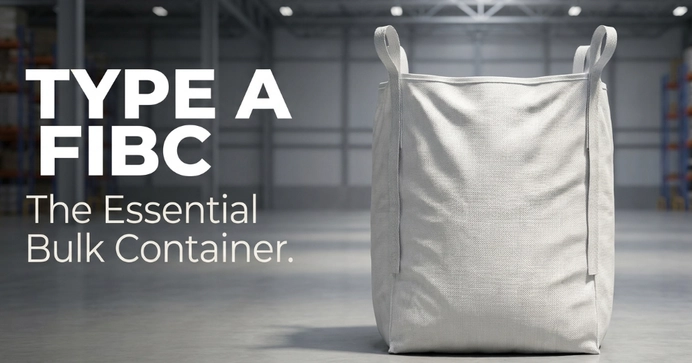
A Type A FIBC bag is a flexible intermediate bulk container made from plain woven polypropylene with no static protection. It’s the most cost-effective bulk bag option, suitable only for non-flammable products in environments free of flammable gases, vapors, or dust. 

This guide explains how Type A bags are made, which specifications buyers should review, where they work best, and when they should not be used.

What Exactly Is This Bulk Bag Type? 

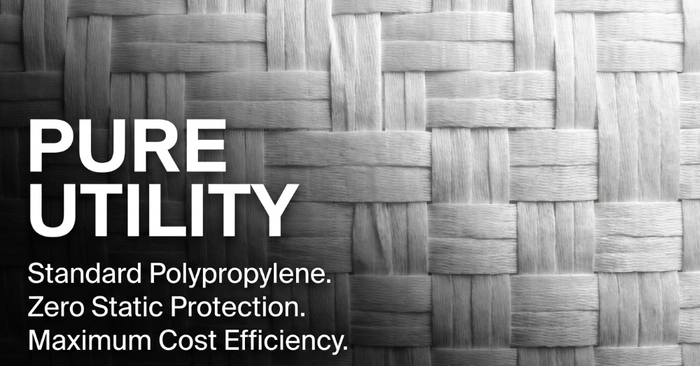
This entry-level bulk container is woven from standard polypropylene fabric. It carries no special features to control or dissipate static electricity. Because of this simple construction, Type A bags are the entry-level option in the FIBC family and the most budget-friendly choice for many dry, non-hazardous products.

Base Fabric Construction

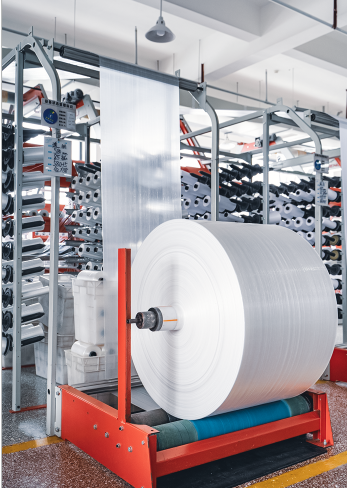
Type A bags are made by weaving polypropylene tapes into a strong, flexible fabric. The fabric can be coated for a moisture barrier or left uncoated for breathability. Standard lifting loops, fill spouts, and discharge spouts are added based on how the bag will be filled and emptied. No conductive or anti-static threads are used in the weave.

No Static Dissipation — What That Means

During filling and discharge, fine powders moving through a bag can build up static electricity. Type A bags have no way to safely release that charge. If a static spark occurs near flammable materials or in a combustible atmosphere, it could trigger ignition. For this reason, Type A bags should only be used with non-flammable products in non-hazardous environments.

What Are the Core FIBC Bags Specifications for Type A?

The table below outlines the typical specifications for this type. Exact figures vary by order and application.

パラメータTypical Specification
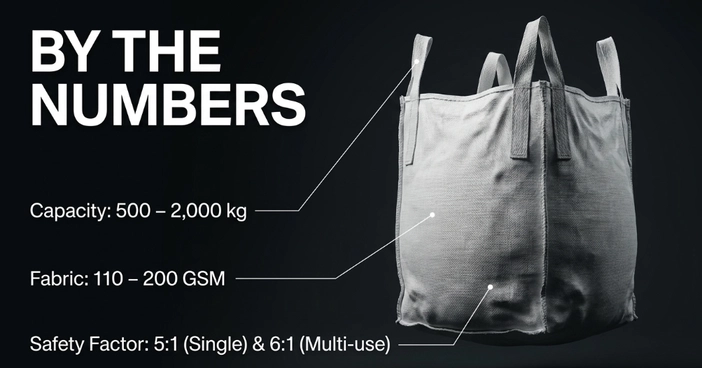
Fabric Weight110–200 GSM (grams per square meter)
安全作業荷重(SWL)500 kg – 2,000 kg
安全係数(SF)5:1 (single-use) or 6:1 (multi-use)
工事U-Panel, Circular, 4-Panel, Baffle
CoatingCoated (moisture barrier) or uncoated (breathable)
ライナーOptional PE liner for fine powders or moisture-sensitive goods

The Safety Factor shows the tested strength margin compared with the bag’s rated load. For example, a 5:1 safety factor means the bag is tested at five times its rated load under controlled conditions.

Where Should You Use a Type A Bag — and Where Should You Not?

Suitable Applications

Type A bags work well for dry, non-flammable products handled in safe environments. Common uses include:

  • Sand, gravel, and construction aggregates
  • Non-hazardous minerals and ores
  • Food products such as grains, sugar, and flour (with a food-grade liner)
  • Animal feed and agricultural goods
  • Building materials and inert powders

Environments to Avoid

Do not use Type A bags when:

  • The product itself is flammable or combustible
  • Flammable solvents, gases, or vapors are present nearby
  • Combustible dust clouds may form during filling or discharge

Real case example: A construction supplier shipping dry sand and gravel to job sites can safely use Type A bags. The material is non-flammable, and the work site has no combustible atmosphere. By contrast, a chemical plant handling flammable resin powders near solvent vapors would need a Type C or Type D bag to prevent ignition risk.

Why Do Supply Chain Managers Choose Type A Over Other FIBC Types?

The main reason is cost. Type A bags use the simplest materials and construction, making them the most affordable FIBC option. For buyers moving large volumes of safe, dry materials, this keeps packaging budgets low without sacrificing load capacity.

The table below compares the four FIBC types:

タイプ静電気防止最適な用途Relative Cost
A型なしNon-flammable products, safe environmentsLowest
タイプBPrevents brush discharges (low breakdown voltage fabric)Dry flammable powders, no flammable atmosphere低い
タイプCConductive, must be groundedFlammable products and/or flammable atmospheresより高い
タイプDAnti-static, no grounding neededFlammable products and/or flammable atmospheresHighest

Choose Type A if your material is non-flammable and your handling environment is free of flammable gases and combustible dust. If any flammable risk exists, move up to a Type B, C, or D bag.

工業用フレキシブルコンテナバッグ(FIBC)メーカー
FIBC ビッグバッグ
フレキシブル中間バルクコンテナ(FIBC)は、ジャンボ、バルクバッグ、スーパーサック、ビッグバッグ、トンバッグとも呼ばれ、乾燥した流動性のある製品を保管および輸送するために設計された、柔軟な布製の工業用コンテナです。
専門家による見積もりを依頼する

結論

Type A bags are a practical choice when the product is dry, non-flammable, and handled in a non-hazardous environment. They support cost control through simpler construction, flexible specifications, and efficient bulk logistics.

XIFAグループ manufactures packaging products, including PP fabric, BOPP bags, FIBC big bags, and PE film bags. Since 1998, we have supported industrial buyers with customized packaging orders and large-scale production. Our facilities include 72,000 m² of workshop space, more than 800 workers, QR-code traceability, and certifications including ISO9001, ISO14001, ISO45001, and BRCGS for relevant operations. 

詳しくはこちら PP生地, FIBCビッグバッグ、 そして our Capabilities pages to compare available structures and customization options.

よくある質問

What Is The Main Use Of Type A FIBC Bags?

They are used for dry, non-flammable bulk materials in non-hazardous environments, such as sand, gravel, and some inert raw materials.

Do Type A Bags Dissipate Static Electricity?

No. They are made from non-conductive polypropylene and do not safely dissipate electrostatic charge.

Can Type A Bags Be Used For Flammable Powders?

No. They should not be used where flammable materials, vapors, gases, or combustible dust hazards are present.

What Is The Main Cost Advantage Of Type A Bags?

They usually cost less than static-protective FIBC types because the fabric and construction are simpler.

記事をシェア
見積もり依頼
さらに詳しく知りたいですか?
今すぐご連絡ください!

今すぐ連絡する

今すぐ連絡する