



 by Simin Xiang
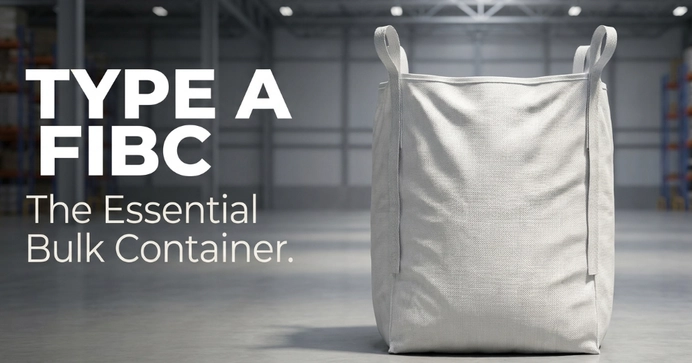
Food grade FIBC bags are bulk containers built to hold dry, edible products without contaminating them. They use controlled materials, hygienic production, and documented processes to meet food-contact rules.
This guide explains the necessary certifications, approved materials, and compliant storage and shipping methods. You will learn about FDA and EU regulations for food-contact materials. We will also cover why BRCGS certification is important and how to reduce risks for large food shipments.
A bag earns “food safe” status through its materials, its production process, and its paperwork. All three must work together.
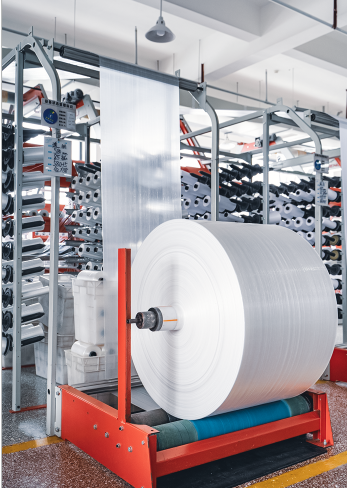
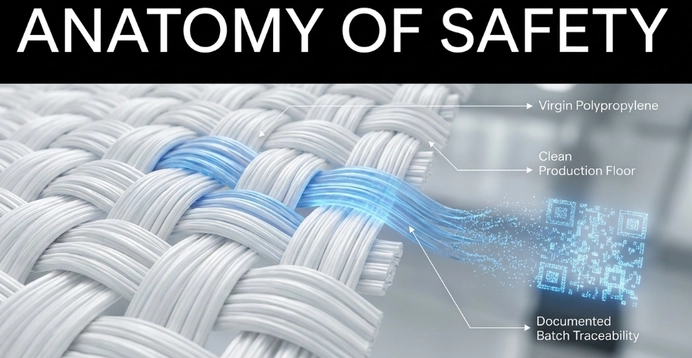
Food-safe FIBC bags start with virgin polypropylene resin. Recycled material is avoided because it can carry unknown contaminants. The resin is chosen to align with food-contact requirements before any weaving begins.
Clean production controls keep dust, oil, and foreign objects out of the fabric. Sewing areas, printing zones, and storage must follow hygiene rules. Workers handle finished bags carefully to prevent contamination.
Each batch needs records that link the bag back to its resin and production line. This lets buyers trace a problem to its source within hours, not weeks.
Buyers look for two things: proof that the materials suit food contact, and proof that the factory manages safety well. These come from different sources.
In the U.S., the FDA does not “approve” individual bags. Instead, the polypropylene must comply with FDA Title 21 CFR 177.1520, which covers olefin polymers for food contact. Suppliers should provide a declaration confirming this.
In Europe, Regulation (EC) No 1935/2004 sets the base rule. Materials must not transfer harmful substances into food. They also must not change the food’s taste, smell, or makeup.
BRCGS is a factory-level standard recognized by the Global Food Safety Initiative. It audits hygiene, traceability, and risk management. For fibc bags food contact certified buyers, BRCGS is often the deciding factor.
| Requirement | United States | European Union |
| Core rule | 21 CFR 177.1520 | Regulation 1935/2004 |
| Focus | Resin composition | Migration and safety |
| Proof | Supplier declaration | Declaration of compliance |
| Factory audit | BRCGS (voluntary, valued) | BRCGS (voluntary, valued) |
Certification means little if the product spoils after it leaves the factory. Storage and transport carry real risk for food grade FIBC bulk bags.
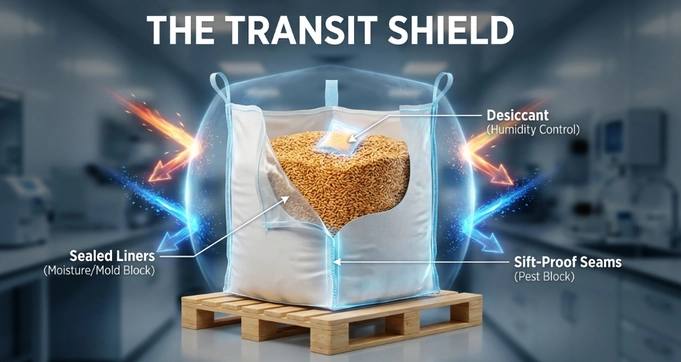
Damp warehouses invite mold. Bags should sit on pallets, away from walls and floors. Sealed liners and desiccant bags help control humidity inside the container.
Heat and swings in humidity can damage powders like flour, sugar, or milk powder. A rice exporter, for example, may add ventilated panels and moisture barriers to protect each load during long ocean trips.
Sealed bags and sift-proof seams block insects and rodents. Clean, off-the-ground storage removes the conditions pests need to settle in.
A BRCGS audit checks the whole system, not just one sample. That gives food companies confidence the next order will match the last one.
European and other strict markets often demand audited suppliers. BRCGS gives buyers a recognized record, which shortens their own vendor checks.
Consistent hygiene and traceability lower the chance of rejected shipments. For a premium rice brand, one rejected container can cost far more than the bags themselves.
XIFA Group has produced woven packaging since 1998. The work happens across a 72,000 m² workshop with more than 800 staff serving over 400 customers.
XIFA holds a BRCGS Food Grade Certificate, plus ISO9001, ISO14001, and OHSAS18001. QR-code traceability, ERP, and MES systems track each batch through its full lifecycle. You can review these capabilities on the about XIFA page.
The team supports food-grade, agriculture, animal feed, and chemical applications. Product types span PP fabric, BOPP bags, PE film bags, and FIBC bulk bags, with customization and warehousing support for a steady supply.
For food and rice exporters in regulated markets, XIFA works as a practical partner. Explore the food grade FIBC solution to match bags to your ingredient and shipping needs.
No. The FDA approves no individual bag. The polypropylene must comply with 21 CFR 177.1520. Suppliers confirm this through a written declaration of compliance.
Reuse is not advised for direct food contact. Used bags may carry residue or hidden damage. Single-use keeps traceability clean and lowers contamination risk.
They carry dry, flowable foods. Common loads include rice, grains, sugar, flour, starch, and milk powder, all needing protection from moisture and pests.