



 by Simin Xiang
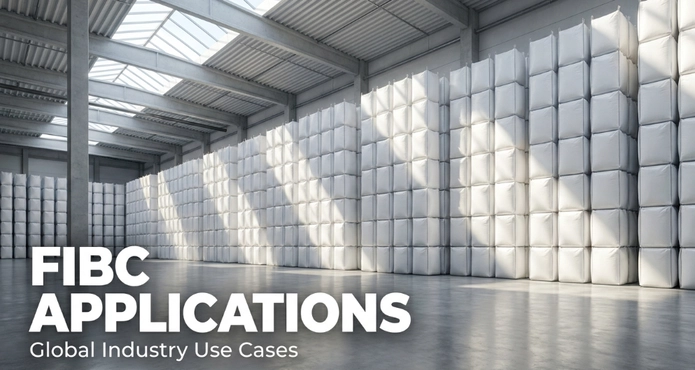
FIBC bags move and store dry, flowable materials across many major industries. These include agriculture, construction, chemical processing, and mining. They are also used in food production, pharmaceuticals, recycling, and logistics.
This guide breaks down where FIBC bags are used and why. You will learn which industries rely on them and what materials they carry. We’ll also show you how to match a bag type to your application.
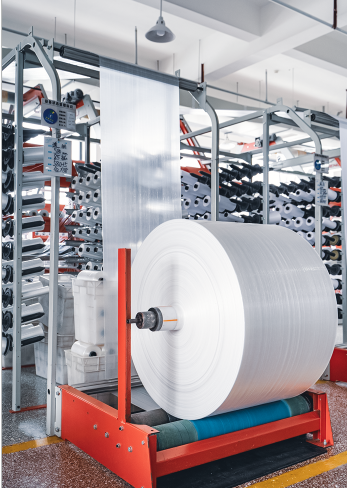
FIBC stands for Flexible Intermediate Bulk Container. These are large woven polypropylene bags built to hold dry, flowable materials. Most carry between 500 kg and 2,000 kg.
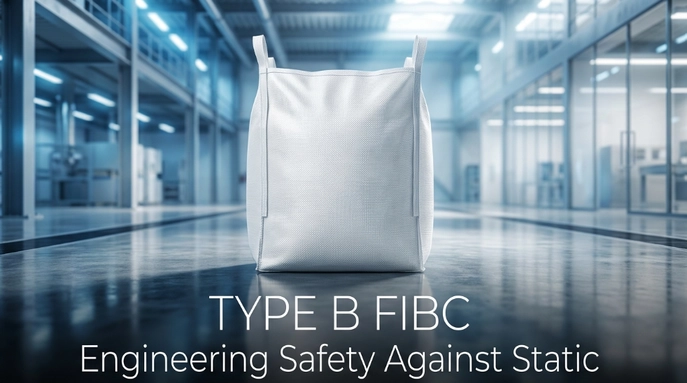
Industries choose them for three reasons: they cost less than drums or bins, they fold flat when empty, and many can be reused. Bags come in four electrostatic types. Type A offers no static protection. Type B limits brush discharges. Type C uses conductive threads and needs grounding. Type D dissipates static without grounding.
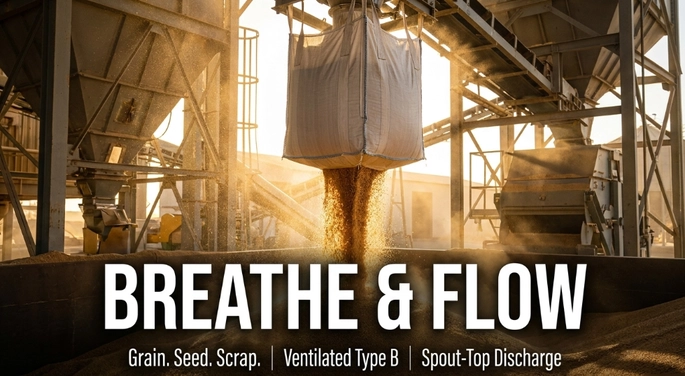
Farms and processors handle huge volumes of dry goods each season. Bulk FIBC bags for agriculture hold grain, seeds, rice, and fertilizers without sealing in moisture. Ventilated and spout-top designs help with airflow and clean filling.
Feed mills use bulk bags to store and ship pellets, meal, and additives. Food-grade liners keep feed clean and dry from production to the farm gate.
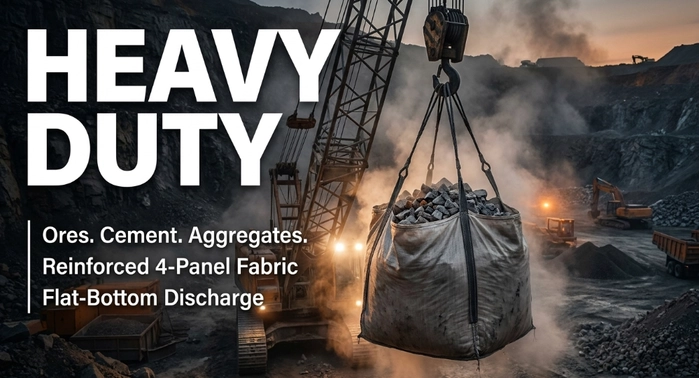
The construction industry relies on FIBC bags to move heavy aggregates safely. Sand, gravel, cement, and crushed stone fill open-top or duffle-top bags with flat-bottom discharge.
These materials are dense and abrasive, so builders often pick reinforced fabric and higher load ratings. The fold-flat design also saves space on tight job sites.
Chemicals add safety risks that other goods do not. Static, dust, and moisture all matter here.
Fine powders can build static during filling. Type C and Type D bags safely move the charge away to prevent sparks. This makes them suitable for combustible powders.
PE liners and coated fabric block moisture and stop fine particles from sifting out. One clear example is lithium carbonate for EV batteries, which needs anti-static bags, liners, and a baffle shape for safe transport.
FIBC bags for minerals carry ores, salts, pigments, and processed concentrates. Four-panel designs hold a square shape that stacks tightly in storage and containers.
FIBC bags for mining face rough handling and long transport routes. Cross-corner loops and heavy fabric give stable lifts and resist tears under load.
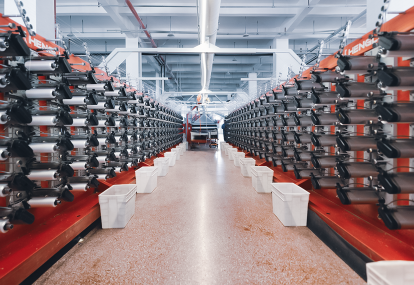
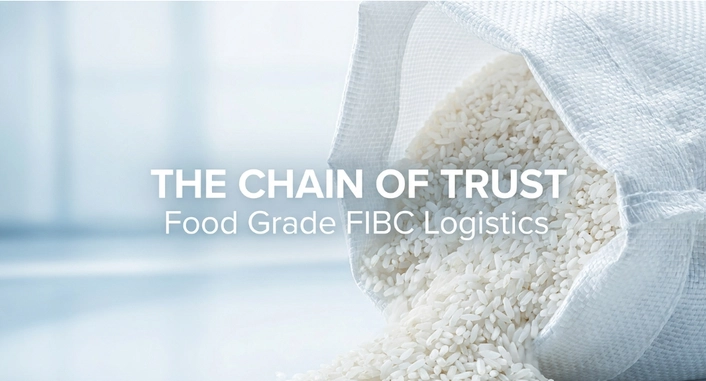
Food plants need clean, traceable packaging. Food-grade FIBC bags use virgin polypropylene, sift-proof seams, and PE liners to protect flour, sugar, starch, and milk powder. Many buyers also require BRCGS-certified production to meet safety rules.
Pharma-grade bulk bags carry active ingredients, excipients, and fine chemicals. They use clean-room production, metal detection, and tight seams to limit contamination.
Recyclers fill open-top circular or U-panel bags with plastic pellets, scrap, and sorted waste. The reusable build cuts packaging costs over time.
Plants ship plastic resins, flakes, and powders in durable bulk bags. Strong fabric resists the sharp edges of some pellets.
Stackable, square bags use vertical space well. This speeds up loading and lowers freight cost per ton.
Crews fill open-top bags with sand for flood control and barrier walls. The same bags also move relief supplies in bulk.
Match the bag type, static class, and liner to your material and risks. The table below gives a quick starting point.
| Industry | Common Materials | Suggested Configuration |
| Agriculture & Feed | Grain, seeds, fertilizer | Type B, spout top, PE liner |
| Construction | Sand, gravel, cement | Type A, duffle top, flat bottom |
| Chemical | Powders, pigments | Type C/D, coated, liner |
| Mining & Minerals | Ores, salts | Four-panel, cross-corner loops |
| Recycling | Scrap, pellets | Circular/U-panel, open top |
For exact specs, confirm Safe Working Load and Safety Factor, which run 5:1 for single-use and 6:1 for multi-use bags.
The right bag depends on your product, your equipment, and your safety rules. XIFA Group brings 25-plus years of experience, a 72,000 m² facility, and over 800 staff to that task. With a 500-million-bag annual capacity and ISO 9001, ISO 14001, OHSAS 18001, and BRCGS Food Grade certifications, the team supports 400-plus clients across 28-plus countries.
Need a bag built for your material? Request a custom recommendation and get a quote.