



 por Simin Xiang
A estrutura em U do FIBC utiliza três painéis de tecido para formar um quadrado que se mantém firme mesmo sob cargas pesadas. Esse design controla o abaulamento, melhora o empilhamento e é ideal para produtos granulares densos. Neste artigo, você aprenderá como a estrutura funciona, por que ela suporta bem o peso e quais materiais são mais adequados para ela.
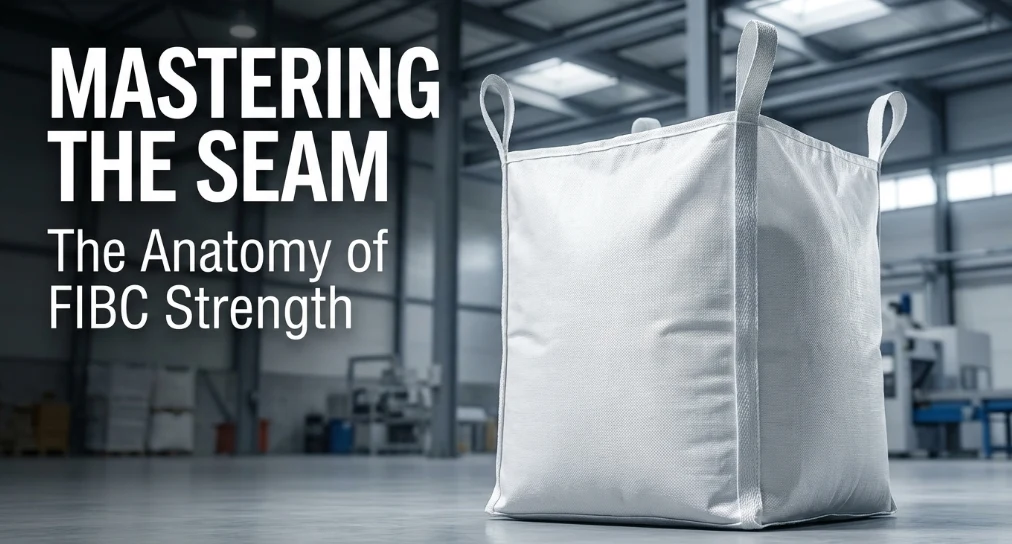
O projeto começa com um longo pedaço de tecido cortado em forma de U. Dois painéis laterais são então costurados para completar o corpo. Juntos, eles formam a base e duas paredes em uma curva contínua.
Este formato confere à bolsa um perfil quadrado definido quando cheia. As costuras são verticais, o que ajuda a manter as paredes retas. Essa retidão é fundamental para uma boa construção de bolsas FIBC e para o controle da carga.
O tecido é feito de polipropileno virgem. Os construtores podem adicionar um revestimento para evitar vazamentos ou um Revestimento de PE Para barreiras contra umidade. As opções de alça e bico ajustam o saco a cada linha de enchimento.
O formato quadrado distribui o peso uniformemente pela base e pelas paredes. Com menos pontos fracos na parte inferior, a bolsa resiste a rasgos mesmo com conteúdo denso. As costuras reforçadas suportam uma carga de trabalho segura de 500 kg a 2.000 kg.
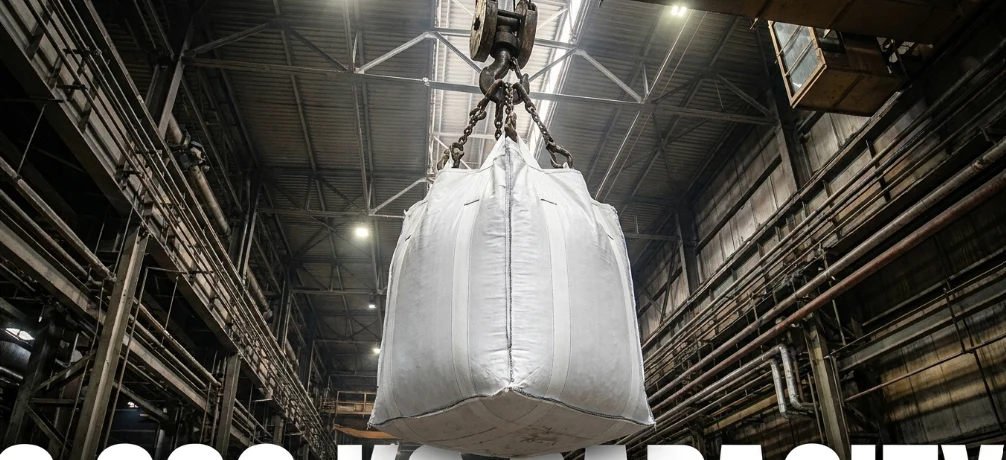
As costuras verticais limitam o estiramento lateral durante o enchimento e o içamento. Isso mantém as taxas de deformação baixas, o que é importante para os compradores que carregam contêineres marítimos. Um formato estável significa que mais sacos cabem por palete sem inclinação.
As classificações padrão são 5:1 para uso em uma única viagem e 6:1 para uso em múltiplas viagens. Esses fatores definem quanta carga a bolsa suporta em relação à sua capacidade nominal. Fatores mais altos são adequados para ciclos repetidos de manuseio.
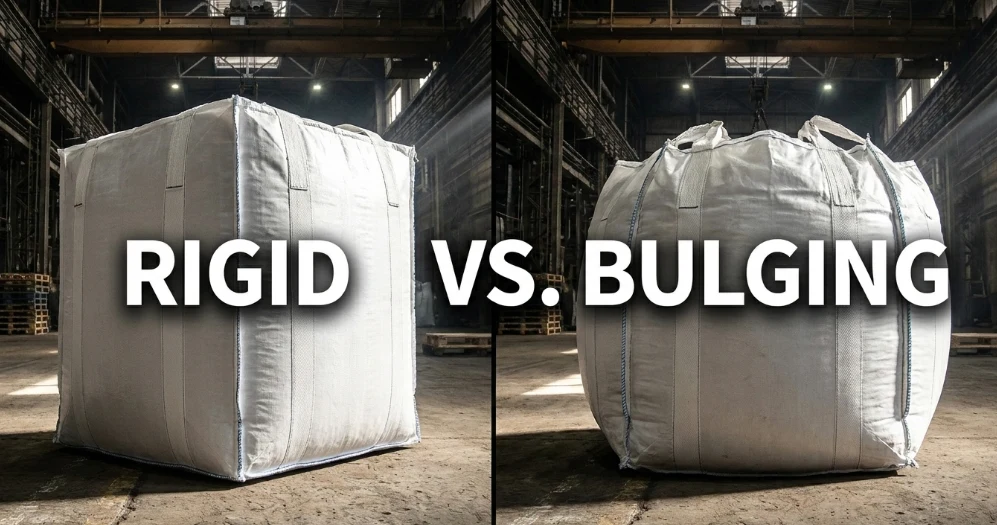
Ambos os corpos usam polipropileno tecidoMas comportam-se de maneira diferente sob carga. Um saco de fibra de vidro circular é tecido como um tubo sem costuras, portanto não possui costuras laterais. Essa parede sem costuras reduz os pontos de peneiração para pós muito finos.
Um corpo circular tende a arredondar e deformar-se quando preenchido. O design em forma de U do FIBC (concreto de fibra de vidro) apresenta um perfil mais quadrado, que permite um empilhamento mais previsível. Para compradores com limites de deformação rigorosos, o corpo mais quadrado costuma ser a melhor opção.
| Recurso | Carroceria em U | Corpo circular |
| Costuras | Costuras laterais verticais | Tubo sem costura |
| Forma preenchida | Quadrado, estável | Arredondado, protuberâncias |
| Empilhamento | Previsível | Menos uniforme |
| Melhor para | cargas densas e pesadas | pós finos |
Materiais densos como minerais, grânulos de resina e cimento combinam bem com a estrutura do painel. Farinha fina ou leite em pó costumam ser adequados para corpos circulares de fibra de vidro, pois limitam o vazamento. O peso do material e o tamanho das partículas orientam a escolha.
A estrutura é adequada para produtos pesados, de fluxo livre e granulados. Ela controla a distribuição do peso sem colapsar ou inclinar durante o transporte.
Na agricultura, utiliza-se para grãos, leguminosas, açúcar e sementes. Na construção civil e na mineração, carrega areia, cimento e minérios processados. Nas indústrias químicas, pigmentos e grânulos de polímero são acondicionados, frequentemente com revestimentos de tecido e películas.
Considere um exportador de minerais que envia cargas de 1.250 kg por longas rotas marítimas. Uma carroceria mais quadrada reduziu a carga, a inclinação e melhorou o preenchimento do contêiner. Essa deformação controlada evitou danos às unidades durante o manuseio.
Para comparações mais detalhadas, consulte Saco FIBC circular vs. U-Panel: qual trama é a melhor?.
O Grupo XIFA é um fabricante de embalagens com mais de 25 anos de experiência em produção. A empresa opera em uma instalação de 72.000 m² com linhas próprias de tecelagem, impressão e costura. Esse controle vertical garante costuras consistentes e precisão dimensional.
XIFA Possui certificações ISO 9001, ISO 14001 e BRCGS para contato com alimentos. Pode atender aos requisitos da FDA e ISO 22000 sob encomenda. Além dos big bags FIBC, a linha de produtos inclui tecido PP, Sacos BOPPe sacos de filme PE.
A equipe atende aos setores agrícola, de mineração, químico, de construção e alimentício em diversos países. Para encontrar o corpo de saco ideal para o seu material e perfil de carga, explore o catálogo. Coleção do Grupo XIFA e solicite uma análise das especificações.
A maioria das bolsas com painéis em U suporta uma carga de trabalho segura de 500 kg a 2.000 kg. A capacidade depende da gramatura do tecido, da resistência das costuras e do fator de segurança escolhido, que pode ser de 5:1 ou 6:1.
Sim. Fabricados com polipropileno virgem, revestimentos de PE de qualidade alimentar e produção limpa, atendem aos requisitos para contato com alimentos. Certificações como BRCGS e conformidade com a FDA estão disponíveis mediante encomenda específica.
Sim. O layout dos painéis e as costuras verticais mantêm um formato mais quadrado sob carga. Isso limita o alongamento lateral e mantém a deformação menor do que a de uma carroceria arredondada.
Sim. Você pode ajustar o tamanho do painel, o revestimento, o tipo de forro, o design da alça e os bicos superior ou inferior. A impressão personalizada facilita a criação de marcas e a identificação do produto.