



 par Simin Xiang
En matière de sécurité alimentaire, l'emballage est souvent négligé, alors qu'il joue un rôle crucial dans la protection des produits et des consommateurs. Pour les entreprises manipulant des denrées alimentaires en vrac, même un léger manquement aux normes d'emballage peut entraîner des risques de contamination, des rappels de produits ou des problèmes de conformité.
C’est pourquoi de nombreuses entreprises ne se contentent plus de la simple durabilité et s’attachent à vérifier que leurs emballages respectent les normes de sécurité reconnues internationalement. Parmi les plus importantes figure la Global Food Safety Initiative (GFSI), qui établit les normes de référence en matière de sécurité alimentaire tout au long des chaînes d’approvisionnement.
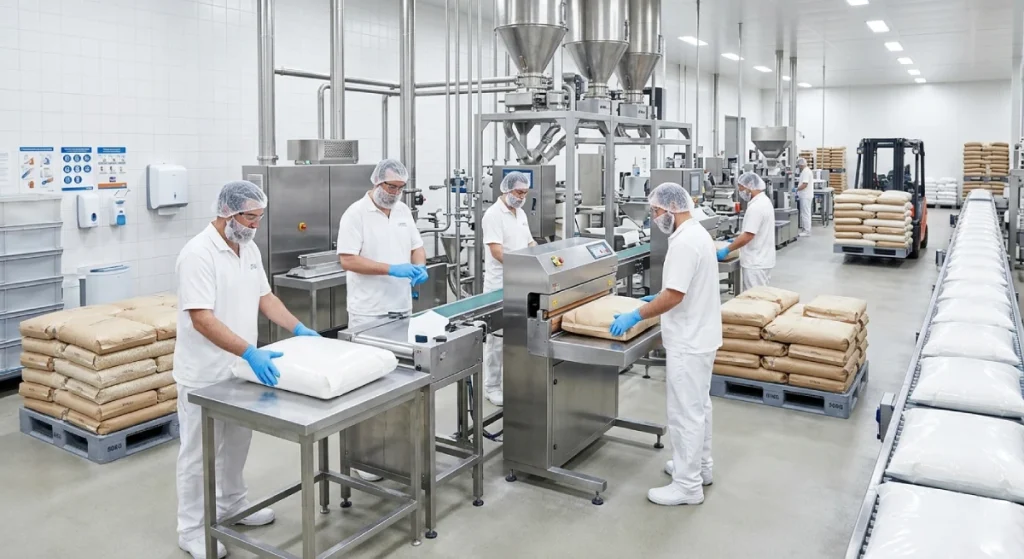
Pour information, GFSI signifie Global Food Safety Initiative (Initiative mondiale pour la sécurité alimentaire). Si vous vous êtes déjà demandé ce que signifie GFSI, il s'agit d'un système international d'évaluation comparative qui reconnaît les programmes de certification de sécurité alimentaire tels que BRCGS.
Une norme GFSI reconnue définit les exigences relatives à la production, à la manipulation et au contrôle des matériaux. Pour les emballages, cela signifie garantir que Les matériaux sont sans danger pour le contact alimentaire.Les processus sont contrôlés et les risques minimisés à chaque étape.
Le respect des exigences de la GFSI permet aux entreprises de maintenir une cohérence tout en se conformant aux réglementations internationales. Plus important encore, il garantit que l'emballage ne constitue pas un maillon faible de la sécurité alimentaire.
L'un des principes fondamentaux de la conformité GFSI est la traçabilité. En termes simples, cela signifie pouvoir suivre chaque étape du parcours d'un produit, des matières premières à la livraison finale.
En cas de problème, la traçabilité permet aux entreprises d'identifier rapidement les lots concernés et d'intervenir sans perturber l'ensemble de la production. Ce niveau de contrôle est particulièrement important lors d'un audit GFSI, où la documentation et la visibilité des processus sont examinées de près.
Les emballages modernes facilitent la traçabilité grâce au codage des lots, à l'étiquetage et aux outils numériques qui créent un enregistrement clair et fiable de la production.
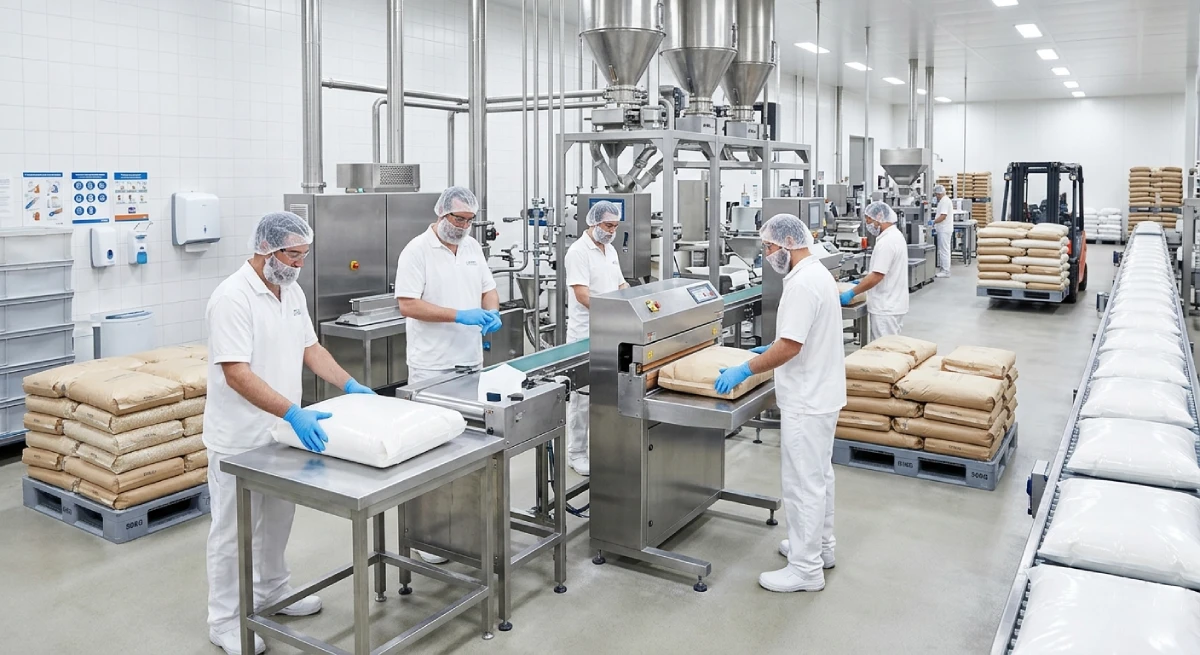
Emballages en vrac adaptés aux aliments Il ne s'agit pas seulement de résistance, mais aussi de maîtrise. Les matériaux sont soigneusement sélectionnés pour résister à l'humidité, prévenir toute contamination et préserver la qualité du produit pendant le stockage et le transport.
La conception joue également un rôle. Des caractéristiques telles qu'une fermeture sécurisée et la compatibilité avec les systèmes automatisés contribuent à réduire la manutention manuelle, ce qui diminue le risque de contamination. Parallèlement, un étiquetage clair garantit que chaque unité peut être identifiée et vérifiée en cas de besoin.
Ces éléments fonctionnent de concert pour assurer à la fois l'efficacité opérationnelle et le respect des normes de sécurité alimentaire.
Face à la complexification croissante des chaînes d'approvisionnement, la vérification numérique devient un élément clé du maintien des normes. Les codes QR, par exemple, permettent aux emballages de contenir bien plus que de simples informations.
En scannant un code, les parties prenantes peuvent accéder à des informations telles que les numéros de lot, les calendriers de production et les rapports d'inspection. Cela améliore la transparence et simplifie les audits, facilitant ainsi la démonstration de la conformité en cas de besoin.
Cela ajoute également un niveau de confiance supplémentaire pour les partenaires et les organismes de réglementation qui s'appuient sur des données précises et accessibles.
Face aux exigences croissantes en matière de sécurité alimentaire, les emballages doivent aller au-delà de la simple protection : ils doivent garantir la traçabilité à chaque étape. Du choix des matériaux à la livraison finale, chaque étape doit favoriser la conformité et la traçabilité.
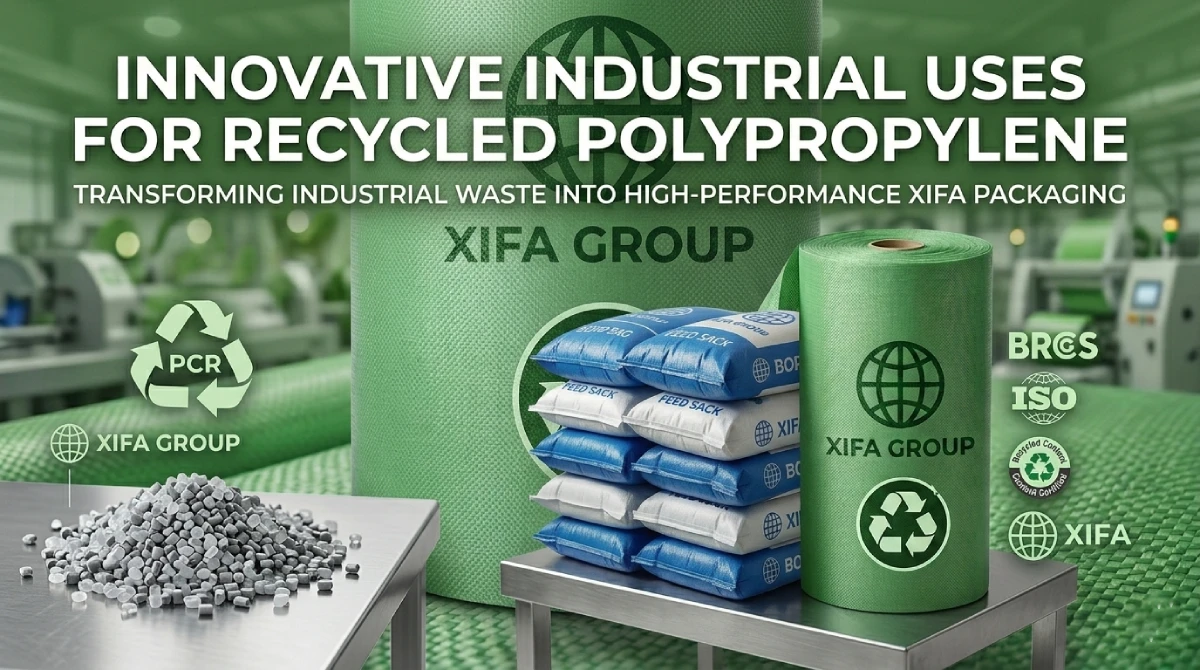
Dans les dernières étapes de l'approvisionnement, il devient essentiel de collaborer avec un fabricant expérimenté. Groupe XIFAL'entreprise, qui a obtenu les certifications BRCGS et ISO pour son système de management de la qualité, est mieux armée pour répondre à ces exigences. Ses processus garantissent une traçabilité complète, incluant le suivi et la vérification par code QR tout au long de la production.
Au final, un emballage en vrac fiable ne se résume pas au confinement ; il s’agit de garantir que chaque étape respecte les normes requises pour assurer la sécurité alimentaire.
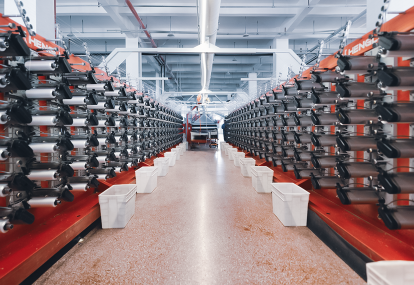
Cela contribue à réduire les risques liés à la sécurité alimentaire et garantit que l'emballage répond aux normes internationalement reconnues.
Non. Il s'agit d'un système d'évaluation comparative qui reconnaît les normes de sécurité alimentaire approuvées telles que BRCGS.
Elle permet aux fabricants et aux acheteurs de suivre les produits et de réagir rapidement à tout problème de qualité.