



 by Simin Xiang
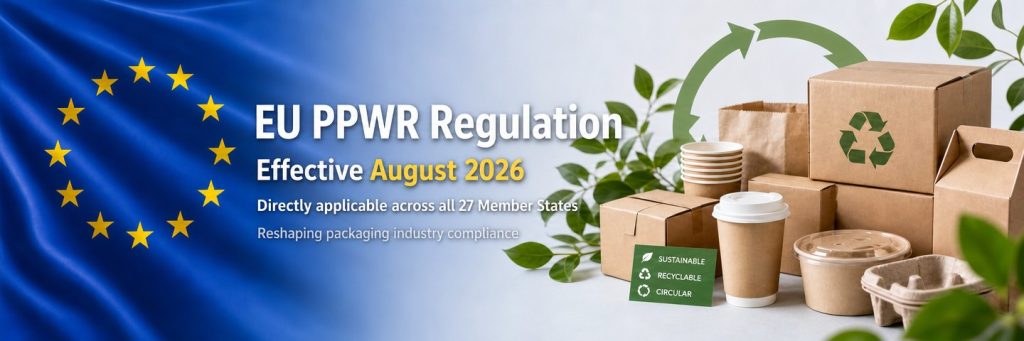
The EU Packaging and Packaging Waste Regulation — officially Regulation (EU) 2025/40 — is the most significant overhaul of European packaging law in 30 years. With a full PPWR application date of August 12, 2026, every manufacturer, importer, and distributor placing packaging on the EU market must comply. There is no national transposition, no grace period, and no country-by-country variation: one unified rulebook applies simultaneously across all 27 member states.
At XIFA Group, we have manufactured woven polypropylene packaging — FIBC bulk bags, PP woven bags, BOPP laminated bags, and valve bags — since 1998, serving customers across Europe, South America, and global industrial markets. This guide is our detailed breakdown of the packaging and packaging waste regulation, written from the perspective of a packaging manufacturer.
The PPWR 2025/40 replaces Directive 94/62/EC, in force for nearly 30 years. The old framework was a directive — each member state wrote its own national implementation, creating a patchwork of rules. The European Packaging and Packaging Waste Regulation is a regulation, applying directly and identically across the EU without local transposition.
The PPWR operates on a phased schedule. Obligations do not all fall on August 12, 2026 — understanding which apply when is essential for prioritising action.
| Deadline | Obligation |
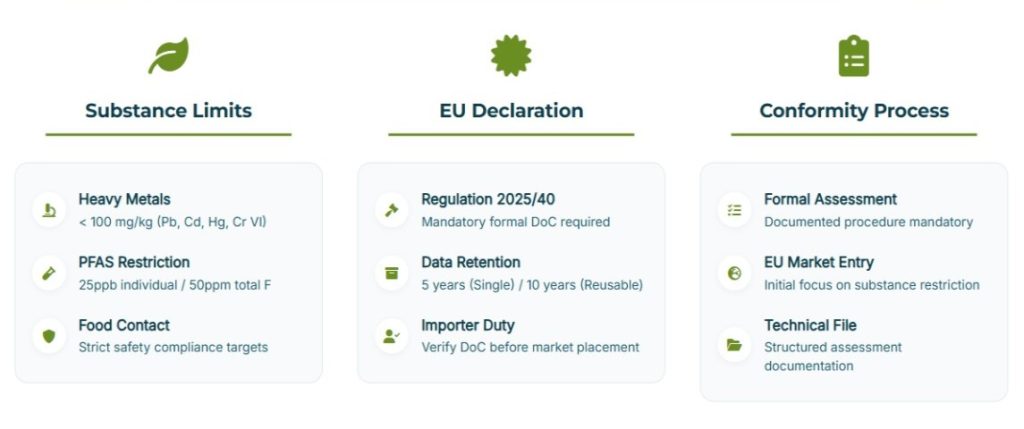
| August 12, 2026 | Heavy metal limits · PFAS restriction (food contact) · EU Declaration of Conformity · Conformity Assessment Procedure |
| August 12, 2028 | Harmonized labelling (material composition, sorting guidance) |
| January 1, 2030 | Design for Recyclability (DfR) · Recycled content thresholds · Packaging minimisation · EPR fees modulated by grade |
| 2030 onwards | Reuse quotas · Recycled content targets increasing to 2040 |
The EU packaging and packaging waste regulation EPR requires producers to register in every member state where packaging is first placed on the market. There is no single EU-wide EPR number — existing national schemes (Germany’s LUCID, France’s Citeo, the Netherlands’ Afvalfonds) remain in operation and are being progressively harmonised.
For non-EU manufacturers exporting to Europe, EPR obligations typically fall on the EU importer as ‘producer.’ Where Chinese manufacturers sell directly to EU end users — including via marketplace platforms such as Amazon — they may need to appoint an EU Authorised Representative to handle registration, reporting, and fee payment. Amazon has already required EPR registration numbers across nine key EU markets.
One often-overlooked advantage for buyers sourcing from manufacturers with an integrated ERP system: EPR compliance depends on accurate, real-time packaging data — material type, unit weight, and volumes shipped per market. XIFA Group operates an internal ERP system that centralises production and shipment records, enabling us to extract the precise packaging weight and volume data that EU importers need for their national EPR reporting and fee calculations. This eliminates the back-and-forth that typically delays compliance filings.
From 2030, EPR fees will be modulated by recyclability grade: packaging achieving grades A or B will attract lower fees, creating a direct financial incentive to invest in recyclable designs now.
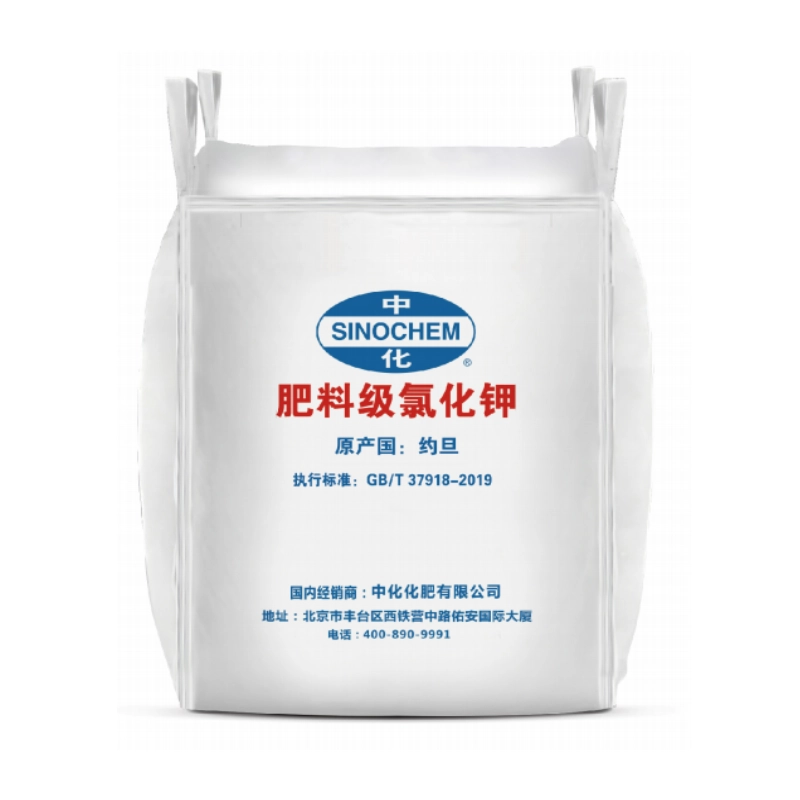
FIBC Bulk Bags: Industry analysis presented at interpack 2026 by EFIBCA indicates that typical industrial FIBC applications are not expected to fall under the mandatory reuse obligations for transport packaging. However, heavy metal limits, DoC requirements, and food-grade PFAS restrictions apply in full. Buyers should request updated technical documentation from manufacturers before August.
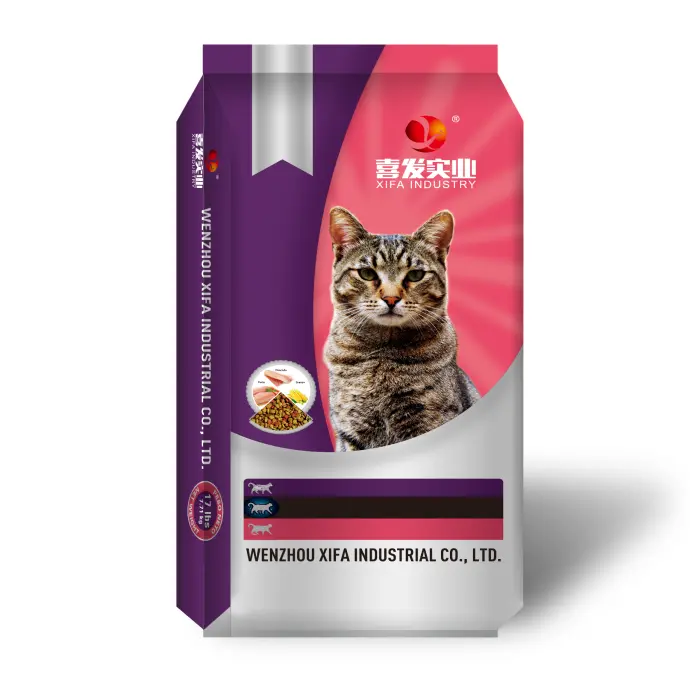
PP Woven Bags: Polypropylene is inherently recyclable and well-positioned for PPWR requirements. Laminated constructions (PP + PE, PP + aluminium) will face greater scrutiny under Design for Recyclability (DfR) criteria to be published by January 2028. Manufacturers offering PCR (post-consumer recycled) PP content will have a clear advantage under EU packaging and packaging waste regulation recycled content targets.
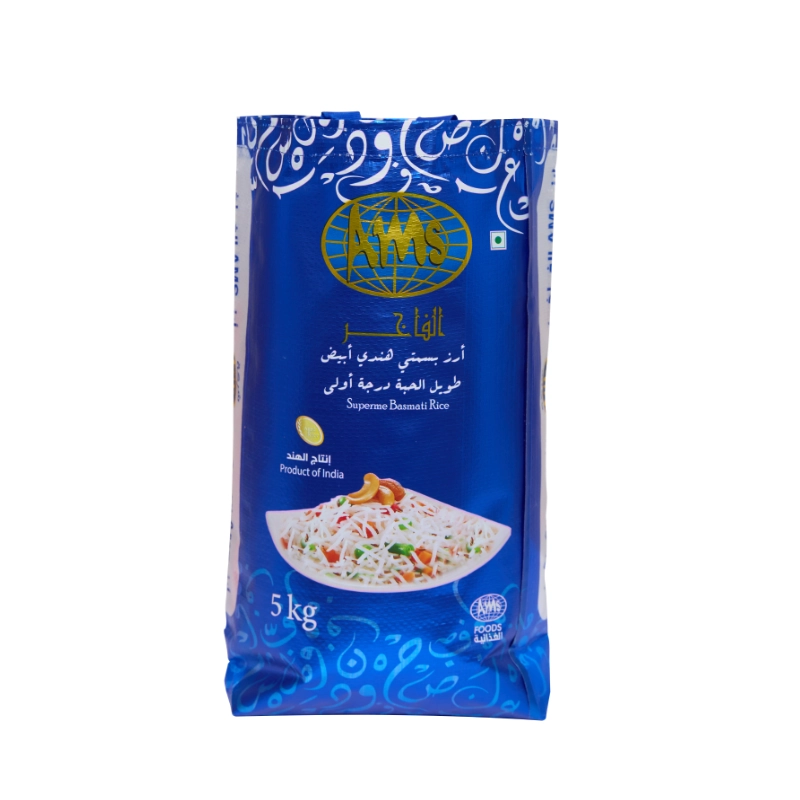
BOPP Laminated Bags: Consumer-facing packaging faces the most stringent requirements. BOPP bags used for rice, flour, and feed must comply with PFAS restrictions immediately. Harmonised labelling — including material composition and sorting guidance — applies from August 2028. Multi-layer constructions should be assessed for recyclability now.
Valve Bags: Subject to heavy metal restrictions and DoC requirements from August 2026. Paper-PP composite constructions will require assessment under future DfR delegated acts.
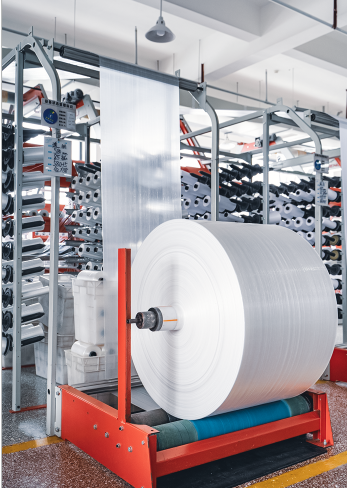
XIFA Group’s factory in Cangnan County, Wenzhou — China’s recognised centre of PP woven packaging — covers 72,000 m² with 800+ employees and 250 million RMB in fixed assets. Our ISO-based quality systems with QR-coded batch traceability, backed by an integrated ERP system, form the same infrastructure that underpins PPWR compliance documentation. Where many suppliers rely on manual records, our ERP provides structured, auditable data on material composition, production batches, and shipment volumes — exactly what PPWR technical files and EPR reporting require.
For customers sourcing FIBC, PP, BOPP, or valve bags for EU markets, we provide:
Our commitment to the European market is strong. Our experienced sales team provides exceptional after-sales support, and we are dedicated to building lasting relationships. Each exhibition is a perfect opportunity to discuss how we can become a reliable partner in your supply chain.
Contact XIFA Group at [email protected] or visit xifagroup.com to discuss technical documentation, product specification, and PPWR compliance support for your EU market orders.
Most industrial FIBC applications are not expected to fall under mandatory reuse obligations. Substance restrictions, DoC requirements, and EPR obligations still apply.
No. Registration is country-specific. Existing national schemes remain in operation under the PPWR framework.
Minimum recycled content targets for plastic packaging begin January 1, 2030, increasing through 2040.
Material composition data, heavy metal test reports, batch traceability records, and a draft EU Declaration of Conformity.
The EU packaging and packaging waste regulation — officially Regulation EU 2025/40 — entered force on February 11, 2025 and fully applies from August 12, 2026 across all 27 member states simultaneously. No national transposition is required, meaning the rules are identical whether you are shipping to Germany, France, or Greece. For buyers sourcing FIBC, PP woven, or BOPP bags for European markets, this deadline is now immediate.
The EU packaging and packaging waste regulation recycled content targets for plastic packaging begin January 1, 2030, but supplier readiness matters now. From 2030, EPR fees will be modulated by recyclability grade — packaging with higher recycled content attracts lower fees. Buyers who lock in suppliers already developing PCR-compatible PP lines under the packaging and packaging waste regulation 2025/40 framework avoid costly sourcing switches later. Asking for documented PCR integration capability is a reasonable pre-qualification step today.
The packaging and packaging waste regulation timeline runs in three waves. August 2026: substance restrictions, EU Declaration of Conformity, and conformity assessment take effect. August 2028: harmonised labelling — material composition markings and consumer sorting guidance — becomes mandatory, particularly relevant for BOPP and multi-layer constructions. January 2030: Design for Recyclability grades and recycled content thresholds apply, and EPR fees begin reflecting recyclability performance. The EU packaging and packaging waste regulation PPWR effective date for each wave is fixed and uniform across all member states.
The European packaging and packaging waste regulation assigns obligations by market role, not location. If a Chinese manufacturer’s name or brand appears on EU-bound packaging, they must issue a Declaration of Conformity and hold supporting technical documentation. EU importers, meanwhile, increasingly require structured supplier data — material composition, heavy metal test results, and per-market shipment volumes — for EPR reporting. At XIFA Group, our ERP system centralises this data across all production batches, so buyers can obtain the precise records needed for national registration in Germany’s LUCID, France’s Citeo, or any other scheme without delays. For buyers assessing EU packaging and packaging waste regulation PPWR readiness, auditable supplier data is now a baseline requirement.