



 par Simin Xiang
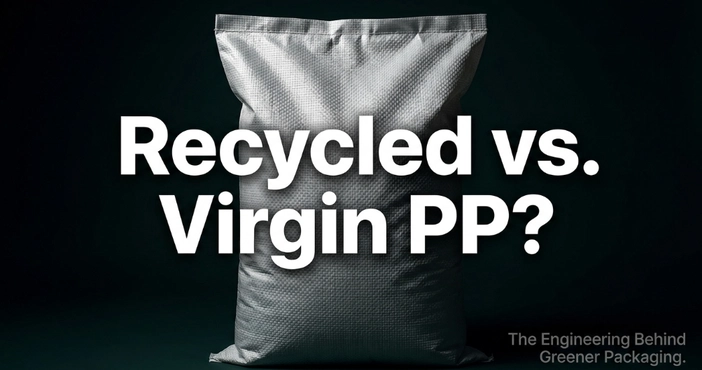
Oui, les sacs recyclés peuvent égaler les performances des sacs vierges dans de nombreuses applications industrielles, à condition que leur conception, la maîtrise de la résine et les tests soient effectués correctement. Cet article explique l'origine de la résistance du polypropylène, les causes de la défaillance des sacs et comment les contrôles de production permettent de réduire ce risque.
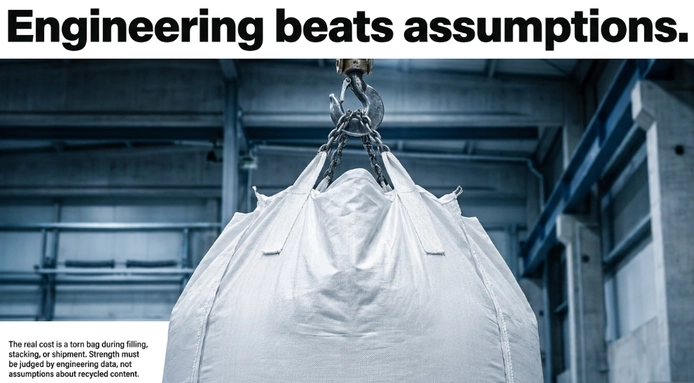
Pour les acheteurs étrangers, le véritable coût ne réside pas dans le sac lui-même, mais dans le risque de déchirure lors du remplissage, de l'empilage ou du transport. La résistance doit donc être évaluée à partir de données techniques et non d'hypothèses concernant le taux de recyclage.
La résistance à la traction est la force à laquelle un matériau résiste avant de s'étirer excessivement ou de se rompre. Dans le cas des sacs tissés, cette valeur résulte de l'interaction de plusieurs éléments, et non d'un seul facteur.
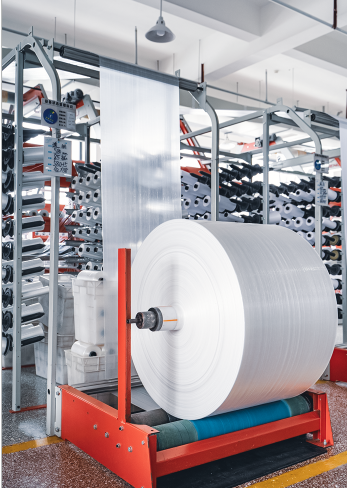
Le fil de trame supporte la majeure partie de la charge. Une densité de tissage plus serrée et un équilibre entre les fils de chaîne et de trame répartissent la tension plus uniformément sur le tissu.
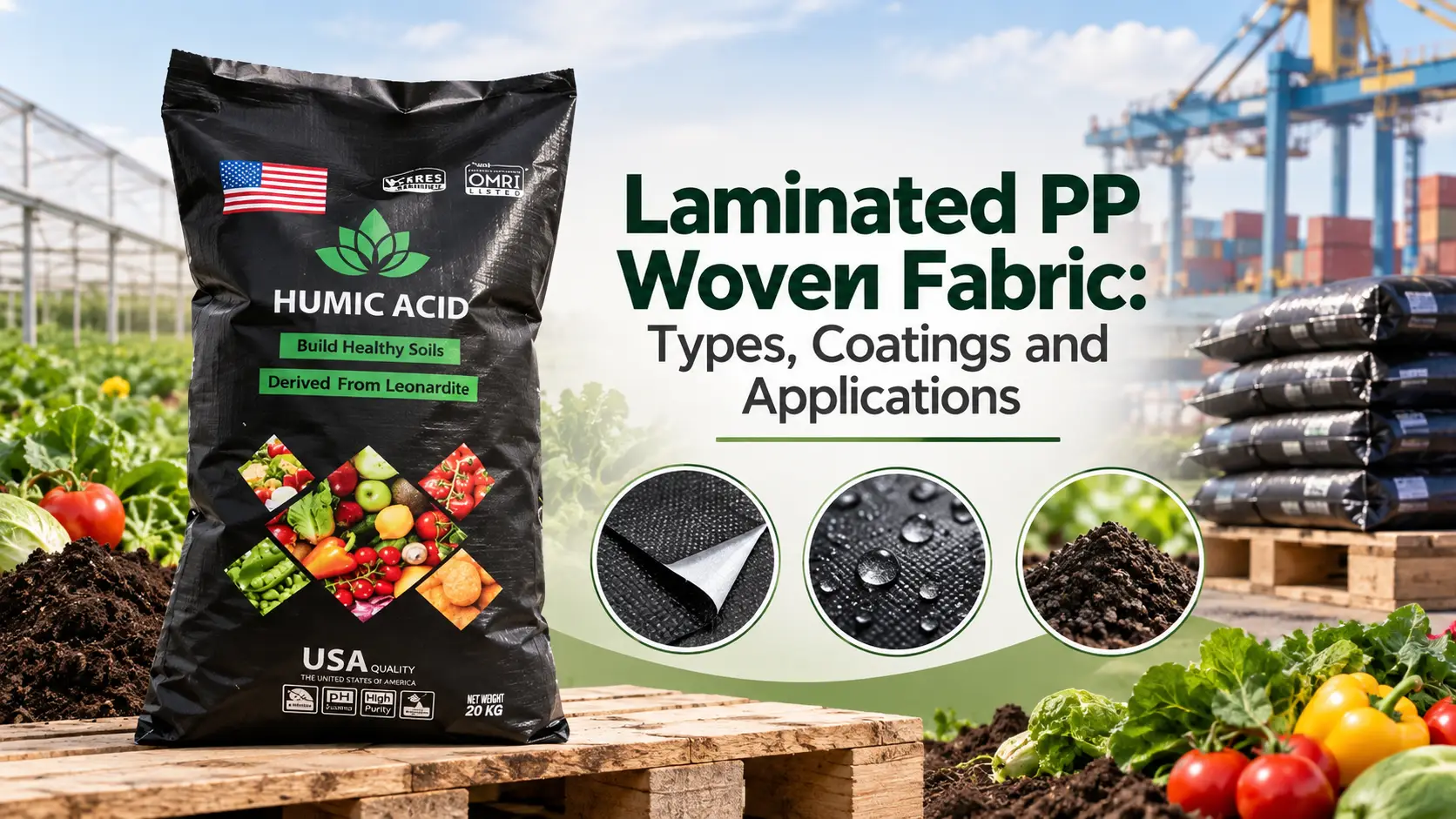
La lamination protège le tissage et lui confère de la rigidité. Les coutures sont souvent les premières à céder ; le type de point et la qualité du fil sont donc aussi importants que le tissu lui-même.
Les échecs proviennent généralement de lacunes dans les processus, et non de l'idée même de recyclage. Avec les bonnes conditions, processus de recyclageLa résistance peut être maintenue, mais lorsque la matière première est instable ou que les réglages dérivent, le tissu final perd de sa résistance.
Les causes courantes incluent la contamination, un indice de fusion irrégulier, l'humidité et la dégradation du polymère. Un étirage de bande de mauvaise qualité affaiblit également l'orientation du fil, ce qui diminue les performances mécaniques du PP sous charge.
La solidité est garantie par une rigueur de processus à chaque étape. Une ligne de production contrôlée vérifie les matières premières, surveille l'étirage du ruban et contrôle les données finales avant expédition.
La résine entrante est testée pour son indice de fusion, sa teneur en cendres et son taux d'humidité. La détection précoce des variations permet d'éviter qu'elles n'atteignent le métier à tisser ou la chaîne de couture.
Des taux d'étirement constants alignent les chaînes polymères et augmentent la résistance du ruban. Un tissage stable permet ensuite de maintenir le poids et la densité du tissu dans les valeurs cibles.
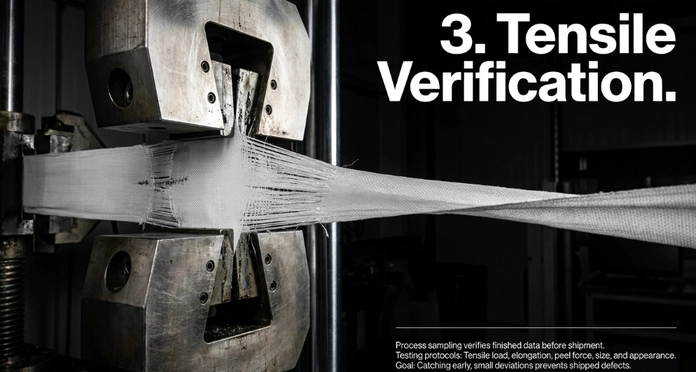
Les échantillons de contrôle portent sur la résistance à la traction, l'allongement, la force de pelage, les dimensions et l'aspect. De nombreuses défaillances commencent par de petits écarts ; des contrôles précoces permettent donc d'éviter les défauts à l'expédition.
Pour de nombreux produits chimiques, engrais, minéraux et constructions applications des sacs en PPLes sacs à contenu recyclé répondent aux exigences lorsque leur conception correspond au chemin de chargement et de manutention.
Un sac de 25 kg pour mortier sec peut être confectionné en polypropylène recyclé. Le grammage, la densité du tissage et les coutures doivent être adaptés à l'empilage sur palettes et aux contraintes liées au transport.
Pour le conditionnement secondaire de produits chimiques, le succès repose sur la résistance aux UV, le choix du revêtement et l'étanchéité. La résistance mécanique seule ne suffit pas à couvrir tous les risques liés à la manipulation.
Les sacs recyclés peuvent avoir la même résistance que les sacs vierges lorsque la décision est prise en fonction de la conception et non de l'étiquetage. Les acheteurs doivent exiger des données de test, des contrôles de processus et une traçabilité avant toute approbation.
À Groupe XIFAAvec une usine de 72 000 m² et 800 employés, XIFA assure un contrôle rigoureux de la production. Certifiée BRCGS et conforme aux normes GB/T8946-2013, XIFA propose une traçabilité par QR code, une fabrication documentée et un contrôle qualité vérifié, et fournit des emballages plus écologiques aux secteurs de la chimie, de la construction et de l'agriculture. Découvrez les solutions XIFA. Solutions de sacs FIBC en vrac pour démarrer votre prochain projet.
Oui, dans de nombreuses applications. La résistance dépend du contrôle de la résine, du tirage de la bande, de la qualité du tissage, de la conception du sac et des tests effectués, et non uniquement du contenu recyclé.
C'est possible. Le sac doit être conçu en fonction du poids du contenu, du mode de manutention et des conditions de stockage.
Demandez les données relatives à la charge de traction, à l'allongement, à la résistance des coutures, à la force de pelage et aux données pertinentes sur le vieillissement ou le transport.
Oui, beaucoup le font. Le choix final dépend du produit, des besoins en matière de doublure, des exigences de barrière et des risques liés à la manipulation.