

 by Simin Xiang
For carbon black, anti-static woven bags are used to reduce ignition risk, limit powder loss, and improve handling control. This article explains how anti-static bag design works, what bag formats fit the job, and how traceability supports safer industrial shipments.
Carbon black is a fine powder with two common packaging problems. It can build up static during filling and discharge, and it can escape through poor bag design. That is why packaging selection is not only a logistics issue. It is also a safety and process control issue.
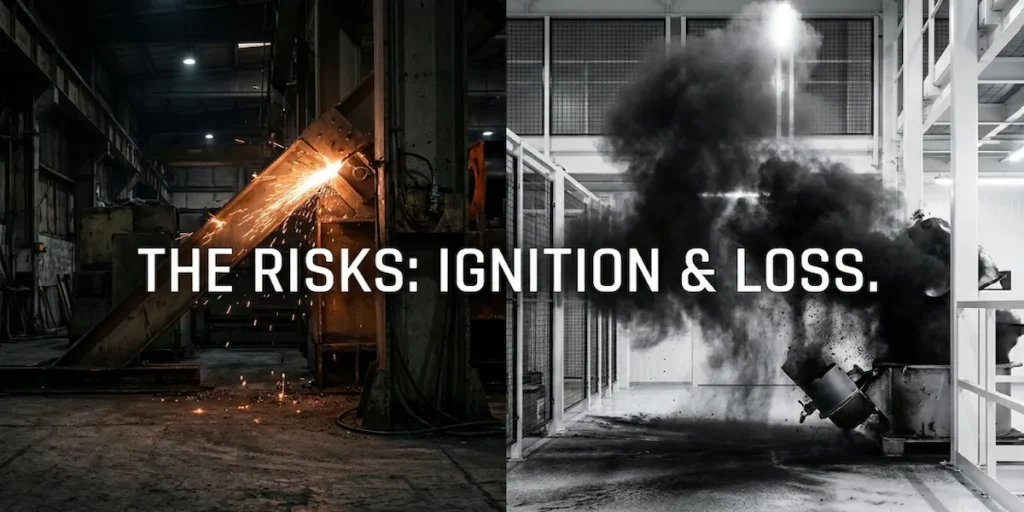
Carbon black behaves differently from many bulk solids. Its low particle size and dusty nature increase the chance of product loss and workplace contamination.
Static can form when powder moves against the bag fabric during filling, transport, or unloading. If the charge is not controlled, discharge can occur near flammable dust or vapor.
A weak bag structure or a poor sealing system can release fine particles. This creates housekeeping issues, material loss, and exposure concerns for operators and downstream users.
The main goal is to combine static control, mechanical strength, and containment. Good carbon black packaging should support safe filling, stable transport, and clean discharge.
Anti-static bag systems are designed to manage electrostatic charge before it becomes a hazard. In industrial powder handling, this is a practical control measure.
They reduce charge buildup on the bag surface and help dissipate energy more safely. In woven structures, this can be done with anti-static coatings or selected material systems.
Chemical plants often handle powders around process equipment, transfer stations, and storage areas. In these settings, static control lowers the chance of an unwanted spark event.
When paired with proper construction, anti-static packaging also helps maintain cleaner handling conditions. This supports more effective dust-free powder packaging for filling and transport operations.
The right bag depends on fill weight, discharge method, and plant handling equipment. Woven packaging is often selected because it balances strength, customization, and transport efficiency.
FIBC bags are useful for larger volume shipments. They can be configured with open tops, duffle tops, spout tops, flat bottoms, or discharge spouts, depending on the process.
PE liners help improve moisture resistance and leak control. Coated fabric can also improve sift-proof performance, which matters when powders are very fine.
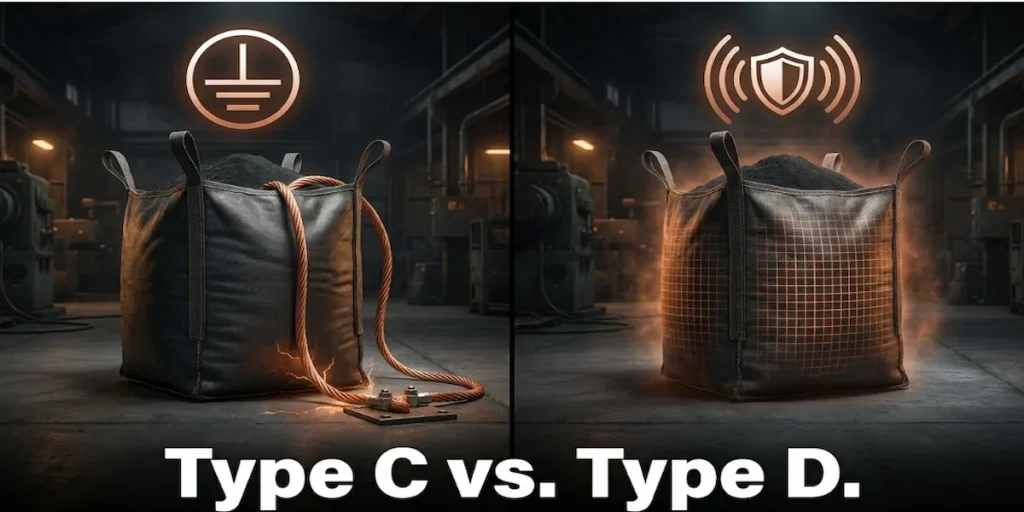
For hazardous environments, FIBC selection matters. Type C bags use conductive threads and require grounding. Type D bags use dissipative fabric and are designed for use without grounding in specific conditions.
Practical examples help show how bag design affects results in the field. The attached company data provides two useful examples.
XIFA group supplied customized anti-static woven bags for CNOOC carbon black shipments. It reduced material loss during transport and improved handling safety. One document states a 15% reduction in transport loss.
The attached files state that QR code traceability improved batch tracking for PetroChina. This helped reduce contamination risk and improved control across the shipment process.
The same documents also note service experience with Sinopec and Sinochem. For procurement teams, this shows familiarity with chemical-sector packaging requirements and controlled supply processes.
The right carbon black packaging system must do three jobs well. It must control static, contain fine powder, and support batch traceability.
For chemical buyers, that means checking bag type, anti-static design, liner options, and digital tracking systems together. XIFA group brings 25+ years of packaging experience, broad woven bag manufacturing capability, and documented work with chemical industry clients.
You can explore the XIFA group, along with their product ranges for woven PP bags, FIBC bags, PE film bags, and BOPP bags.
It is a fine powder that can generate dust, cling to surfaces, and build static during handling. That combination demands strong containment and electrostatic control.
Yes, if the bag design includes the right fabric, coating, liner, and closure system. The bag must be matched to the powder behavior and filling method.
Type C is used when grounding can be controlled during operation. Type D is used when dissipative performance is needed without grounding, under proper use conditions.