

 by Simin Xiang
Denier is a simple way to measure the thickness and weight of polypropylene yarn, and it directly affects how strong, durable, and cost-effective a woven bag will be. If you’re choosing packaging for grains, chemicals, or industrial materials, understanding the denier of PP bag fabric helps you pick the right balance between strength, performance, and budget.
This guide explains what denier means, how it influences real-world applications, and how buyers can choose proper ranges backed by XIFA’s manufacturing expertise.
Denier is a weight-based measurement that indicates the mass of yarn per 9,000 meters.
A higher denier means thicker yarn, and a lower denier means thinner yarn. Many buyers ask, “What is denier pp bag fabric?” because this number determines how the woven structure performs.
This simple measurement forms the baseline for load tolerance, abrasion behavior, moisture resistance, and long-term storage performance.
A higher yarn mass increases tensile strength. This helps the fabric resist tearing during filling, stacking, and transport.
Heavy products like minerals or construction materials need a stronger yarn to manage the pressure created inside the bag.
Thick yarn reduces wear when bags rub against pallets or machinery. It also improves resistance to loop stress, seam tension, and friction during repeated handling.
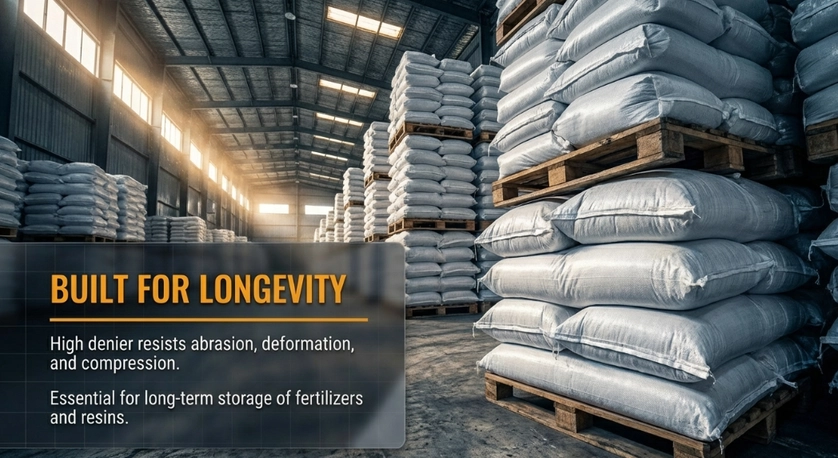
Higher-denier fabrics hold up better against deformation and compression during long storage cycles. This matters for fertilizers, chemicals, and resins kept in large warehouses.
Higher denier results in increased fabric gsm. This affects:
Heavier fabric is preferred when the product needs support during transport, while lighter fabric suits fast-moving consumer packaging or moderate loads.
Choosing gsm without understanding denier often leads to overspecification. XIFA guides buyers by combining denier, gsm, and weave density to meet performance targets without adding unnecessary material costs.
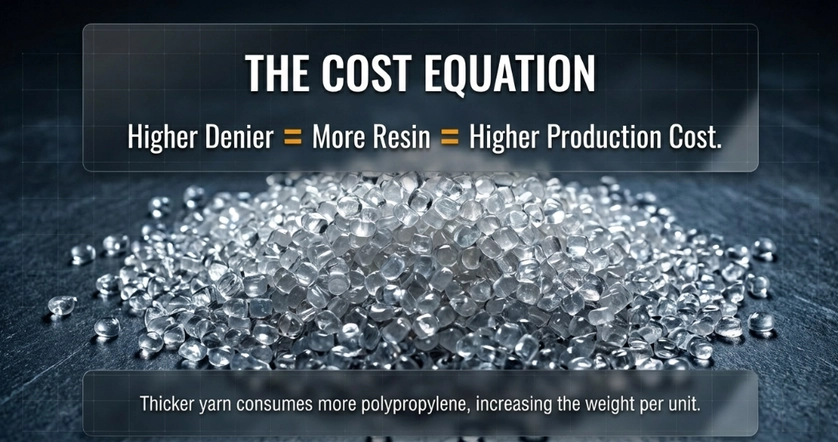
Denier directly influences production cost because thicker yarn uses more polypropylene. This increases:
Cost rises as denier increases, but the higher expense provides measurable performance gains.
The goal is to achieve the lowest cost that still meets your application’s safety and handling requirements.
XIFA sources resin from major upstream suppliers, which ensures stable technical data during yarn drawing. This stability makes cost planning easier and helps clients understand the relationship between denier, gsm, and final bag pricing.
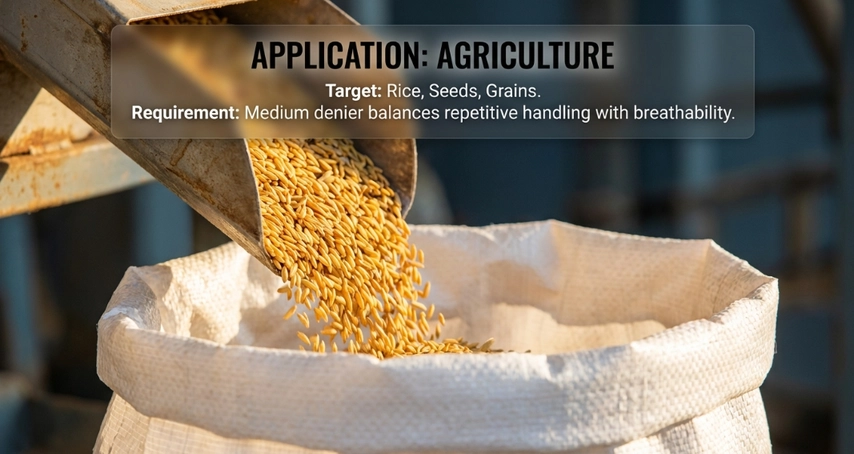
These products benefit from a medium denier. The bags must endure repetitive handling, stacking, and transport while preventing cracking or seam stress.
Heavier materials require thicker yarn. Stronger denier supports lifting stress and prevents deformation under weight.
Powders need tight weaves to limit leakage. Denier must match weave density and coating thickness to maintain containment. Liners or anti-static structures may be added.
Moderate denier is often enough, especially when product appeal and printing quality are important. BOPP lamination adds strength without needing a very high denier.
Choosing yarn thickness by guesswork often leads to unnecessary costs or performance issues. The engineering approach is simple:
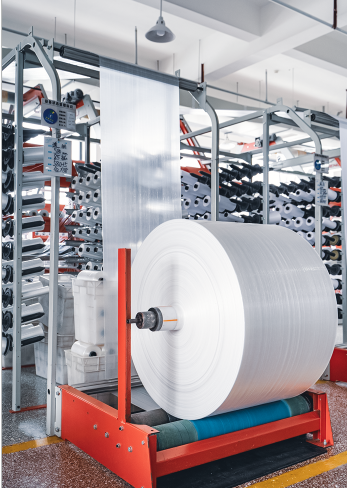
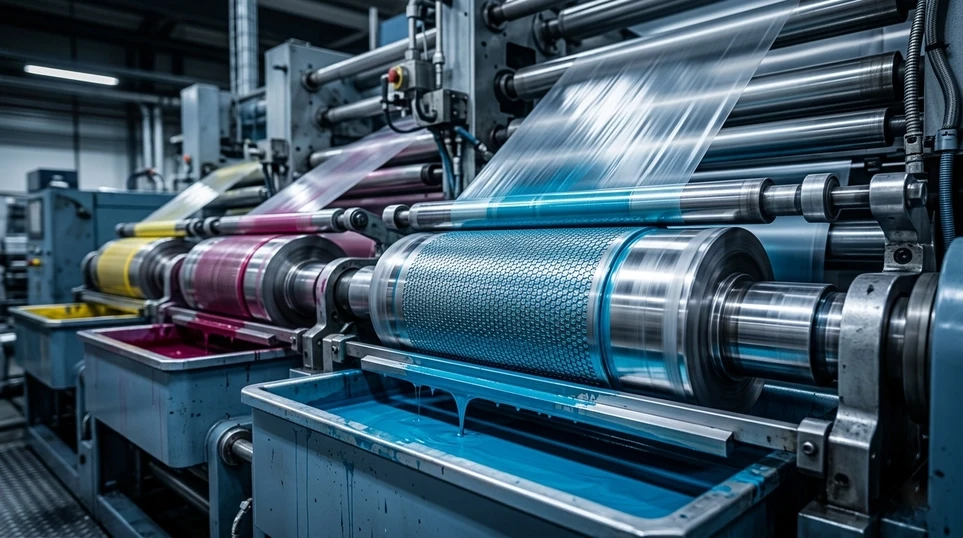
XIFA’s production chain—from wire drawing to weaving, coating, printing, and conversion—is controlled in-house. This lets the team fine-tune specifications for any industry, whether for heavy industrial loads or clean food-contact packaging. Their vertically integrated system, supported by certifications like ISO and BRCGS, ensures that parameter adjustments are precise and consistent.
XIFA offers full flexibility across:
Clients can tailor bag strength, appearance, and performance to match their supply chain needs. Because raw materials come from large upstream suppliers, technical data stays consistent across batches. This helps clients predict performance, plan costs, and maintain stable packaging standards.
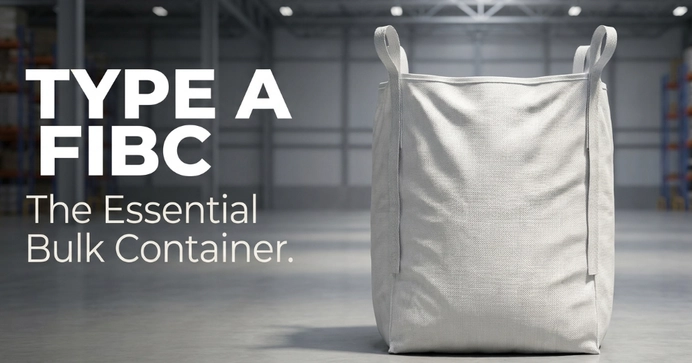
In addition, XIFA supports warehouse management, partial storage, and flexible order quantities. This helps companies manage seasonal demand for woven bags, FIBCs, BOPP bags, and PE film bags.
Denier influences performance, durability, and cost in every PP woven bag.
When chosen correctly, it improves safety, protects your product, and reduces long-term packaging expenses.
XIFA’s integrated manufacturing, material transparency, and wide customization range make it easier to select a fabric structure that fits your industry’s needs. Explore XIFA’s collection of woven PP bags to find a specification that supports your product, workflow, and growth.
It is the yarn thickness used to weave the fabric, which affects strength and weight.
No. Higher values add strength but raise material cost and weight. Choose based on the application.
Evaluate your product load, handling conditions, and storage method. A supplier can recommend a suitable range.