



 by Simin Xiang
A gusseted bag is a bag with folded side or bottom panels that expand when filled. That extra fold increases volume, improves shape control, and helps the bag stack, store, and transport more efficiently.
This guide explains bag structure, M-fold design, use cases, and buying criteria. You will also see how gusset paper bags and paper-plastic composite formats fit building materials, chemical powders, and other industrial applications.
In simple terms, the gusset is an inward fold built into the bag wall. When the bag is empty, the fold lies flat. When filled, it opens and creates more usable volume.
This design changes how the bag behaves in storage and transport. A flat bag tends to bulge unevenly. A gusseted bag forms a more stable profile, which helps pallet loading and shelf presentation.
The folded section acts as an expansion zone. It lets the package hold more product without a large increase in face width.
For industrial users, that means better filling efficiency and more predictable bag geometry. It also improves machine handling on some filling lines.
An M-fold gusset bag uses a folded side panel that looks like the letter “M” in cross-section. This is common in side-gusset packaging for powders, granules, and dry bulk products.
M-fold construction helps the bag open in a controlled way. That matters when you need stable stacking and better use of pallet space.

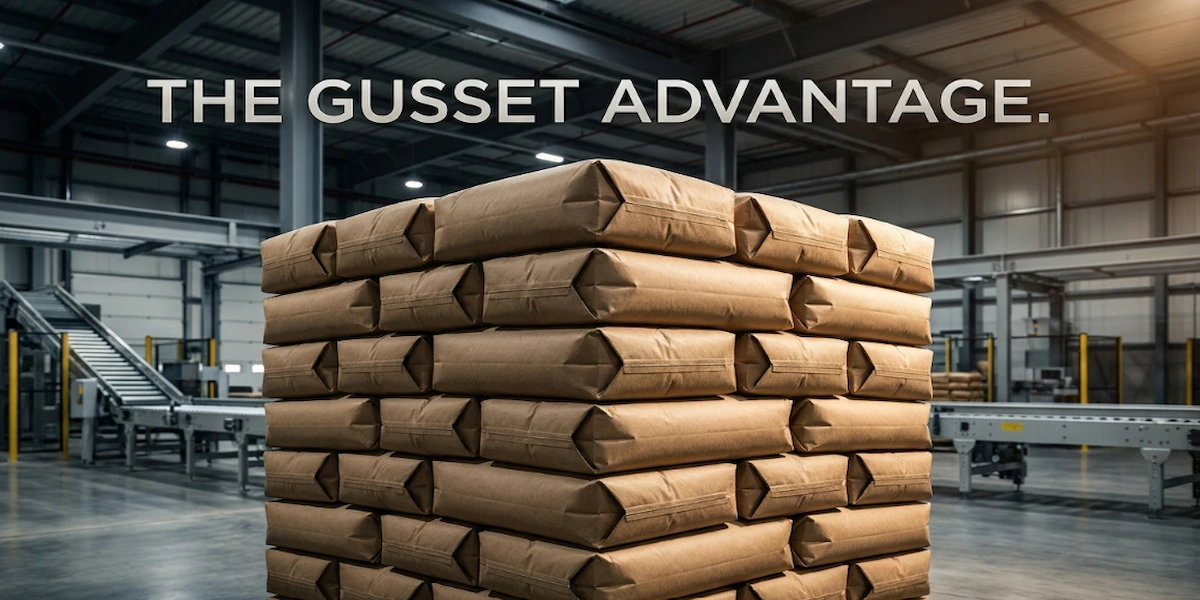
Side gusset construction creates a more rectangular pack after filling. That shape is easier to stack than a rounded or irregular flat bag.
For warehouses and export shipments, this improves container fill and pallet alignment. It also reduces empty gaps between bags.
A more uniform bag profile distributes the load more evenly. That lowers the risk of leaning stacks and pallet instability.
With side gusset formats, rows sit tighter together. This can improve storage density and reduce movement during transport.
With 25+ years in industrial packaging, XIFA has seen side gusset formats used to improve line efficiency and load consistency. In practice, buyers often choose custom gusseted bags when freight cost, stack stability, and warehouse space all matter at once.
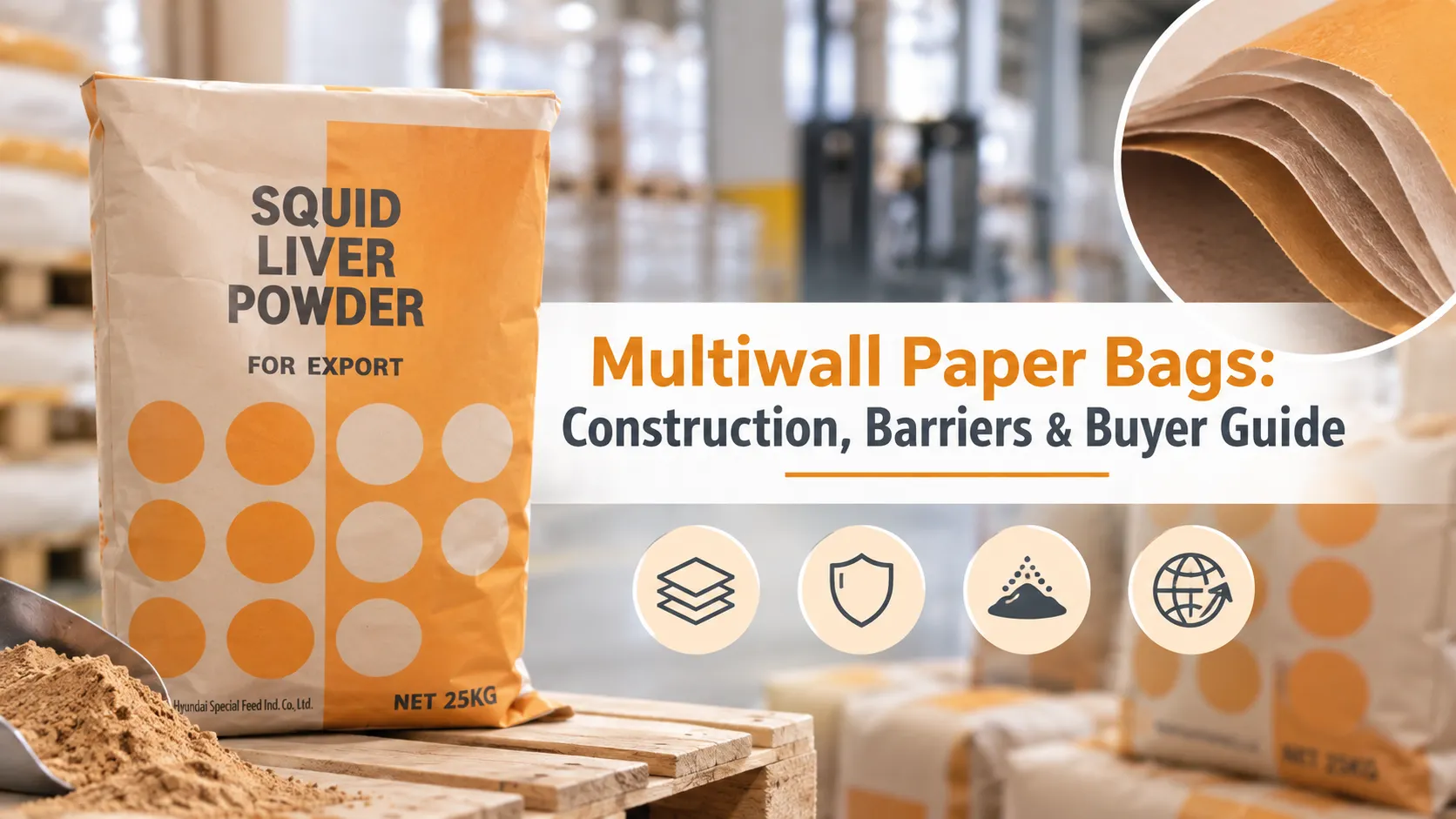
Gusset paper bags are widely used for dry products that need structure, print area, and easier manual or automatic handling. Common markets include food ingredients, mineral powders, cementitious blends, and agricultural products.
Paper-plastic composite structures are useful when the product needs better moisture resistance or stronger burst performance. XIFA provides custom Paper-Plastic Composite bags for building materials and chemical powders, where standard paper alone may not be enough.
A dry mortar producer may need a bag that runs on valve filling equipment, stacks well, and resists warehouse humidity. A side-gusset composite bag can improve pallet shape and reduce bag deformation during transport.
For related end-use sectors, see XIFA’s Construction Applications.
A chemical powder pack often requires controlled dimensions, seal strength, and barrier support. In one common case, a fine mineral powder supplier uses gusseted composite bags to improve stacking and lower dust leakage risk during handling.
For sector-specific packaging needs, see XIFA’s Chemical Applications.
Flat bags still work for light-duty or simple packing needs. Gusseted formats are usually better when load shape, capacity, and stacking matter.
| Feature | Gusseted Bag | Flat Bag |
| Internal Volume | Higher for same face width | Lower |
| Filled Shape | More structured | Less controlled |
| Stacking | Better pallet stability | More shifting risk |
| Shelf Or Warehouse Handling | Easier to align | Less uniform |
| Typical Use | Powders, grains, building materials | Light or simple packing |
Choose flat bags when the product is light, the pack does not need to stand well, or cost and simplicity are the top priorities.
If the product is dense, powdery, or shipped in pallets, a gusseted option usually performs better.
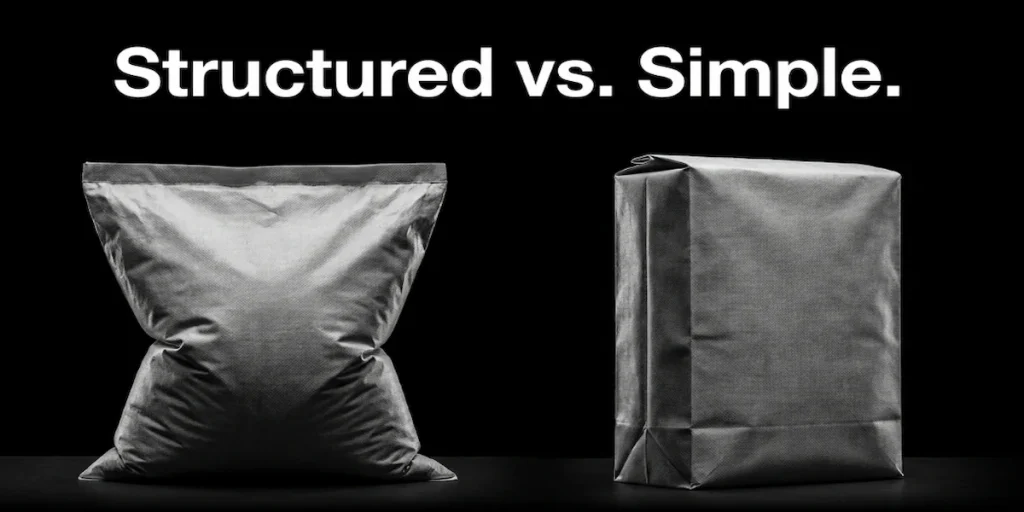
Bag selection should start with product behavior, not appearance. Weight, density, flow, moisture sensitivity, and filling method all affect the correct structure.
Check these first:
A buyer comparing China gusset bags from different suppliers should also review traceability, process control, and material consistency. Those factors affect line performance more than appearance alone.
Ask how the bag is tested, how dimensions are controlled, and whether batch traceability is available. If sourcing from a bottom gusset bag factory or side gusset supplier, request details on paper grade, lamination, sealing method, and print tolerance.
You should also review the wider product range. XIFA’s product collection includes PP Fabric, BOPP Bag, FIBC Big Bag, and PE Film Bag, which helps buyers match bag type to application.
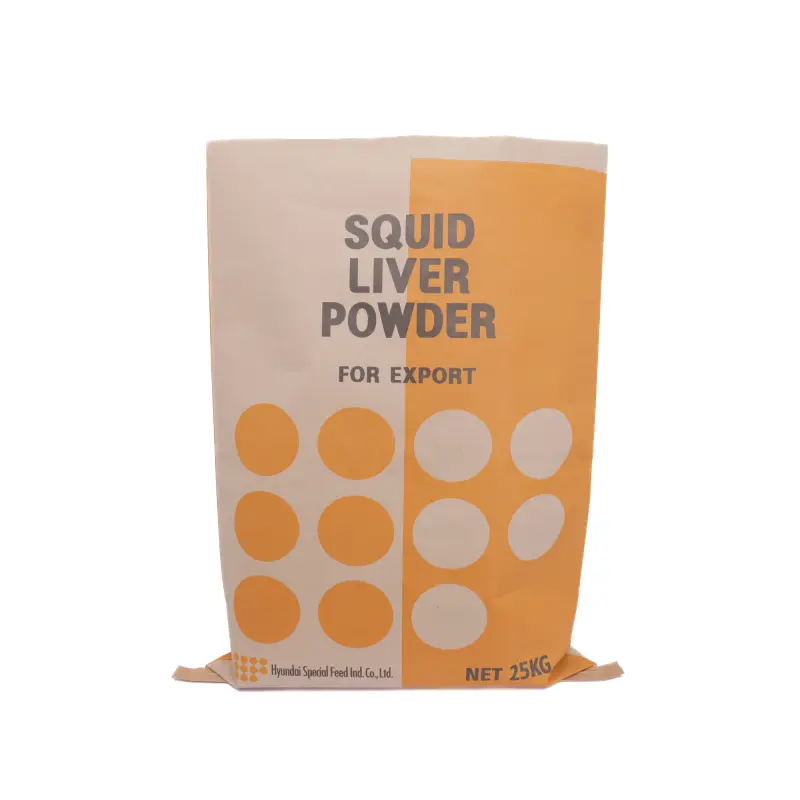
.Gusseted bags are a practical choice when you need more volume, better stacking, and tighter logistics control than flat bags can provide. For buyers evaluating custom gusseted bags and gusset paper bags, the best results come from matching structure to product behavior and transport conditions.
XIFA Group brings 25+ years of packaging experience, a 72,000 square meter facility, 800+ workers, QR traceability, and systems aligned with BRCGS, ISO9001, and ISO14001. Its packaging serves construction, chemicals, agriculture, food, and animal feed, including custom Paper-Plastic Composite bags for powder applications. If you are reviewing industrial packaging options, explore the collection and compare the right format for your line and load.
The main benefit is expandable volume with better shape control. This improves stacking, storage, and transport efficiency.
Yes, many are. For fine or moisture-sensitive powders, paper-plastic composite structures are often a better fit.
Yes. Buyers can customize size, structure, printing, barrier layers, and filling format based on product and line requirements.