



 por Simin Xiang
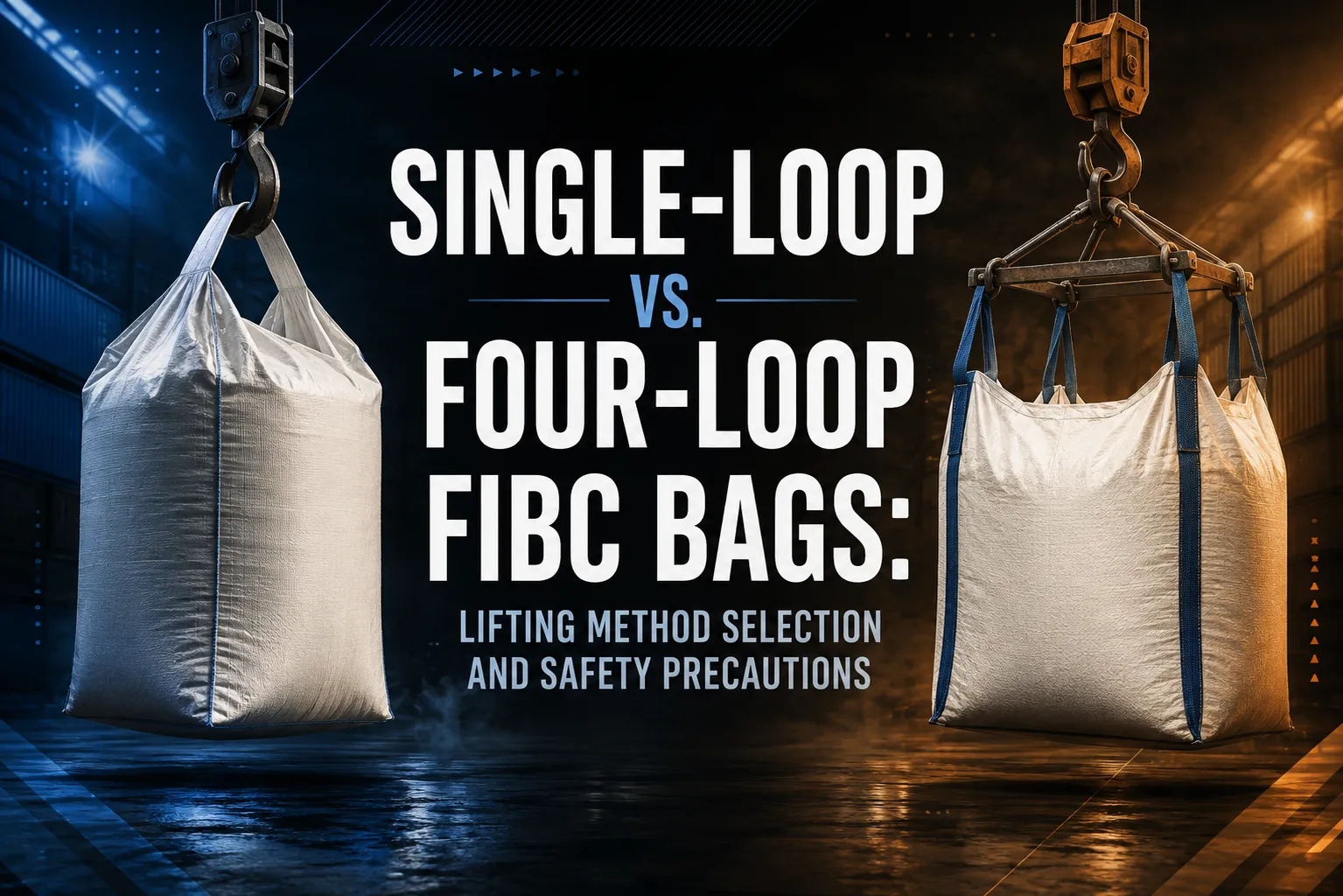
Las bolsas FIBC de un solo lazo concentran la fuerza de elevación en un punto integrado para una operación rápida con grúa por una sola persona. Bolsas de cuatro asas Para mayor estabilidad de la carretilla elevadora, distribuya el peso entre las cuatro esquinas. La elección correcta depende de su equipo de manipulación, la densidad del producto y la infraestructura de transporte regional.
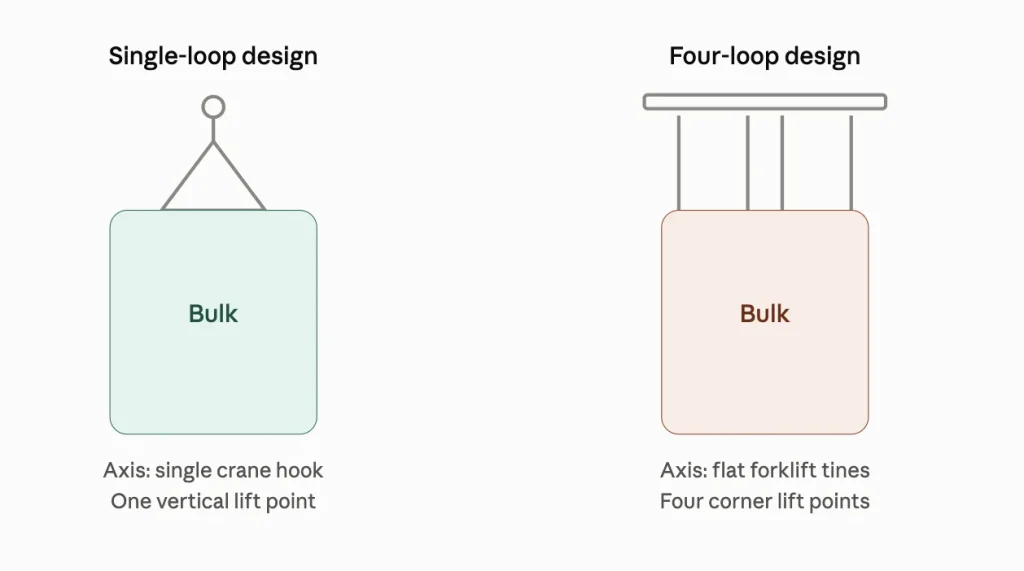
La principal diferencia radica en cómo cada diseño gestiona la tensión vertical durante el izamiento.
En Bolsas FIBC de bucle únicoEl tejido principal se extiende hacia arriba para formar un punto de elevación integrado, eliminando por completo la necesidad de correas cosidas por separado. Esto reduce la complejidad de la fabricación y maximiza la relación resistencia-peso. Cuando un gancho de grúa levanta la bolsa, toda la carga se canaliza hacia un único eje vertical, lo que permite que un solo operario opere la línea sin necesidad de un segundo trabajador para colocar las asas en su lugar.
Los diseños de cuatro bucles dividen esa misma carga útil en cuatro puntos distintos cosidos en las esquinas de un Panel en U o construcción de cuatro paneles. En lugar de concentrar la tensión en un solo punto, el esfuerzo se distribuye uniformemente por las cuatro esquinas, manteniendo la bolsa equilibrada cuando la levanta una carretilla elevadora. Este equilibrio evita que la bolsa se balancee o se incline al moverla sobre suelos irregulares del almacén o al cargarla en plataformas.
La infraestructura portuaria en Europa y África funciona casi en su totalidad con grúas puente y equipos de llenado automatizados basados en ganchos, y esa es la razón principal por la que los contenedores FIBC de un solo bucle y los diseños de dos bucles predominan en las rutas comerciales a través de estas regiones.
Los sistemas de bucle integrado permiten cambios rápidos y un llenado secuencial veloz en este tipo de configuración. Un buque que carga urea a granel o fertilizante comercial puede mover miles de toneladas por hora, ya que los operadores de grúas solo enganchan un punto de sujeción de la tela por unidad en lugar de tener que manejar cuatro correas separadas.
El mercado de bolsas FIBC de dos asas ha crecido paralelamente a esta infraestructura portuaria por una razón específica: las configuraciones de dos asas ofrecen una ligera mejora en la estabilidad con respecto a las bolsas de una sola asa, manteniendo una velocidad de cambio similar a la de las operaciones con un solo gancho. Para los operadores que buscan un mayor equilibrio sin renunciar a la rapidez de manipulación que hace que los sistemas con gancho sean una buena opción, este punto intermedio resulta muy atractivo.
No todos los mercados funcionan con infraestructura portuaria basada en grúas. Muchas operaciones dependen en cambio de la logística estándar con carretillas elevadoras, y esos patios se basan casi por completo en configuraciones de múltiples bucles.
Para necesidades regionales especializadas fuera de los puertos automatizados, el abastecimiento a través de un socio exportador indio de FIBC de cuatro asas puede ofrecer configuraciones alternativas adaptadas a los sistemas de transporte básicos. Sin embargo, para industrias pesadas de alta capacidad, como el procesamiento químico o la minería, las bolsas FIBC estándar de cuatro asas siguen siendo el método principal para mantener estables las cargas pesadas y densas durante el transporte y el almacenamiento.
Los modelos de un solo asa concentran toda la carga en un único punto superior, lo que obliga a las grúas a levantar la bolsa completamente en vertical para mantener la tela intacta. Tirar de la bolsa lateralmente o arrastrarla por el suelo ejerce una presión desigual sobre el material y puede rasgar el asa integrada.
Los operarios de carretillas elevadoras nunca deben intentar levantar una bolsa de un solo punto con una horquilla sin recubrimiento, a menos que utilicen un gancho de grúa especializado y redondeado diseñado para evitar cortar el polipropileno.
La mayoría de las mochilas de un solo punto de anclaje tienen un factor de seguridad de 5:1, lo que significa que están diseñadas para viajes de un solo uso y nunca deben cargarse más allá de su capacidad de peso exacta.

Las empresas comerciales más pequeñas a menudo tienen dificultades para cumplir con las especificaciones globales personalizadas, y es precisamente ahí donde una empresa integrada de fábrica y comercio como XIFA Group tiene ventaja. XIFA diseña, teje y prueba la carga tanto de sacos FIBC de una sola asa como de sacos a granel de cuatro asas, todo internamente, y cuenta con una producción a gran escala equipada con líneas de trefilado de precisión, maquinaria de tejido circular de alta velocidad y sistemas de costura automatizados diseñados para gestionar pedidos personalizados en grandes volúmenes.
Nuestro equipo de ingeniería adapta cada diseño de bolsa a la configuración específica de su fábrica y a las normativas de envío regionales. Si envía polvos químicos finos a Europa, fabricamos bolsas personalizadas de una sola capa con revestimientos interiores de PE coextruido cosidos a las costuras exteriores, lo que evita que el revestimiento se retuerza o se deslice durante el llenado rápido y automatizado. Si su operación transporta materiales mineros pesados y afilados para envíos a puertos africanos o necesita configuraciones de asas en las esquinas que cumplan con los estándares de montacargas de la India, fabricamos bolsas FIBC multicapa de 4 asas de alta resistencia con costuras de doble puntada y estabilización UV, diseñadas para soportar un almacenamiento exterior exigente sin deteriorarse.
Desde longitudes de bucle personalizadas hasta bucles especializados capas de tejido antiestáticoXIFA proporciona una cadena de suministro directa desde fábrica que mantiene las operaciones globales funcionando de forma segura y puntual en todas las regiones a las que prestamos servicio, sin los fallos de entrega que se producen al trabajar a través de intermediarios no cualificados.