



 by Simin Xiang
Quick Answer:
In the UAE, there are manufacturers and suppliers that cater to cement, chemicals, minerals, food, and other product lines with multiwall kraft sacks. Meanwhile, Dubai and Sharjah can also be considered sources for access to logistics services for GCC and re-export orders. In sourcing paper bag manufacturers in UAE, industrial buyers should take into consideration the following criteria: ply count, closure type, barrier technology, printing services, and manufacturing capabilities. Location is also important for packaging materials to be distributed from the UAE. XIFA Group is another China-based option for bulk orders, specializing in bag packaging manufacturing, including paper bags, PE film bags, and more.
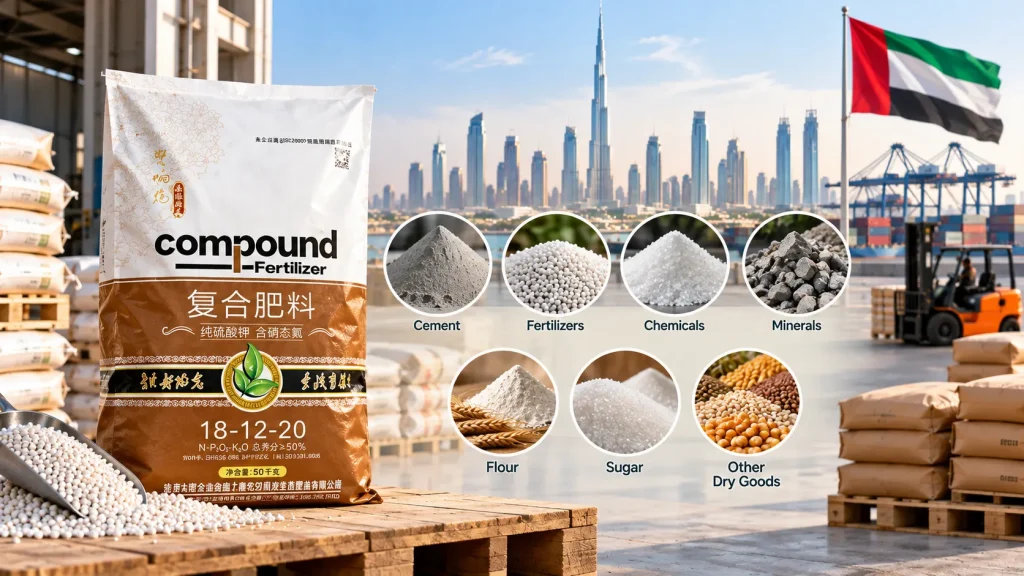
The UAE meets packaging needs not only in its home market but also regionally. Industrial paper sacks are made for the packaging of cement, fertilizers, chemicals, minerals, flour, sugar, and other dry goods.
When dealing with purchasing in bulk, there are some differences from the retail market with regard to kraft paper bags in Dubai. The industrial sacks must be constructed with consideration of the filling machinery, weight, moisture, and palleting needs.
There are some manufacturers of kraft paper in the UAE as well. Arabian Kraft Paper in Umm Al Quwain declares a production capacity of more than 20,000 metric tons per year.
There are several UAE-based firms that manufacture/supply paper packaging, but these vary in terms of specialization.
Paper Sacks Factory is a business within Sharjah Cement & Industrial Development Company. It started production in 1976. This factory specializes in manufacturing multi-wall pasted valve sacks for cement, fertilizers, chemicals, flour, sugar, and minerals. It claims to have the capacity to produce 120 million sacks per year and caters to 2–6 ply structures. Exports take place in GCC nations, Africa, Asia, and other foreign countries.

Shuaiba Industrial Company runs an industrial packaging plant at Jebel Ali Free Zone, along with its operations in Kuwait. Paper sacks made by this firm can have 2-4 plies, with a PE film lamination option. Uses for such sacks include cement, gypsum, lime, fertilizers, animal feeds, food grains, and agricultural products. They claim the combined capacity of Kuwait and JAFZA facilities is 180 million bags/year.

Hotpack runs a plant in Dubai Investments Park that produces paper packaging products. Among the papers that it produces are kraft bags, flour bags, salt bags, grocery bags, and many other options. It also provides services like six-color flexographic printing in its manufacturing unit. Users should ensure that the material will be suitable for their particular industrial application.

Arabian Kraft Paper does not limit itself to producing industrial sacks but also manufactures kraft paper for conversion purposes. Its manufacturing facilities in the UAE produce virgin, semi-virgin, recycled, bleached, and unbleached kraft paper. It is claimed that 60% of its production is exported.
Use the chart as a starting point for assessing industrial paper sacks available in the UAE and associated kraft packaging.
Note: The information below has been gathered from publicly available information on the companies on their website at the time of this writing.
| Supplier | Location | Main focus | Published information |
| Paper Sacks Factory | Sharjah | Multiwall valve sacks | 2–6 plies, 120 million/year |
| Shuaiba Industrial | Jebel Ali | Multiwall industrial sacks | 2–4 plies, PE option |
| Hotpack Global | Dubai | Kraft and food paper bags | Six-color flexo available |
| Arabian Kraft Paper | Umm Al Quwain | Kraft paper production | 20,000+ MT/year |
| XIFA Group | China | Multiwall industrial sacks | 2–4 plies, barrier options |
XIFA is included for import comparison only. It is not one of the paper bag suppliers in the UAE.
The choice of materials for the production of industrial sacks depends on the contents of the sack. While heavy powder material could call for many layers of kraft, moisture-sensitive material could call for PE or any other barrier layer. The printing needs have to be determined before quotations.
Certification has to match both the product and the production location. Paper Sacks Factory’s parent company has claimed ISO 9001:2015 for its sack manufacturing facility. Food packaging would require additional food-safe certificates.
XIFA lists available management, quality control, and food-safety systems including AIB, BRC, FSSC 22000, HACCP, and ISO-based certifications.
The free zones of the UAE could be beneficial for companies if they import packaging or packed products prior to distributing them in other markets. It should be noted that the free zone does not automatically provide a special customs and VAT treatment for all transactions.
According to the UAE Federal Tax Authority, only certain Designated Zones that meet certain criteria are provided with special VAT treatment. In addition, customs supervision and documentation for the import and export of goods are required.
Moreover, Dubai Customs provides some guidelines for imported goods for further re-exportation. Accordingly, buyers who intend to use industrial paper sacks in the UAE in case of regional distribution should consider preparing necessary documentation before shipment.
It is possible to stock a warehouse in the UAE with inventory for GCC, Africa, and South Asia customers. It is possible to avoid sending individual small orders directly from the origin factory to different customers.
Economic benefits will depend on warehouse costs, delivery frequency, customs treatment, and final destination of each shipment. It is necessary to verify the current process through a freight forwarder or customs broker.
UAE manufacturing may work well for buyers that require regional sourcing, reduced domestic transportation, or ease of restocking local inventories.
China may be a good option for bulk orders in containers when international transport time can be accounted for within inventories.
XIFA produces multiwall kraft bags for cement, flour, fertilizer, feed, chemicals, foodstuffs, plastic pellets, and charcoal. Structures available include PE linings, PE coating, and aluminum foil lining.
The company claims an OEM standard of 10,000 bags and above, with bulk manufacturing taking about 15 to 20 days. Special dimensions and 7-8 color printing are available.
When comparing kraft paper bags Dubai with sourced packaging, the quote must include freight cost, importation cost, storage cost, and inventory.
The product itself, desired filling weight, and filling machine to be used should be specified at the beginning of the request. This determines dimensions, composition of paper, valve structure, and venting features of the bag.
Also, buyers should state paper GSM, ply number, liner, closure, printing, quantity per year, country of destination, and required certificates.
In case of storage in UAE conditions, information about expected temperatures and humidity should be provided. If it is necessary, a special moisture barrier should be added. Sampling of the bags should be performed in real conditions of filling.
Yes. Shuaiba mentions that their multiwall bags have options for PE film laminated.
No. XIFA Group produces its products in China and is listed as one of the options for importing.
Yes. But whether such imports will be considered as such or not is based on many other factors as well.
No. The total cost of landed cost includes freight, customs, storage, stock keeping, and risks of rejection.