



 by Simin Xiang
There are seven different categories of plastics marked by SPI Resin Identification Codes 1 through 7. Some of these are easily recyclable and don’t cause much trouble, whereas others require more intricate handling in their recycling process. Choosing the correct method for each is how processing plants manage to turn different types of plastic waste into raw materials that generate revenue.
This numbering system was first introduced by the Plastics Industry Association in 1988. Today, nearly every plastic product has a chasing-arrows triangle that has these numbers stamped. These plastic classifications help sorters identify materials on sight rather than using their best judgment.
Chemicals and heat affect each polymer differently. A recycling facility cannot process PVC via the same method as it processes PET. Before melting anything, the sorters use the numbers to understand what they’re dealing with.
Below is a plastic recycling guide that explains what each resin code implies and where the material ends up after collection.
You drink from PET constantly, since it makes up most water and soda bottles. Facilities shred collected bottles into flakes. They wash out the labels, then melt everything into pellets. PET recycling turns those pellets into polyester fibers for clothing and carpet, or back into new bottles. Almost every municipal program accepts it, which is why PET has one of the highest recovery rates among household plastics.
HDPE tends to resist chemicals and hold its shape, so it’s the ideal plastic for things like shampoo containers and milk jugs. A wash cycle marks the beginning of HDPE recycling. It’s done to strip contaminants and ensure the material gets ground into flakes. You then melt those flakes into plastic lumber, pipes, and storage bins.
Your plumbing pipes and window frames likely contain PVC. Its durability comes from chlorine and additives that turn toxic when melted down. Most recycling centers won’t touch it because of that. What little gets processed requires specialized chemical treatment. The rest becomes plastic waste in a landfill.
Grocery bags, bubble wrap, and squeeze bottles are all LDPE. It’s flexible enough to stretch, but that same flexibility jams sorting machinery at recycling plants. Wondering how to recycle plastic film specifically? Skip your curbside bin. Drop it at a supermarket collection point instead.
Bottle caps, yogurt cups, and car bumpers use PP because it survives high heat without warping. PP recycling depends on optical sorters that pull it out of mixed waste streams. From there, the material gets deodorized. It’s then reformed into battery cases, storage bins, and shipping pallets. That same durability is also why industry relies on PP far beyond the yogurt cup, as you’ll see further down.
You know this one as Styrofoam. Coffee cups and takeout containers are made from it, but it’s mostly air. That makes shipping it to a recycling facility barely worth the cost. Thermal densifiers can compress it down into solid blocks, but few facilities are equipped to take it, which is why most curbside programs still refuse it outright.
Polycarbonate, acrylic, and bioplastics all land here, showing up in water coolers and electronics. These resins don’t match each other chemically. Standard sorting lines can’t handle them as a result. Most get incinerated for energy. Some go through experimental pyrolysis to break the molecules back down.
Your curbside bin and a commercial recycling plant aren’t playing the same game.
Municipal systems deal with dirty, mixed residential waste. They stick mostly to PET and HDPE because those sort out easily. Industrial recycling works with clean, single-stream commercial scrap instead, arriving in bulk with far less contamination. That difference in feedstock is what lets industrial plants take on higher volumes of materials like PP and LDPE than a city program could ever manage.
Large plants use Near-Infrared spectrometry to identify material the instant it passes a sensor: Collected Waste → NIR Optical Sorting → Friction Washing → Shredding/Granulation → Extrusion into Pellets.
The PP and HDPE from your kitchen are only a fraction of what those two resins actually do. Factories consume enormous volumes of both for industrial packaging you never see on a store shelf.
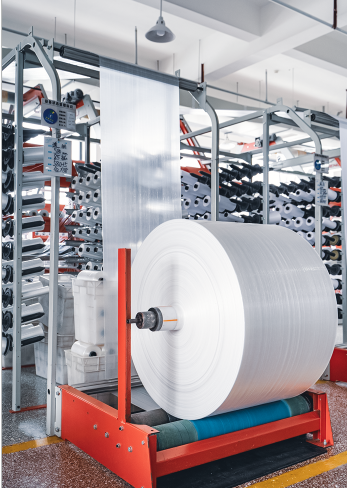
PP gets woven into bulk bags, feed sacks, and cement bags. Once those wear out, they shred and pelletize back into circular plastic pellets instead of sitting in a landfill. HDPE gets extruded into protective films and liners built specifically to survive standard wash and recovery systems.
Some of this recycling happens before a product even ships. Factories leverage closed-loop, in-house recycling to immediately repurpose trimmed edges and other manufacturing waste back into the production line. This process reduces energy consumption and the need to buy new virgin resin.
High-capacity bulk manufacturing & custom solutions for global industrial buyers.
Explore Product CatalogRecycling starts at home, but the biggest volumes get handled long before anything reaches your curb.
At home, rinse food containers before you toss them, and keep plastic film out of your rigid recycling bin since it jams equipment. On the industrial side, the more meaningful shift comes from manufacturers who manage their own structural scrap instead of relying on consumers to sort it out downstream.
As a responsible group, XIFA Group possesses an industry-leading closed-loop process for the large-scale industrial recycling of PP (No. 5) and HDPE (No. 2). We turn post-use plastics and commercial production scrap into high-performance raw materials. This helps XIFA minimize fossil fuel reliance while preventing secondary environmental pollution, giving our enterprise partners a sustainable source of recyclable plastic for their packaging needs.