

 by Simin Xiang
Per- and polyfluoroalkyl substances (PFAS) are synthetic chemicals used for grease, heat, and water resistance that may be found in food packaging. These chemicals, however, do not break down easily in the environment or the human body. Hence, this article breaks down the risks of PFAS in food, current legal changes, and the shift toward safer packaging alternatives.
PFAS in food packaging is a common mechanism as they resist grease, moisture, and heat, making them common in burger wrappers, paper plates, and takeout containers. Their strength and durability make them suitable for many food-grade materials and industries.
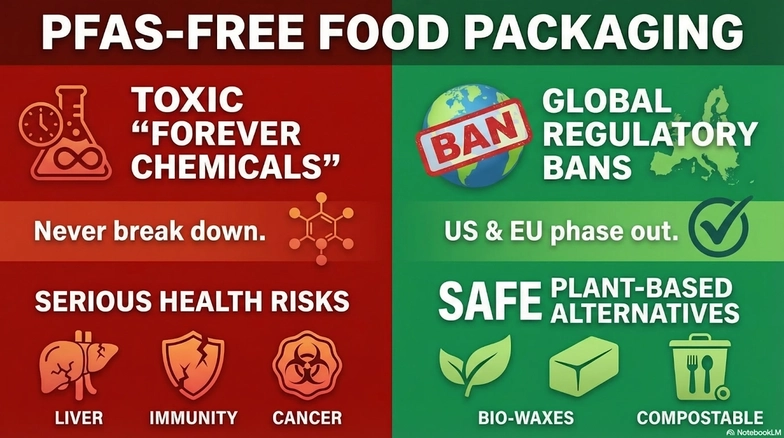
However, PFAS are often called “forever chemicals” since they are not easily broken down. In the long run, they build up in the environment and in the human body, increasing risks of liver damage, weakened immunity, hormone disruption, and cancers. These growing health concerns have led to stricter regulations and efforts to reduce PFAS in food packaging.
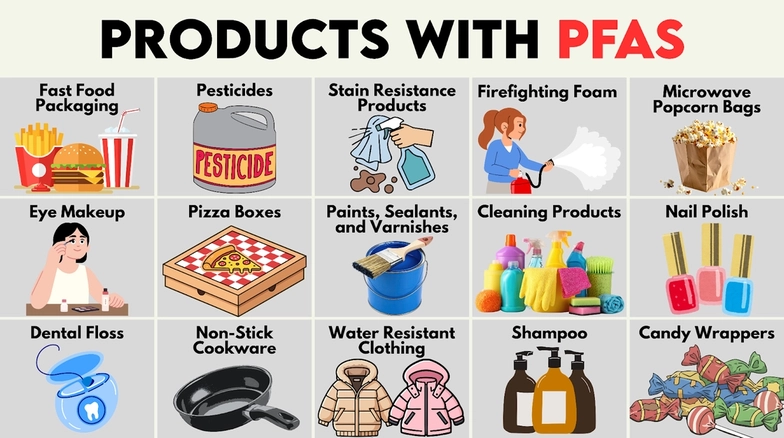
To address the rising health concerns, different governments globally are enacting legislation to limit or phase out PFAS in food, promoting non-PFAS food packaging solutions and healthier lifestyles. With the U.S. and the European Union leading these efforts, the regulatory landscape is now rapidly evolving.
In the U.S., states like California and New York have implemented bans on PFAS in food packaging, while the EU is proposing restrictions across various products, such as food contact materials. These regulations aim to minimize consumer exposure and encourage the industry to adopt safer, PFAS-free choices.
However, these create a complex patchwork for manufacturers worldwide as standards and timelines are different by region. Therefore, companies should carefully navigate these varying rules to ensure compliance without compromising product quality and production efficiency.
The PFAS packaging regulation news is reshaping the food industry, pushing manufacturers and distributors to adopt PFAS-free solutions that meet the standards and demands for safer, non-toxic products. However, the key challenge is looking for alternatives that match the renowned grease and moisture resistance of PFAS while maintaining packaging performance.
This drives numerous companies to explore plant-based materials, advanced barrier technologies, and natural coatings like bio-waxes and clay to eliminate the need for PFAS. Compostable materials and engineered grease-resistant layers are gaining popularity as sustainable and eco-friendly options.
To stay compliant and competitive, businesses must collaborate with material experts, invest in research and development, and partner with suppliers specializing in PFAS-free solutions. By embracing creativity and commitment, the industry can meet environmental standards while maintaining excellent food quality and overall functionality.
Identifying PFAS in food packaging has led to stricter manufacturing standards and better material innovation. Now, the industry is moving away from these “forever chemicals” to help protect public health and the environment. Adopting PFAS-free food packaging is now highly encouraged for many businesses, particularly in the modern food market.
XIFA meets the strict certification requirements of the European market through strict quality control methods for food packaging without PFAS. We source all raw materials from reputable large-scale suppliers to ensure safety and consistency. Furthermore, to support sustainable goals, XIFA has developed a biodegradable version of the inner bag for food-grade applications.