

 Симин Сян
Вертикальные пакеты FFS идеально подходят для сыпучих продуктов, таких как порошки и гранулы. Горизонтальные же форматы лучше всего подходят для твердых продуктов или премиальной розничной упаковки. Правильный выбор зависит от характеристик вашего продукта и форматов пакетов, востребованных на вашем рынке.
Вот как вертикальные и горизонтальные машины FFS различаются по ключевым эксплуатационным параметрам.
| Фактор | Вертикальная упаковочная машина FFS | Горизонтальная упаковочная машина FFS |
| Ориентация | Работает вертикально, используя силу тяжести. | Работает в горизонтальном положении с конвейером. |
| Подходящие продукты | Порошки, гранулы, жидкости, мелкие сыпучие предметы | Твердые предметы, изделия неправильной формы, хрупкие товары |
| Распространенные форматы сумок | Пакеты-подушки, пакеты с боковыми складками, пакеты с четырехсторонней запайкой | Пакеты с устойчивым дном, плоские пакетики, пакеты для ретортной обработки, пакеты с застежкой-молнией. |
| Скорость производства | Более 200 мешков в минуту | Высокая скорость, но медленнее при индексировании заливок. |
| Площадь пола | Компактные габариты, требуется высота потолка. | Требуется линейная площадь пола. |
| Первоначальная стоимость | Снижение инвестиций в оборудование. | Более высокая первоначальная стоимость |
| Обработка продукции | Товары падают под действием силы тяжести. | Аккуратное размещение на конвейере |
| Лучшее для | Товары массового производства | Товары премиум-класса для розничной торговли, деликатные изделия |
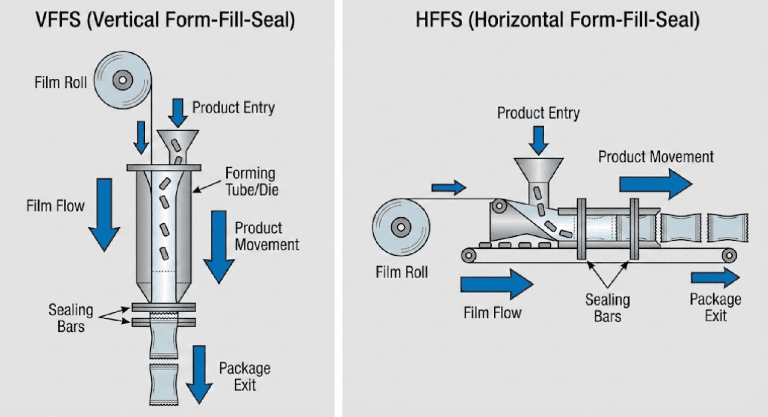
Тип упаковываемого материала определяет, какая машина сможет его обработать.
Сыпучие продукты, такие как сахар, кофейная гущаПластиковые гранулы используются в вертикальных системах. Материал спускается через трубчатый формовочный механизм в расположенные ниже мешки, что позволяет достичь скорости более 200 мешков в минуту. Такая эффективность достигается за счет использования силы тяжести вместо механических систем для перемещения продукта.
Для твердых или хрупких изделий необходимы горизонтальные машины. Если ваш продукт ломается при падении, требует определенной ориентации или имеет неправильную форму, вертикальное наполнение не подойдет. Горизонтальные конвейеры бережно перемещают изделия к формовочной станции и позиционируют их перед обмоткой пленкой.
Стили упаковки, ожидаемые вашим рынком, сужают ваш выбор.
Вертикальные системы эффективно производят пакеты-подушки и пакеты с боковыми складками. Пакеты-подушки имеют шов с задней стороны и подходят для товаров массового потребления. Пакеты с боковыми складками имеют боковые складки, которые расширяются при наполнении, позволяя им устойчиво стоять на полках. Эти форматы подходят для кофе, закусок и т.д. корм для домашних животных где вам необходимо заметное присутствие на полке без дополнительных функций премиум-класса.
Рынок горизонтальных упаковочных машин FFS значительно вырос благодаря спросу на премиальную розничную упаковку. Эти системы позволяют создавать различные форматы, которые стимулируют розничные продажи, в том числе
Если розничные продавцы требуют именно таких форматов или потребители ожидают упаковку с возможностью повторного запечатывания, становится необходимым горизонтальное оборудование.
Размеры вашего здания ограничивают возможности установки той или иной машины.
Вертикальное оборудование занимает минимальную площадь, поскольку оно направлено вверх. Если вы увеличиваете производственные мощности в условиях ограниченного пространства, вертикальные машины помещаются в небольших помещениях. Для формовки трубок необходима высота потолка и высота падения продукта, обычно 12-15 футов в зависимости от размера мешка.
Для организации производственной последовательности горизонтально расположенному оборудованию требуется длина пола. Конвейер, размотчик пленки, формовочные станции и оборудование для запайки располагаются в линию, которая может простираться на 20-30 футов. Это удобно для помещений с низкими потолками, где вертикальное оборудование не поместится.
Стоимость оборудования различается в зависимости от типа машины.
Вертикальные системы обходятся дешевле на начальном этапе и обеспечивают меньшие текущие расходы:
Горизонтальные упаковочные машины требуют больших инвестиций, но их возможности оправдывают затраты. Если вы продаете продукцию премиум-класса, где упаковка играет решающую роль при покупке, то возможности горизонтальных систем позволяют устанавливать более высокие розничные цены. Возможность добавления молний, носиков и нестандартных форм отличает вашу продукцию от конкурентов, использующих обычные пакеты-подушки.
Свойства пленки должны быть совместимы с системами вашего оборудования.
Для упаковочных машин Vertica FFS необходима пленка, достаточно жесткая, чтобы формировать тубы при наматывании на трубоформовочное устройство. Материал должен запаивать при высоких скоростях и выдерживать вес продукта во время гравитационного наполнения. Если пленка слишком тонкая, тубы деформируются и создают проблемы с наполнением.
Для горизонтальных машин требуется пленка, которая движется по двум полотнам и запечатывается через несколько слоев при формировании складок. Материал должен быть плотным, чтобы пакеты могли стоять вертикально после наполнения.
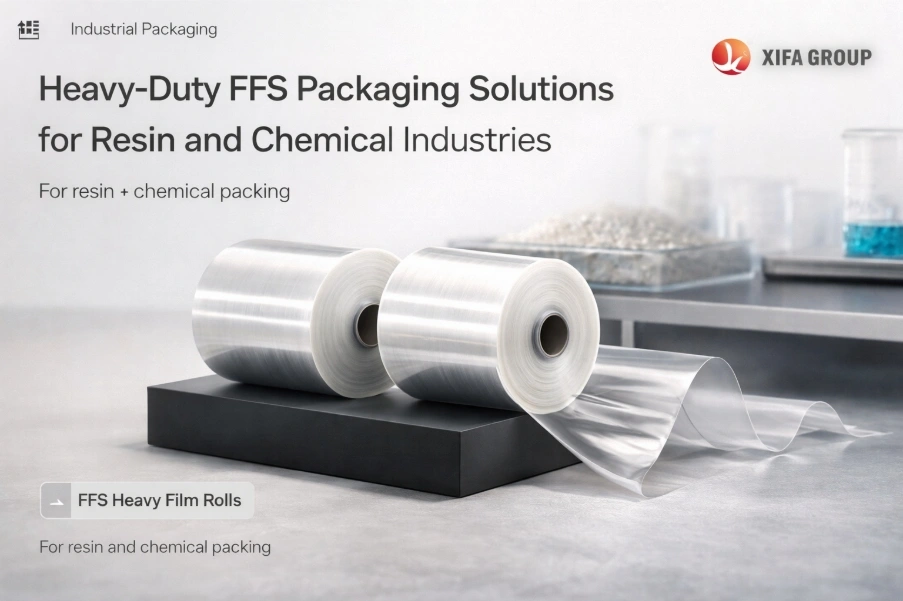
Дизайнерский отдел XIFA Group предоставляет Индивидуальные размеры и дизайн логотипа с использованием различных шрифтов. В зависимости от конкретной модели вашего оборудования. Наша команда сотрудничает с техническими инженерами, чтобы гарантировать соответствие характеристик пленки возможностям вашего оборудования. Мы корректируем толщину пленки для правильного формования, ширину в соответствии с производительностью и параметры прочности шва для вашей скорости производства.
Свяжитесь с нашей технической командой чтобы обсудить технические характеристики пленки, соответствующие требованиям вашей машины для пленочной печати.
Обеспечьте бесшовную интеграцию с существующим оборудованием VFFS/HFFS. Мы проводим профессиональные испытания по подбору оборудования, чтобы исключить риски простоя.
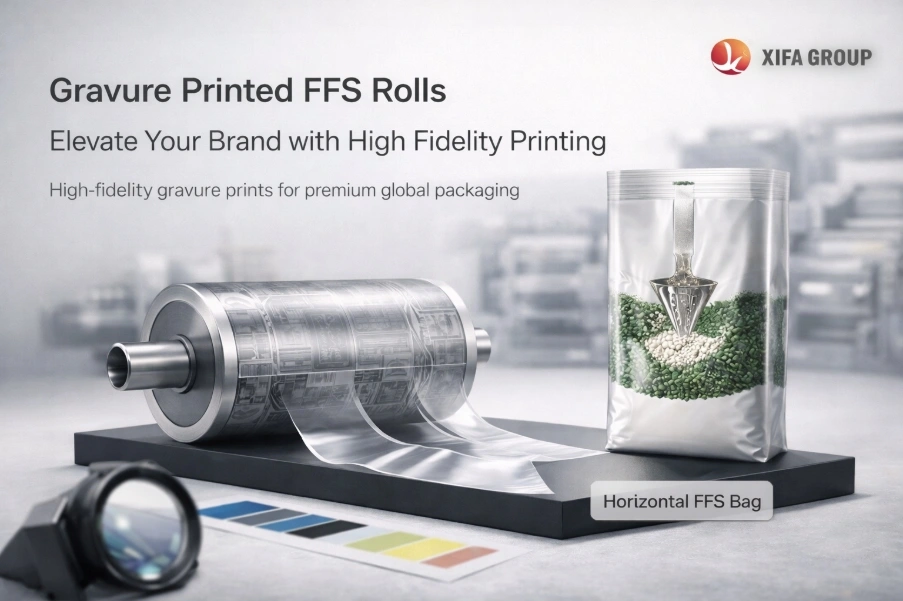
От глянцевых до матовых покрытий премиум-класса. Многослойная соэкструзия и ротогравюрная печать гарантируют, что ваш бренд будет выделяться благодаря долговечности промышленного уровня.
Специально разработанные для высокоскоростных автоматизированных линий, наши пленки обладают превосходной устойчивостью к проколам и эластичностью, предотвращая разрыв во время быстрого наполнения.
Вертикальные пакеты FFS используют гравитационное наполнение для получения сыпучих продуктов и бывают в формате «подушки» или с боковыми складками. Горизонтальные пакеты FFS предназначены для твердых предметов или премиум-форматов, таких как стоячие пакеты, с точным размещением продукта.
Вертикальные системы FFS имеют меньшие первоначальные инвестиции и затраты на техническое обслуживаниеГоризонтальные системы стоят дороже на начальном этапе, но обеспечивают более широкие возможности форматирования для упаковки премиум-класса.
Нет, пленка должна соответствовать системам формования и запайки вашей конкретной машины. Толщина, ширина и рисунок запайки должны соответствовать техническим характеристикам вашего оборудования.