

 por Simin Xiang
Las bolsas FFS para operaciones con resina ofrecen dos ventajas cruciales: velocidades de envasado automatizadas superiores a 1000 bolsas por hora y sellos herméticos que impiden la entrada de humedad. Si envasa resinas granulares, estas capacidades impactan directamente en su rendimiento de producción y la calidad del producto. bolsas tejidas tradicionales No pueden coincidir.
El envasado de resina granular no es como el envasado de otros productos industriales.
El material fluye libremente, lo que significa que se necesitan sistemas de llenado que soporten altas velocidades sin generar polvo ni derrames. La resina también se degrada al exponerse a la humedad, por lo que cualquier espacio en el envase permite la entrada de aire y agua. Esto provoca aglomeración, decoloración y cambios en las propiedades químicas que inutilizan el producto.
Las bolsas tejidas tradicionales presentan problemas en ambos sentidos. Los cierres cosidos dejan agujeros que permiten la filtración de humedad.
Las operaciones de llenado manual no pueden seguir el ritmo de los volúmenes de producción modernos. Se generan cuellos de botella en la línea de envasado que limitan la producción total de las instalaciones.
La tecnología FFS resuelve estos problemas al combinar la formación, el llenado y el sellado de bolsas en una secuencia automatizada.
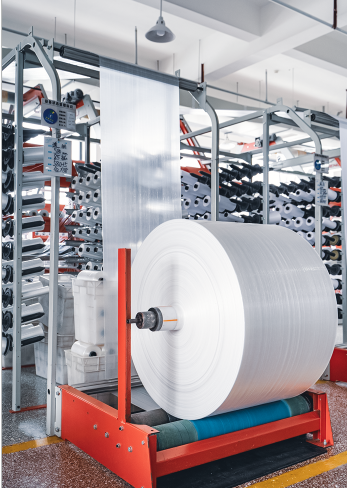
El sistema crea bolsas a partir de rollos de película continua, las llena a alta velocidad y las termosella sin costuras. Esto significa que no hay agujeros de aguja ni manipulación manual que ralentice la línea.
El cambio hacia el embalaje FFS refleja cambios más amplios en la forma en que industria química opera.
Costos y disponibilidad de mano de obra
Encontrar personal para las operaciones de envasado se ha vuelto más difícil y costoso. La automatización de FFS reduce la cantidad de personal necesario en la línea de envasado. Un solo operador puede gestionar equipos que, de otro modo, requerirían tres o cuatro trabajadores para posicionar y sellar las bolsas manualmente.
Presión regulatoria sobre la integridad del producto
Las normas de seguridad para la manipulación de productos químicos exigen un embalaje que evite fugas y contaminación. Si se produce una fuga de producto durante el transporte o el almacenamiento, se expondrá a responsabilidades y sanciones regulatorias. El embalaje FFS, que utiliza películas multicapa de polietileno o polipropileno, crea propiedades de barrera que las estructuras tejidas tradicionales no pueden lograr:
Expectativas del mercado en materia de sostenibilidad
Los clientes demandan cada vez más embalajes reciclables. Los sistemas FFS funcionan con películas monomaterial que las plantas de reciclaje pueden procesar, a diferencia de las bolsas tejidas compuestas que mezclan materiales y terminan en vertederos.
La tecnología ofrece beneficios de rendimiento específicos cuando se aplica a envases de resina granular.
Velocidad de producción que cambia su capacidad
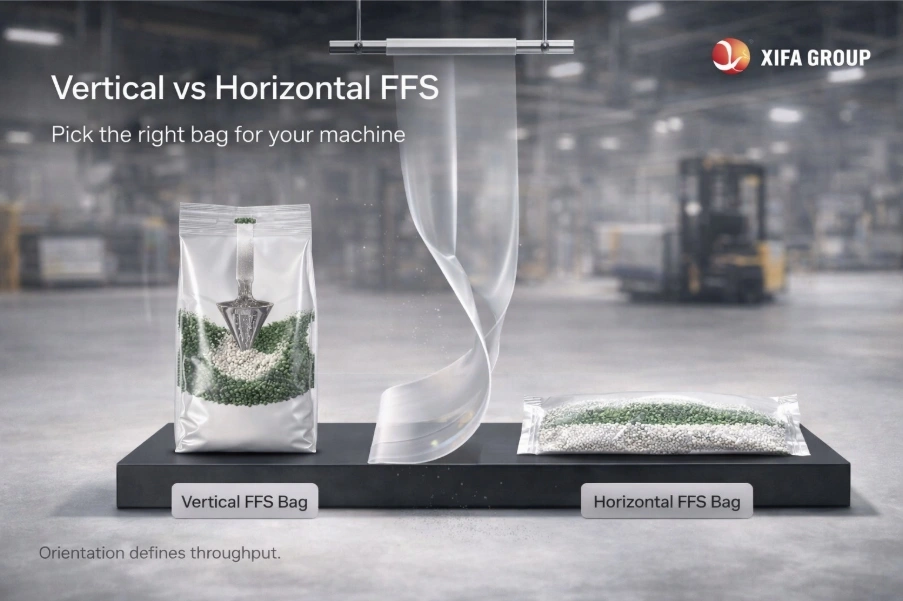
Los sistemas FFS verticales u horizontales manejan miles de bolsas por hora. Esto significa que puede envasar más producto en un solo turno sin añadir líneas de envasado ni ampliar sus instalaciones.
La ventaja de velocidad se agrava cuando se consideran los cambios.
Si necesita cambiar de bolsas de 25 kg a bolsas de 50 kg, puede ajustar la configuración de la máquina en lugar de cambiar completamente los inventarios de bolsas prefabricadas. Esta flexibilidad reduce el tiempo de inactividad entre ciclos de producción.
Resistencia del material para entornos de distribución irregular
Los productos químicos suelen almacenarse al aire libre o transportarse a largas distancias en climas variables. Las películas FFS están diseñadas con propiedades protectoras específicas:
Estas características significan que las bolsas mantienen su integridad incluso cuando se apilan en seis pallets de alto o se dejan en patios de almacenamiento descubiertos.
Eficiencia de palets que reduce los costes de transporte
Las bolsas FFS de fondo cuadrado crean paquetes cuadrados que se apilan eficientemente en palés. Permiten almacenar más producto por palé en comparación con las bolsas tipo almohada, que dejan huecos y superficies irregulares. Esto se traduce directamente en menores costos de flete por unidad al enviar a los clientes.
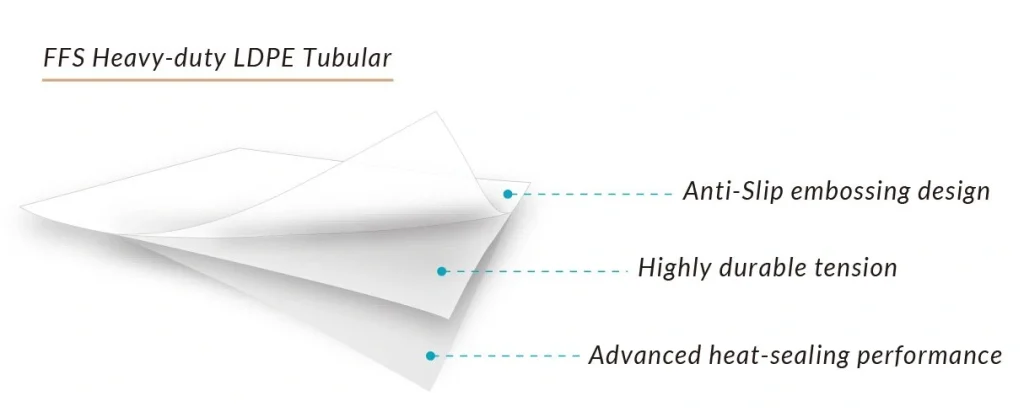
El relieve antideslizante en la superficie de la película mantiene las pilas estables durante el transporte. Esto reduce el riesgo de colapso del palé o desplazamiento de la carga, que daña el producto y crea riesgos de seguridad.
Los aspectos económicos se hacen evidentes cuando se desglosan los costos reales.
Los rollos de película para sistemas FFS cuestan 50% menos que comprar cantidades equivalentes de bolsas tejidas compuestas prefabricadas. Se compra materia prima en lugar de producto terminado, lo que elimina los costos de conversión y los márgenes de manipulación del precio.
Los gastos de mano de obra disminuyen porque la automatización gestiona el trabajo. Se necesitan menos personas por turno y estos trabajadores se centran en la supervisión de los equipos en lugar de en tareas manuales repetitivas. Esto reduce tanto los costes salariales como el riesgo de lesiones laborales.
El desperdicio de material también disminuye. Los equipos FFS cortan bolsas con precisión a partir de rollos continuos, minimizando los desperdicios. Las operaciones con bolsas prefabricadas generan desperdicios debido a inventario dañado y tamaños obsoletos cuando cambian las especificaciones.
Las regulaciones de la industria química exigen el seguimiento de los productos a lo largo de la cadena de suministro.
Los sistemas FFS integran la impresión y el etiquetado directamente en el proceso de envasado. Los códigos QR se aplican a cada bolsa durante su fabricación, creando una marca permanente que se vincula a la base de datos de lotes. Los clientes pueden escanear estos códigos para verificar el origen del producto y acceder a las fichas de datos de seguridad.
Esta capacidad es fundamental al manejar materiales peligrosos o sustancias reguladas. Permite demostrar el cumplimiento de los requisitos de seguimiento sin añadir operaciones de etiquetado independientes que ralentizan la producción.
Matrix FFS para bolsas de arena y aplicaciones exigentes similares extiende la tecnología central a materiales extremadamente pesados o abrasivos.
Este enfoque utiliza estructuras de película reforzada y sistemas de llenado modificados. Si envasa productos con diferentes características de flujo o pesos superiores, la configuración de la matriz se adapta manteniendo las ventajas de la automatización.
Hemos trabajado con fabricantes de productos químicos el tiempo suficiente para comprender lo que sus envases deben lograr.
El Grupo XIFA ofrece soluciones de embalaje FFS diseñadas específicamente para aplicaciones de resinas y productos químicos. Nuestros materiales resisten las condiciones a las que se enfrentan sus productos durante el almacenamiento y la distribución.
Nuestras películas ofrecen:
Nuestra capacidad de producción de 400 millones de bolsas anuales garantiza un suministro estable incluso para operaciones de gran volumen. También aceptamos pedidos urgentes con entrega en 4 a 6 días cuando necesita materiales rápidamente para evitar interrupciones de producción.
Si también está envasando productos químicos en grandes cantidades, es importante comprender Los beneficios de las bolsas a granel FIBC para aplicaciones químicas Puede ayudarle a decidir cuándo es más conveniente usar contenedores a granel que bolsas individuales. Algunas operaciones utilizan ambos formatos según las necesidades del cliente y los destinos de envío.
Ofrecemos personalización del espesor de la película, las dimensiones y la impresión para adaptarnos a sus necesidades específicas. El control de calidad incluye la integración de códigos QR para la trazabilidad. Contacta con nuestro equipo para discutir Fertilizante de película pesada FFS Opciones de bolsas de embalaje y soluciones de embalaje de resina que se adaptan a sus necesidades de producción.
Preguntas más frecuentes
¿Por qué la resina granular necesita embalaje FFS en lugar de bolsas tradicionales?
La resina granulada requiere un llenado automatizado de alta velocidad que las operaciones manuales tradicionales no pueden lograr, y requiere barreras de humedad herméticas que las bolsas tejidas cosidas no pueden proporcionar. El envasado FFS ofrece ambas ventajas mediante sistemas automatizados integrados.
¿Cuánto pueden reducir los costes los embalajes FFS en comparación con las bolsas tejidas?
La película FFS cuesta aproximadamente 501 TP6T menos que las bolsas tejidas prefabricadas equivalentes y requiere menos trabajadores por línea de envasado. El desperdicio de material también se reduce gracias al corte de precisión de los rollos continuos.
¿Pueden los envases FFS satisfacer los requisitos de seguridad y seguimiento de la industria química?
Sí, los sistemas FFS crean sellos herméticos que evitan fugas de producto y admiten la impresión de códigos QR integrados para la trazabilidad regulatoria en toda la cadena de distribución.