

 by Roy
Nowadays, PP non woven fabric has increasingly replaced traditional materials as various industries continue to expand towards sustainable solutions. Thus, this guide explains its core technical aspects, including PP non woven fabric manufacturing process, properties, and applications to help procurement teams make informed decisions.
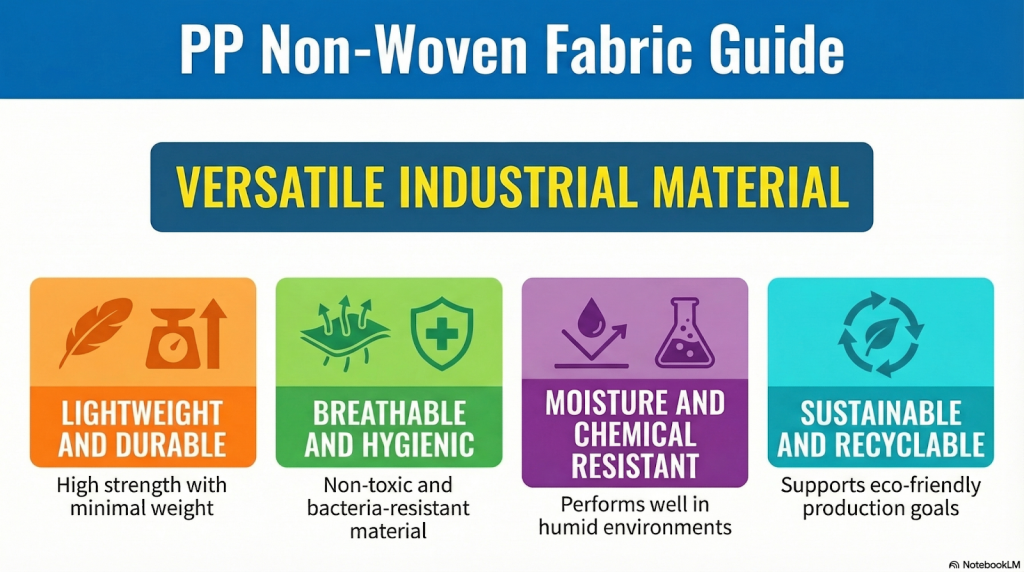
This fabric is a material made directly from polypropylene fibers that are bonded together through different processes instead of being knitted or woven. They are randomly arranged, providing the fabric with a unique texture and features. This can be achieved via mechanical, thermal, or chemical processes that shape into a fabric with different properties.
Non-woven polypropylene fabric is popular for being breathable, lightweight, and resistant to abrasion, chemicals, and moisture. These make them ideal for products that require a combination of flexibility, durability, and cost-efficiency.
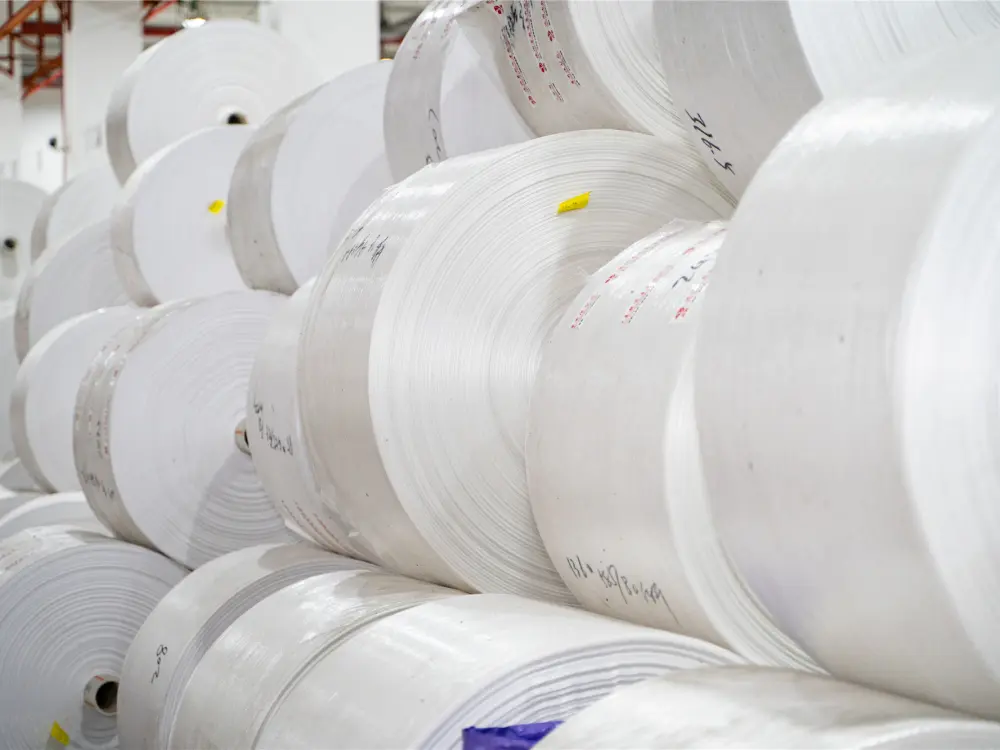
The manufacturing of PP non woven textile uses various methods to achieve specific textures. This comprehensive guide to PP fabric manufacturer non woven covers key techniques and the production process.
| Preparation of Raw Materials: The process begins with the primary raw material, which is the polypropylene resin. The resin is then melted and mixed with additives that improve the properties of the fabric, like UV stabilizers, colorants, or flame retardants. |
| ↓ |
| Extrusion: Melted polypropylene is forced through spinnerets to form fine fibers or filaments. In the spunbond process, these fibers are randomly laid on a conveyor to make a web. |
| ↓ |
| Bonding: The fiber web is bonded to form fabric. This can be done via heat or pressure (spunbond) or by entangling fibers mechanically (needle-punched). |
| ↓ |
| Finishing: The bonded fabric may undergo processes like calendaring, where heated rollers smooth and compress the material to improve strength and texture. |
| ↓ |
| Quality Control: Strict testing is then applied throughout production to ensure standard compliance for strength, weight, and thickness. Then, the finished PP non-woven fabric is rolled or cut into sheets for distribution. |
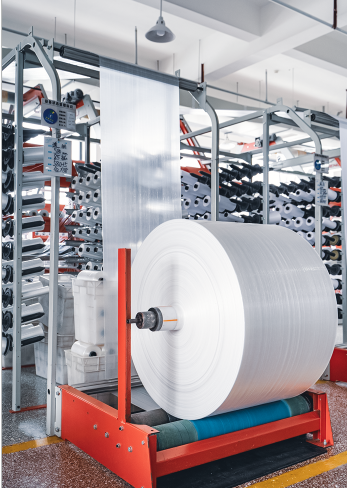
Top-tier production environments, like XIFA, maintain strict cleanliness protocols. We hold ISO 9001 and BRCGS certifications, ensuring the facility meets global safety requirements for food-grade and medical-grade materials.
B2B buyers look for more than just raw materials, but also consistent mechanical properties across every roll. A professional partner ensures that the first meter matches the last meter in the batch, preventing machine downtime during the final conversion process.
Products must also comply with international standards for physical durability and chemical safety. Using certified materials minimizes compliance issues, the risk of defects, and expensive product recalls in global markets.
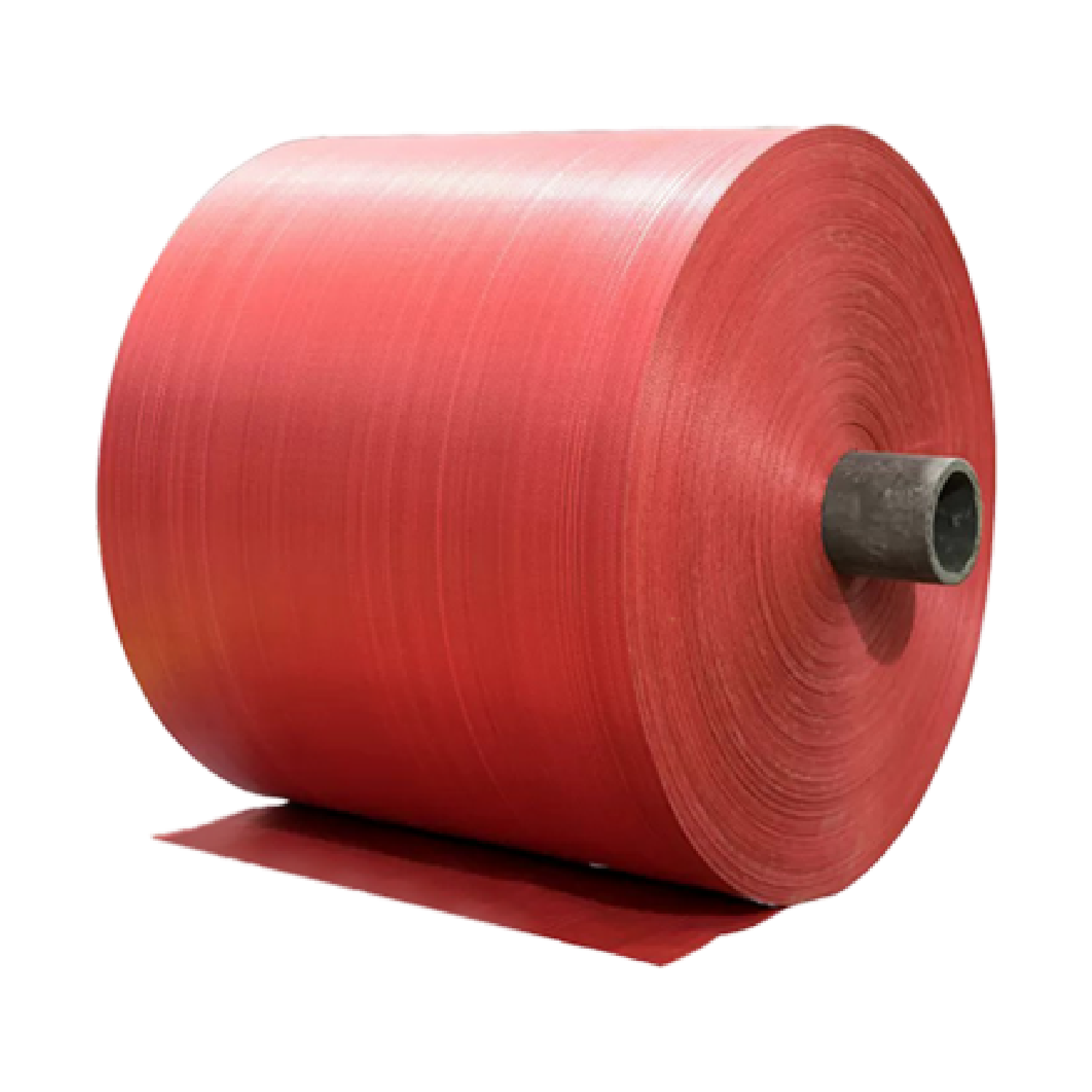
PP non woven fabric is a durable, versatile, and vital material used in various industries. Though its manufacturing process is complex, technological advancements and global demands enable
manufacturers in improving production processes to improve efficiency, quality, and sustainability.
XIFA offers professional PP non-woven fabric solutions tailored to a wide range of applications, including food-grade packaging, animal feed, agriculture, construction, chemicals, and flood control.
Additionally, our facilities follow rigorous management protocols to ensure every shipment meets international trade standards. At XIFA, we ensure compliance with technical precision to support your long-term supply chain goals.