

 by Roy
To calculate the fibc bag calculation of dimensions and capacity, you need three basics: bag size, usable volume, and load limits. This guide explains each step in plain language. You will learn how to measure dimensions, calculate area, estimate capacity, and check weight limits using simple formulas. This helps buyers choose the right bag and avoid costly mistakes.
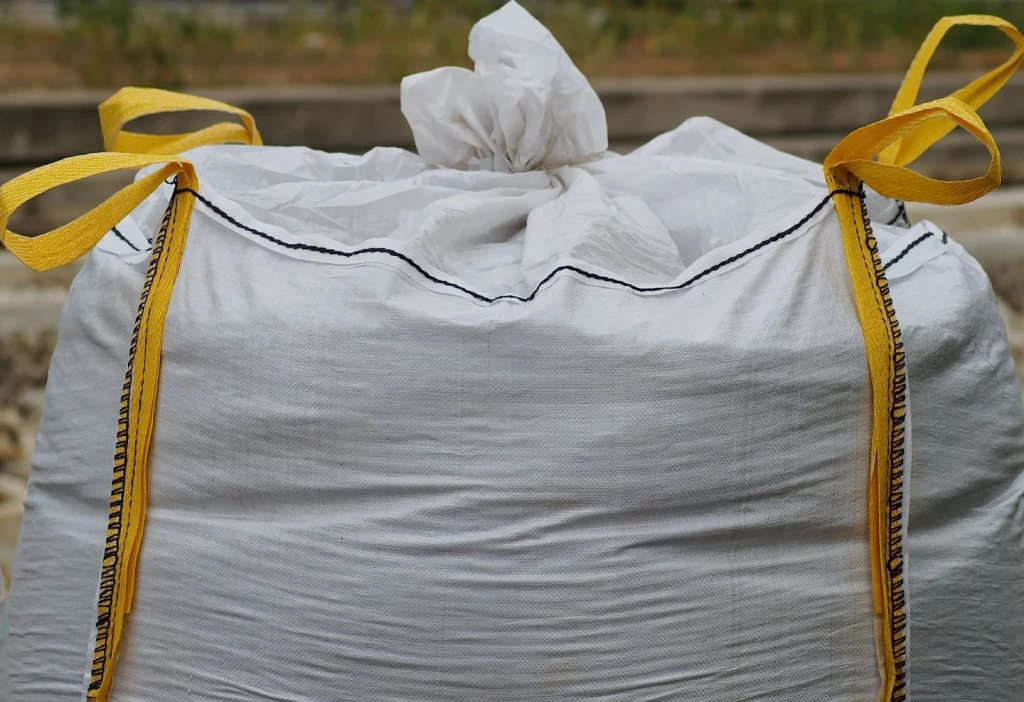
An FIBC bag is a large flexible container used for bulk materials. It is also called a jumbo bag or a bulk bag. These bags store and move dry products like grains, chemicals, powders, and minerals.
Choosing the wrong size can cause loading problems. It can also affect safety and transport costs. Correct calculations help you match the bag to your product and handling method. Accurate sizing improves space use in containers and warehouses. It also ensures the load stays within safe limits during lifting.
Most bulk bags use three main measurements: Length (L), Width (W), and Height (H). These are internal dimensions. They describe usable space, not the outer seams. Dimensions are usually shown in centimeters. For example: 90 × 90 × 125 cm.
Calculate internal volume and load weight instantly
To find the usable space inside a bulk bag, use the following formula:
Volume (m³) = (Length × Width × Height) / 1,000,000
Example: For a bag measuring 90 × 90 × 125 cm: (90 × 90 × 125) / 1,000,000 = 1.01 m³
To estimate the actual load weight, multiply the volume by your product’s bulk density:
Net Weight (kg) = Volume (m³) × Material Density (kg/m³)
Calculation: If your material density is 1,000 kg/m³: 1.01 m³ × 1,000 kg/m³ = 1,010 kg
Area matters when calculating fabric use and bag weight.
This method is widely used in fibc bag calculation of area for design and material planning.
Once the area is known, bag weight can be estimated.
Bag Weight (kg) = (Total Area × GSM) / 1,000
GSM means grams per square meter. Heavier fabric increases strength but also adds weight. This step supports the fibc bag weight calculation and helps plan shipping loads.
SWL is the maximum weight the bag can carry safely. It includes the product but not the dynamic forces.
Safety Factor shows how much extra strength the bag has. Safety Factor = Breaking Load / SWL. Common ratings are 5:1 or 6:1. These are set by industry standards.
Check if your bag meets international safety standards.
Consider a bag sized 90 × 90 × 125 cm. It has a small top opening and four bottom lifting loops.
Bag openings affect filling speed and dust control. Bottom discharge options affect emptying speed. Common options include:
Many buyers use a fibc bag weight calculator to speed decisions. These tools combine dimensions, GSM, and design options. They are useful for quick checks. Final confirmation should come from technical specifications.
Ignoring material density is the most common issue. Another is assuming volume equals weight capacity. Also, skipping the loop and opening design can cause handling problems later.
Understanding dimensions, area, and load limits helps buyers choose the right solution. These steps reduce risk and improve handling efficiency. If you are planning bulk packaging, explore a collection of FIBC big bags, PP woven bags, BOPP bags, and PE film bags from XIFA Group to match your project needs with confidence.
1.How do I calculate FIBC bag capacity?
Multiply internal length, width, and height. Convert to cubic meters.
2.Why does material density matter?
Density affects how much weight fits inside the same volume.
3.Does fabric GSM change capacity?
No. It affects bag weight, not internal space.
4.Should pallet weight be included?
Yes, for total shipment calculations.
5.Are calculators accurate?
They provide estimates. Always confirm with the supplier’s data.