

 by Roy
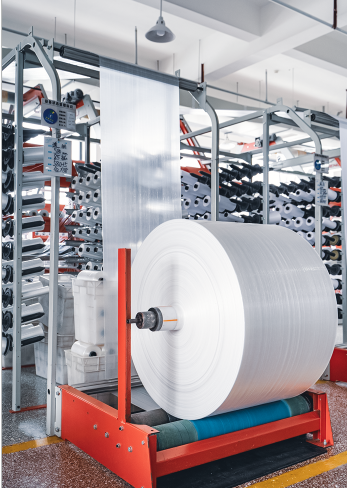
An FFS roll is a continuous roll of plastic film designed for Form-Fill-Seal machines. It forms, fills, and seals bags automatically in one process. In simple terms, it is the raw material that becomes finished packaging bags on high-speed filling lines.
This article explains how ffs bag rolls work, how they are structured, what specifications matter, and how they support industries like fertilizer, resin, and animal feed. If you are new to industrial packaging, this guide gives you clear and practical knowledge.
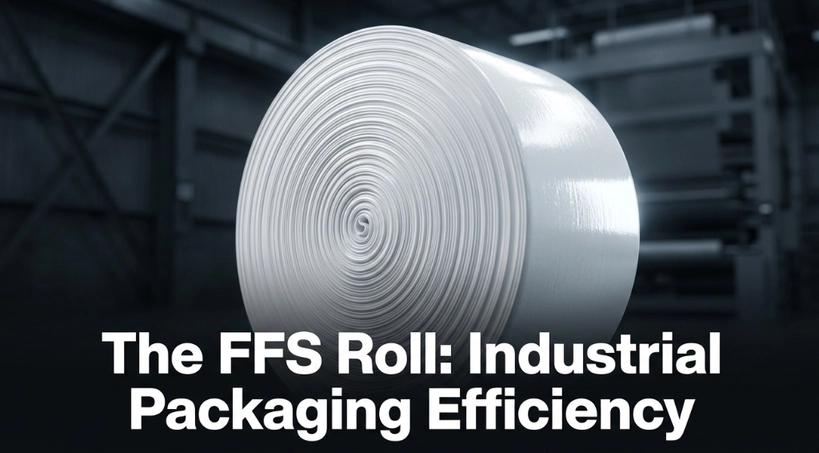
FFS means Form-Fill-Seal. The machine pulls film from a roll, forms it into a tube, fills it with material, and then seals it.
This process reduces manual handling. It improves speed and hygiene. It is widely used for 25kg and 50kg industrial packaging.
In simple terms:
This is why many manufacturers prefer ffs film roll packaging for automatic material handling lines.
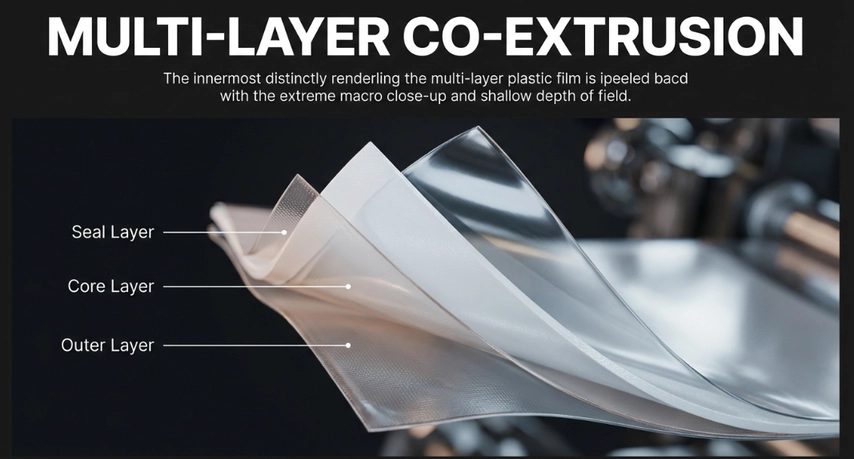
A FFS film is usually made using multi-layer co-extrusion. Each layer has a specific function.
Typical layers include:
Low melt ffs roll film improves hot-tack performance. It allows fast sealing at lower temperatures. This is important for high-speed automatic filling lines.
Some industries use low melt ffs roll stock to handle heavy or dusty materials. Lower sealing temperatures reduce burn-through and improve consistency.
In the fertilizer and resin industries, tensile strength matters. The bag must survive pallet stacking and transport.
Film thickness usually ranges from 100 to 250 microns. Thicker films provide better drop performance.
Mechanical testing often includes:
According to ASTM standards for plastic films (astm.org), tensile and impact tests are key quality indicators.
Moisture can cause caking in fertilizer and degradation in resin pellets. Co-extruded polyethylene film creates a barrier against humidity.
Some applications use inner PE liners for additional protection. This approach is common in chemical packaging.
Industrial filling machines require specific roll dimensions.
Common specifications include:
If these values are incorrect, the machine may stop frequently.
Print eye marks guide the cutting position. They ensure accurate bag length.
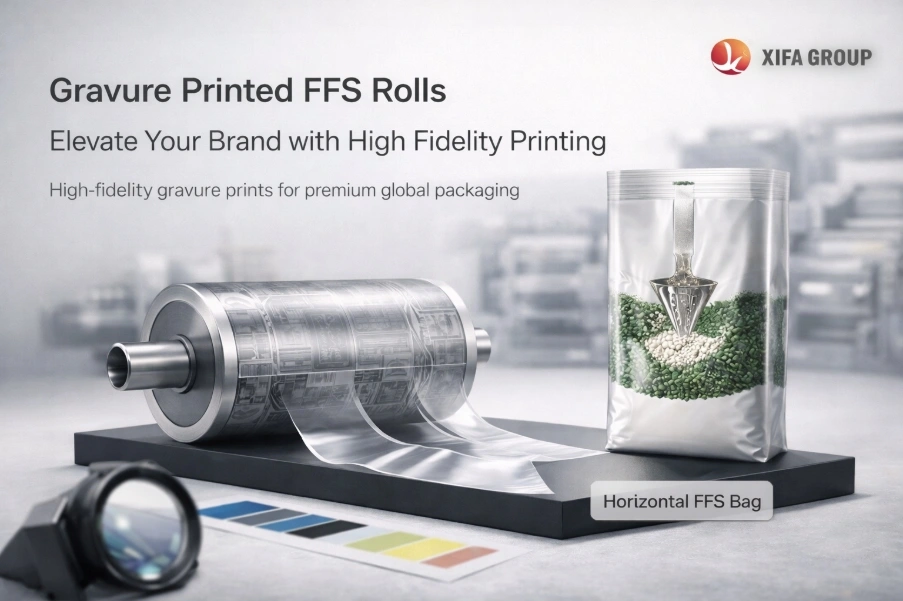
When using ffs printed bag rolls or ffs printed rolls, registration accuracy is critical. Misalignment causes sealing defects.
A roll must match the machine’s collar size, sealing jaw temperature, and speed.
For example:
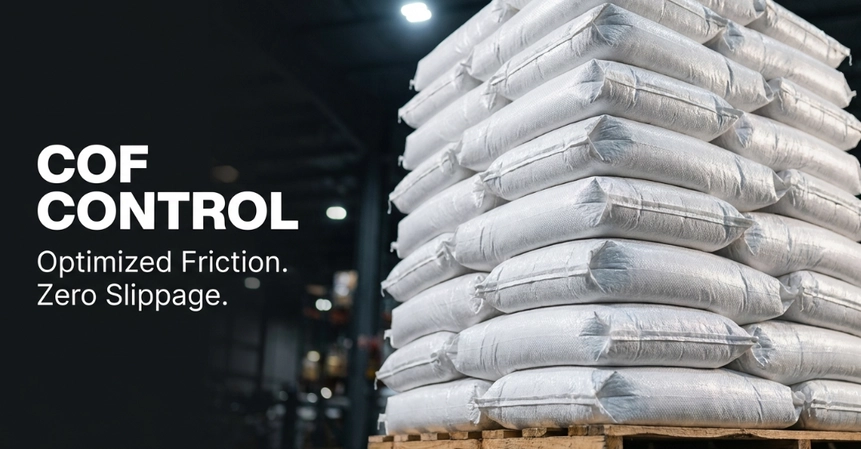
If the friction is too low, pallets slide. If too high, the film may jam. Understanding these values prevents downtime.

High tensile film prevents tearing during transport. Moisture control prevents lump formation.
Strong core layers resist puncture from sharp pellets.
Consistent sealing avoids leakage and contamination.
FFS systems are widely discussed in industrial packaging forums and technical resources such as packagingdigest.com.
The company operates 17 fully automatic cutting and sewing integrated machines, supporting large-scale industrial packaging projects. The production facility includes 150 circular weaving machines and 12 film blowing machines, along with 17 integrated cutting and sewing systems.
This equipment structure enables a stable supply for automatic filling lines used in fertilizers, animal feed, and other bulk materials. The combination of weaving, film blowing, and automated finishing allows consistent output and compatibility with high-speed Form-Fill-Seal operations.
XIFA follows national production standards and established quality management systems to ensure controlled manufacturing processes. The company holds ISO management system certifications and BRCGS food-grade compliance. These certifications demonstrate adherence to international packaging standards, support equipment compatibility, and confirm consistent production control across industrial and food-grade applications.
Compared with pre-made bags:
Compared with woven sacks:
For more technical comparison, see our guide on Vertical vs. Horizontal FFS and Heavy-Duty FFS Packaging.
An FFS roll is not just plastic film. It is a system component in an automatic packaging line. Film structure, sealing temperature, friction, and roll dimensions all affect production speed and bag strength.
XIFA Group combines film production, printing, and automated cutting under one system. With integrated manufacturing and strict quality control, it supports large-scale industrial packaging projects. If you are planning to upgrade your automatic filling system, explore our collection of industrial packaging solutions and speak with our technical team for guidance.
It is used in automatic packaging machines that form, fill, and seal bags in one continuous process.
Most industrial film ranges from 100 to 250 microns, depending on product weight.
They allow faster sealing at lower temperatures, reducing burn-through and improving efficiency.
Yes. They can be supplied as printed rolls with eye marks for precise cutting.