

 by Simin Xiang
For large-scale production, Form-Fill-Seal (FFS) systems are significantly more cost-effective than pre-made bagging due to lower material costs, faster operational speeds, and reduced labor requirements. FFS typically achieves ROI in 12 to 18 months for high-volume operations.
The FFS vs pre-made bagging machines differences come down to how each system handles packaging material and where costs accumulate over time.
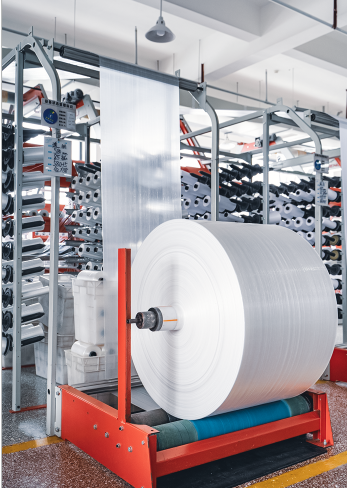
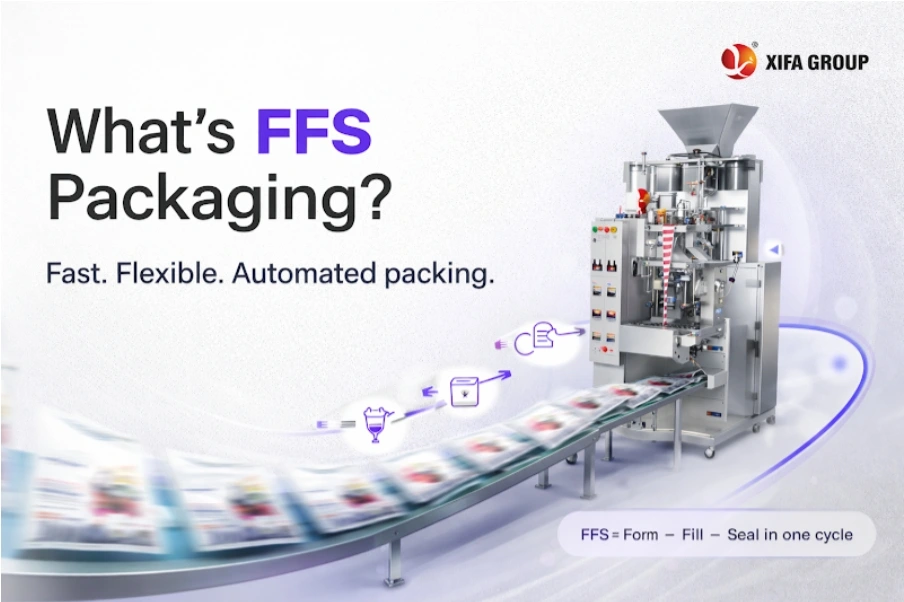
FFS bagging equipment creates bags from continuous film rolls, fills them, and seals them in one integrated process. Pre-made bagging uses pouches manufactured separately at another facility, then fills and seals them on dedicated equipment. This fundamental distinction drives everything from material pricing to production speed and labor needs.
Both approaches work for packaging, but their economic profiles diverge sharply when production volumes increase beyond 200,000 units monthly.
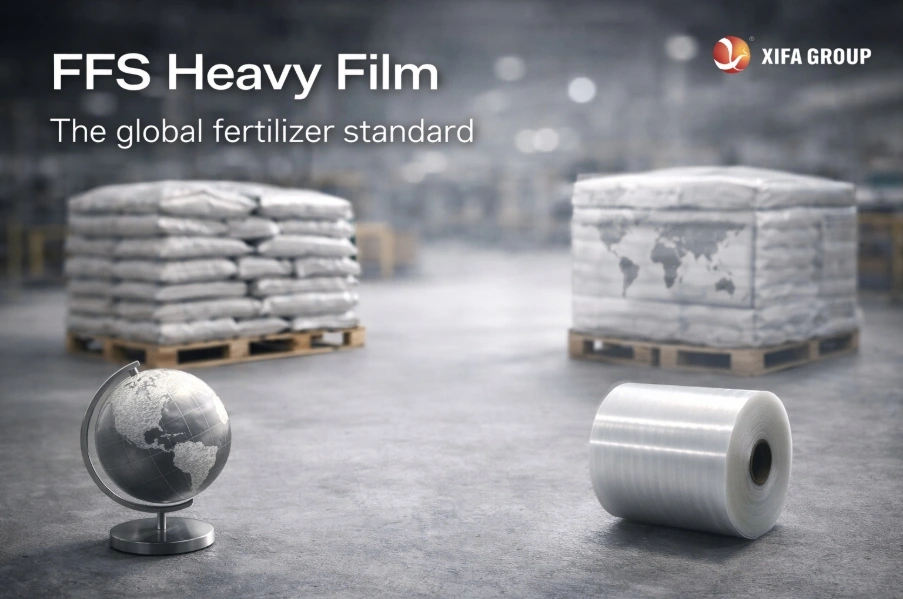
Roll film used in FFS type bags costs 30 to 50 percent less than purchasing pre-made pouches.
This price difference stems from the manufacturing chain. Pre-made pouches require separate production facilities, converting processes, quality inspections, and logistics before reaching your filling line. Roll film ships directly from extrusion plants with minimal intermediate handling.
For operations running 500,000 units monthly, this material savings alone can represent $15,000 to $25,000 in reduced monthly expenses.
Additional material considerations:
Production speed differences become critical at scale.
FFS bagging systems routinely exceed 100 bags per minute in continuous operation, with some configurations reaching 200+ units per minute for simple formats. Pre-made bagging lines typically operate between 35 and 90 bags per minute depending on pouch complexity and filling requirements.
This speed gap means an FFS line can potentially produce twice the output of a pre-made system during the same shift, directly impacting your per-unit labor costs and facility utilization rates.
FFS bagging equipment requires less staffing for equivalent output volumes.
A typical FFS line operates with one technician managing multiple machines, handling film loading, quality monitoring, and basic adjustments. Pre-made bagging operations often require 2 to 3 staff members per line for pouch loading, quality checks, and jam clearing.
At large scale, this labor difference translates to substantial ongoing savings. For a facility running three shifts across multiple lines, reduced staffing needs can cut annual labor costs by $80,000 to $150,000 per line.
The upfront investment tells only part of the economic story.
| Factor | FFS Bagging System | Pre-made Bagging |
| Initial Equipment Cost | $150,000+ for VFFS systems | $80,000+ for entry-level models |
| Material Cost per Unit | 30-50% lower (roll film) | Higher (pre-made pouches) |
| Production Speed | 100-200+ bags/minute | 35-90 bags/minute |
| Labor Requirements | 1 operator per multiple lines | 2-3 staff per line |
| Material Waste | Near-zero substrate waste | 12-15% trim waste |
| Storage Space Needed | Compact film roll storage | 40% more space for pouch inventory |
| ROI Timeline | 12-18 months (high volume) | 24-36 months (high volume) |
| Changeover Flexibility | Adjust settings for new sizes | Requires new pouch inventory |
Pre-made pouches offer advantages in specific scenarios despite higher running costs.
Premium product lines benefit from the superior print quality and complex pouch structures available with pre-made formats. Stand-up pouches with zippers, shaped bags, and multi-material laminates provide shelf appeal that justifies the cost premium for high-margin items.
Small batch production or frequent SKU changes also favor pre-made systems when you need multiple distinct bag designs. Stocking various pouch styles proves more practical than constantly reconfiguring FFS equipment for short runs.
Operations prioritizing design flexibility over cost efficiency may find pre-made bagging better suited to their brand positioning.
The decision comes down to your production volume and time horizon for recovering the initial equipment investment.
For facilities producing over 500,000 units monthly, FFS systems typically recover their higher initial investment within 12 to 18 months through accumulated material savings, labor reduction, and increased throughput. Operations below 200,000 monthly units may find the ROI period extends beyond 24 months, making pre-made bagging more financially attractive in the short term.
Consider also your growth trajectory. If you’re scaling toward high-volume production, investing in FFS infrastructure now avoids the need to replace pre-made systems later when volumes increase.
Equipment choice is just one component of an effective packaging operation. Material quality matters equally.
XIFA Group manufactures high-quality FFS bags and film materials for large-scale production operations. With 250 million RMB in fixed assets supporting substantial production capacity, XIFA provides cost control advantages through integrated manufacturing and trading operations. Their QR code traceability system and international certifications ensure consistent material quality for demanding production environments. Contact XIFA’s packaging team to discuss FFS bag and film specifications for your production requirements.
FAQ
What are the main cost differences between FFS and pre-made bagging?
FFS systems use roll film that costs 30 to 50 percent less than pre-made pouches, produce less waste, and require fewer operators, though FFS equipment has higher upfront costs.
How fast do FFS systems operate compared to pre-made bagging?
FFS bagging systems typically run at 100 to 200+ bags per minute, while pre-made bagging operates at 35 to 90 bags per minute depending on pouch complexity.
What production volume justifies investing in FFS equipment?
Operations producing over 500,000 units monthly typically achieve ROI on FFS systems within 12 to 18 months, making them cost-effective for large-scale production.